
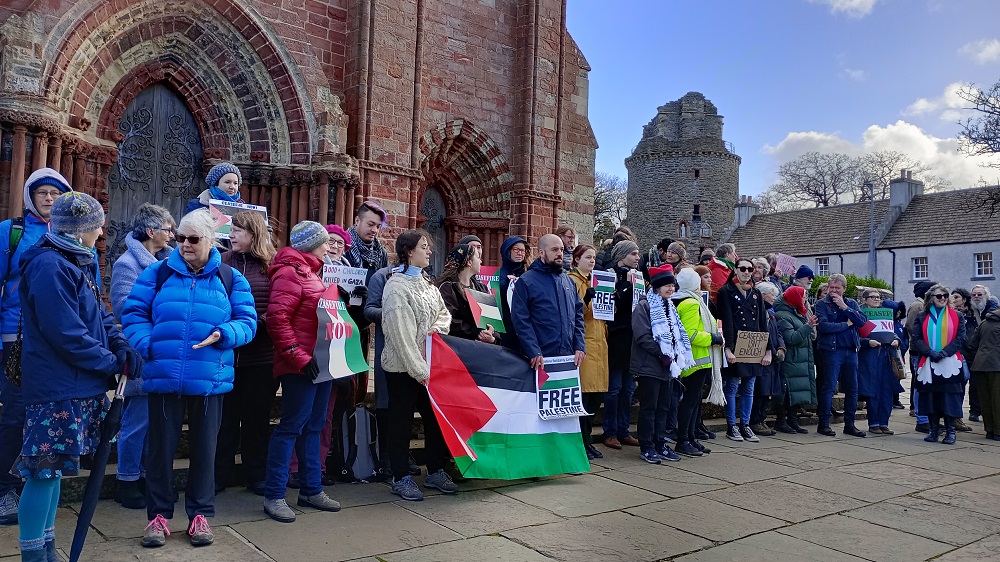
The USA vetoes resolution for an immediate humanitarian ceasefire.
“There is a high risk of the total collapse of the humanitarian support system in Gaza, which would have devastating consequences.” – UN Secretary-General António Guterres
The UN Security Council held an emergency meeting Friday morning (8th December) New York time to discuss the catastrophic situation in Gaza. This follows Wednesday’s urgent letter by Secretary-General António Guterres – one of the most powerful tools at his disposal – urging the body to help end carnage in the war-battered enclave through a lasting humanitarian ceasefire. A resolution tabled late afternoon in the chamber calling for an immediate humanitarian ceasefire was vetoed by the United States.
The resolution was put forward by the United Arab Emirates and backed by over 90 Member States. There were 13 votes in favour and the United Kingdom abstained. Owing to the US veto, the resolution was not therefore adopted.
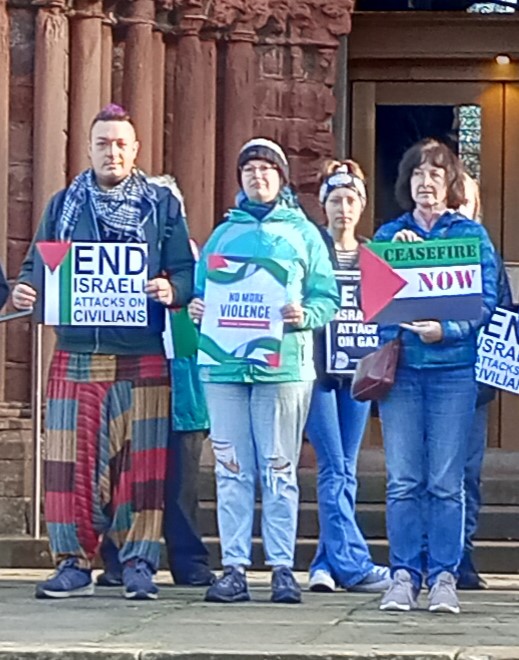
Campaigners will again meet in Orkney on the steps of St Magnus Cathedral from 1 to 2pm.
UN relief agencies report that grave humanitarian consequences are leaving tens of thousands dead and injured across the Strip. Homes, schools, medical facilities and other infrastructure have also been destroyed.
So far 130 UNRWA ( the UN agency for Palestine refugees) staff have been killed in Gaza since the beginning of the escalation.

The people of Gaza are being “forced into a horrible scenario” amid a “cruel campaign” by Israel against the population of the Strip in retaliation for Hamas’ terror attacks on 7 October, UN health agency WHO spokesperson Christian Lindmeier told journalists in Geneva on Friday.
“The situation in Gaza is beyond belief” he stressed, insisting that the enclave “cannot afford to lose” one more ambulance or hospital. WHO has documented 212 attacks on healthcare in the Strip since 7 October affecting 56 facilities and 59 ambulances.
The UN humanitarian affairs coordination office OCHA reported that the influx of internally displaced persons to Rafah has continued and that there was “no empty space left for people to shelter, not even in the streets and other open areas”.
Thousands of people lacking basic essentials waited for hours around aid distribution centres and “there are concerns of a breakdown in law and order under these conditions,
More than 17,000 Palestinians have reportedly been killed since the start of Israel’s military operations, including over 4,000 women and 7,000 children. Tens of thousands are reported to have been injured, and many are missing, presumably under the rubble.
About 85 per cent of Gaza’s population has been displaced; hospitals, schools and UN facilities have been damaged or destroyed.
António Guterres told the UN Security Council that there is also a serious risk of starvation and famine noting that half the people in northern Gaza and more than one third of displaced people in the south are “simply starving”.
“Attacks from air, land and sea are intense, continuous and widespread,” he said, adding that people in Gaza “are being told to move like human pinballs – ricocheting between ever-smaller slivers of the south, without any of the basics for survival.”
He reiterated his “unreservedly condemnation” of Hamas’ brutal attacks on Israel on 7 October, stressing that he is “appalled” by the reports of sexual violence.
He said that the people of Gaza “are looking into the abyss”, the UN chief called on the international community to do “everything possible” to end their ordeal.
“The eyes of the world – and the eyes of history – are watching.”
Fiona Grahame





Leave a Reply