
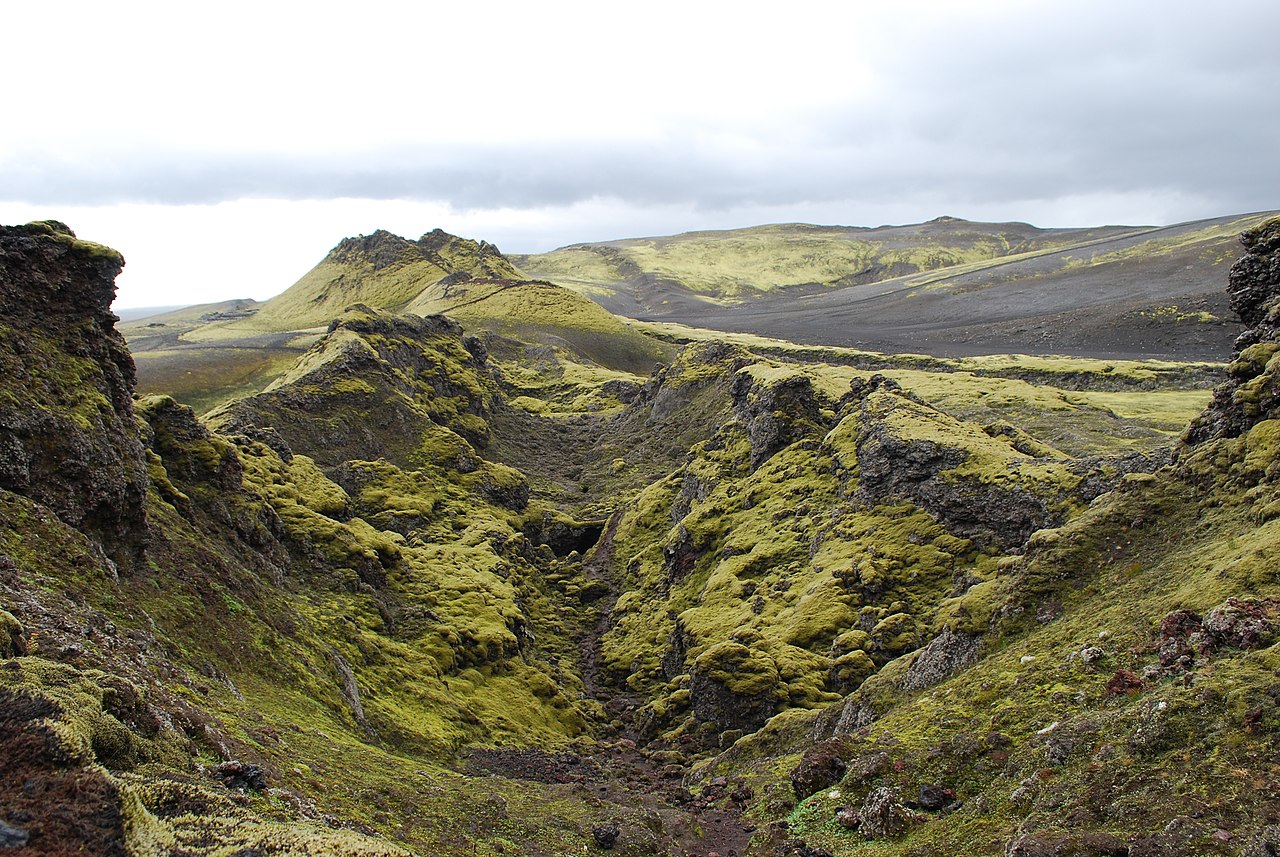
On 8th June 1783 the Laki volcano in southern Iceland began an 8-month eruption, killing 10,000 people and causing widespread famine throughout Europe and Asia.

Geoff Hellman wrote a series of articles published in The Orkney News about the eruption of the Laki Volcano and the long lasting effects it had on the weather, and the failure of harvests, leading to political upheavals across Europe and further afield.
the Laki eruption of 1783-1784, which commenced on the 8th of June, 1783 and ceased on the 7th February, 1784, represents the main volcanic event of a two-year-long volcano-tectonic episode within the Grimsvôtn system lasting from May 1783 to 26th May 1785. In Iceland, this is often called the Lakagígar or Skaftáreldar (Skaftár fires) eruption. – Geoff Hellman
The consequences of this event were catastrophic for Iceland. The despoliation of pasture and farm land by volcanic ash and polluted rainfall, resulted in the death of more than 60% of the grazing livestock, mainly through chronic fluorosis. Over 10,000 cattle, 27,000 horses and 190,000 sheep died between 1783 and 1784. It is estimated that these figures represent approximately 50% of the total stock of cattle, 75% of the horses and nearly 80% of the sheep. As mutton made up a large proportion of the people’s diet, these losses were devastating, and widespread starvation ensued, killing over 20% of the population, i.e. approximately 10,000 people.
To find more in the series, please use the search button on the website.

Donate to The Orkney News
£2.00

.jpg)
Leave a Reply