
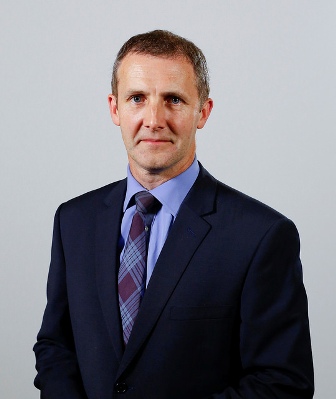

The Remote Towers Project which will see the loss of highly skilled Air Traffic Control jobs from the islands has the full backing of the Cabinet Secretary for Transport, Infrastructure and Connectivity , Michael Matheson.
The Project by Highlands and Islands Airports Ltd has been controversial from the very start.
Michael Matheson was giving evidence before the Public Petitions Committee of the Scottish Parliament on Wednesday 24th of February.
Michael Matheson said that the key point of the project was that it would ensure the continuation of air services to the islands and rural areas in the medium and long term. He said the status quo was not an option,
No one who is concerned about the delivery of the project has ever stated that they objected to either change or modernisation. In fact it is recognised that the service needs to develop. The Remote Towers Project, which has been described as the riskiest and costliest option, is the only one the HIAL Board went to Scottish Ministers with.
HIAL is a public company owned entirely by Scottish Government Ministers but Michael Matheson said that it would be wrong for Ministers to interfere with ‘operational matters’.
Michael Matheson confirmed that the Remote Towers Project was on budget and on schedule. He criticised media reports on the financing of the project which he said were ‘misleading and wholly inaccurate.’ The Budget, which was set in 2019 is £48.4million made up of £34.7million for capital costs and £13.7million for revenue costs. There was also the additional contingency budget of £6.8million.
Questioned by Orkney constituency MSP Liam McArthur, LibDem, on the costs, Michael Matheson said that there was no indication of cost over runs.
The Islands Impact Assessment was presented to the HIAL Board on the 24th of February and Michael Matheson confirmed that he had not seen it. He said that HIAL had no legal obligation to conduct the assessment as the project was started before the Islands Act came finally into being. His interpretation of ‘Islands Proofing’ was that the assessments were there to mitigate the effects of policies or developments which may impact adversely on the islands. The Islands Impact Assessments he said were not to stop developments which would have a negative impact – just to mitigate where those occurred. Michael Matheson didn’t know of the individual costings of the Budget including if the costs of mitigations that would be required could be met.
The HIAL Board does not include anyone who lives in the islands. Both Michael Matheson and Gary Cox, Head of Aviation at Transport Scotland, said that the Board is made up of people with great skill sets.
Click on this link to view the members of the HIAL Board: Board of Directors HIAL
Gary Cox stated to the committee that a huge part of the project would be retraining of staff. Michael Matheson couldn’t say how many staff were willing to uproot and move to Inverness but Rhoda Grant MSP, Labour, claimed that between 30 and 60 staff will not move.
HIAL have said that commuting will be an option but this has still to be worked out and Rhoda Grant said that it had been ruled out as according to HMRC staff would have to pay for their own flights. In last week’s Orkney News it was reported that commuting would also present huge problems in producing a staffing rota.
There are many unknowns with the Remote Towers Project which will impact on costs ranging from connectivity to staffing. The Scottish Government’s ferries procurement fiasco should be a stark warning to Ministers who do not keep a close eye on such large projects.
The Scottish Parliament’s Rural Economy and Connectivity Committee published a scathing report on CONSTRUCTION AND PROCUREMENT OF FERRY VESSELS IN SCOTLAND It concluded that ‘Transport Scotland and CMAL applied inadequate due diligence in scrutinising and signing off the procurement process‘
And:
‘The Committee is further concerned that Transport Scotland, as project sponsors, failed to intervene more quickly when these significant project planning and management problems became apparent.‘
The cost of that project soared to over £200million.
Rhoda Grant urged Michael Matheson to reflect on the Remote Towers Project which the objectors ‘truly believe to be wrong’.
Michael Matheson was not to be budged and remained convinced that it was the only option if air services were to be sustained in the islands and rural areas in the future.
What happens next?
The Public Petitions Committee felt that there were significant issues which need to be addressed. They asked for additional information, particularly around budget details, which Michael Matheson said that he would get HIAL to provide.
A ‘Legacy Paper’ will be published by the committee and as there is an election in May 2021 a new committee will be required to continue this work.
You can watch the committee proceedings here, slightly over 1 hour in:
Reporter: Fiona Grahame
“If I were a private investor and HIAL were making a pitch to me for funding I would walk away.”




Leave a Reply