
I’ve been following two stories closely : the campaign to seek justice for those convicted of witchcraft in Scotland’s past and which they paid for with their lives; and The Great Tapestry of Scotland. I have also read the comments on social media about both these issues and I am shocked by them.
I am pleased to say I am not yet desensitised to the appalling comments people think they can make on social media that they don’t affect me – because they still do – but even more than that is what they reveal about those making them.
A petition came before the Scottish Parliament’s Citizen Participation and Public Petitions Committee on 1st September 2021 to pardon those convicted of witchcraft in Scotland and to memorialise them nationally. You would think that well into the 21stC in Scotland that this would be uncontentious. A ‘no brainer’ as someone commented.
Sadly it’s not. There are people who think there’s better things to do than correct a dreadful act – repeated acts – of injustice to thousands of Scots, 85% of whom were women. According to those commentators the Scottish Parliament is incapable of redressing this injustice and continue to discuss the hundreds of other topics which they do. This one item has folk so stirred up that they even find it humorous that ordinary folk were tortured to confess for a made up crime before being brutally murdered.
The other topic I’ve been following is that of The Great Tapestry of Scotland. A wonderful work of art and beauty completed mostly by women.
More than 1,000 volunteer stitchers from all over Scotland created the 160 panels. These highly skilled women, just ordinary folk, were led by Dorie Wilkie and it took 55,000 hours of devotion to make this extraordinary art work.
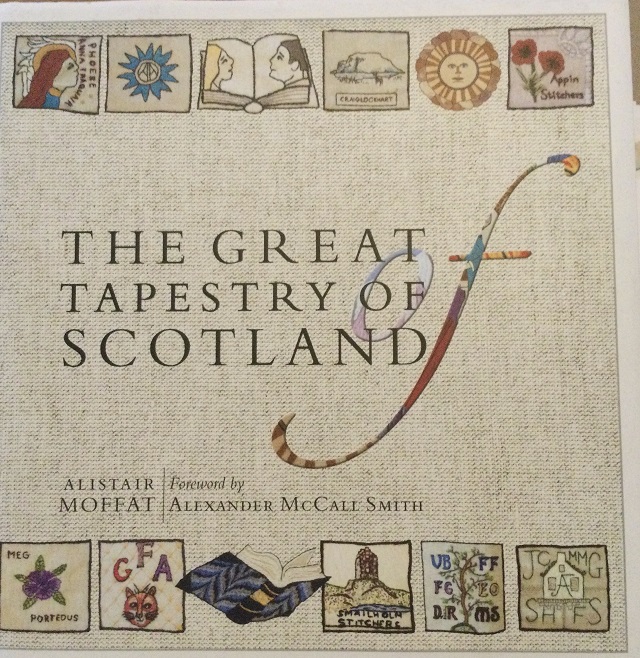
There’s a new visitor centre in Galashiels where people can see for themselves The Great Tapestry. A friend very kindly gave me the book about it by Alistair Moffat with a foreword by Alexander McCall Smith and when I can I will visit it to see it for myself. Even in the images on the page it looks magnificent.

Here are some of the comments on the Border Telegraph Facebook page:
“I would rather see paint dry”
“I would rather watch my toenails grow”
“Got better teatowels”
Is this because it is the work of women that the key board critics think this is worthless?
I think of all those volunteer women and the artist Andrew Crummy who created the images they worked on, when I read such negative comments. The Great Tapestry is a work of beauty created in a time of loss, bereavement and anxiety when people had been unable to meet with friends and couldn’t even grieve properly for the death of a loved one.
The Tapestry is a thing of extraordinary love, telling the story of Scotland through the ages.
The two stories I have highlighted in this: the pardoning of those executed by the state for witchcraft and The Great Tapestry are subjects which mainly involve the work of women and justice for historic crimes against women.
The social media commentators who trivialise state torture and murder, who seek to devalue the work of skilled women, reveal that Scotland has much to do if the nation we are building is a fair and equal one.

Fiona Grahame




Leave a Reply to strathedinCancel reply