
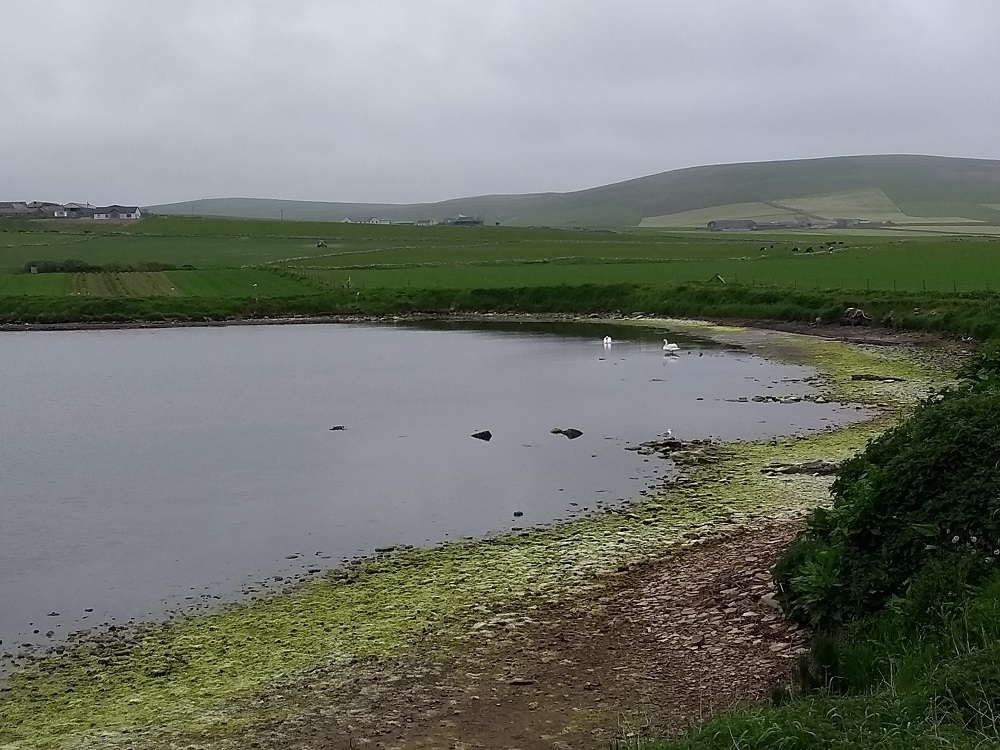
Scotland’s lochs and reservoirs are undergoing rapid and extensive warming, with water temperatures of most monitored lochs rising by between 0.25 and 1 degree Celsius per year between 2015 and 2019.

Between 2020 and 2080, it is projected that loch and reservoir temperatures could further increase up to 3 degrees Celsius in total.
The UK Centre for Ecology & Hydrology (UKCEH) and The James Hutton Institute have outlined a series of recommendations in a new report for CREW – Scotland’s Centre of Expertise for Waters, outlining the urgent actions needed to be taken.
High concentrations of plant nutrients such as phosphorus, most of which enter water courses via agricultural runoff, is contributing to the outbreaks of algal blooms. These blooms negatively affect water quality and aquatic biodiversity, and produce toxins harmful to animals and people.
The estimated annual cost of £16.5 million to the economy includes higher water treatment costs, financial losses for local business when water courses are shut to the public, and reductions in property values in the surrounding area.
Freshwater ecologist Dr Linda May of UKCEH, lead author of the report, explained:
“Our climate is changing rapidly and harmful algal blooms are becoming more common. This is reducing the value of our water courses for recreation, water supply and wildlife habitat. To mitigate these effects, we need to reduce nutrient inputs to our lochs and reservoirs.
“Our report shows that, by adopting more sustainable land use practices and lifestyles we can protect our lochs for future generations to enjoy.”

If there is no action to limit global warming or nutrient pollution, the concentration of phosphorus in our waters could more than double, due to changes in land use and rainfall patterns. This, together with warmer waters, will greatly increase the risk of harmful algal blooms.
Across most of Scotland, runoff from land is the main source of phosphorus pollution and is likely to increase because of climate change. Only 1 per cent of the 7,000 lochs studied receive effluent from wastewater treatment works. However, excess nutrient pollution from wastewater is known to be an issue at some lochs, so tackling this would increase ecosystems’ resilience to the impacts of climate change.
Dr Miriam Glendell of The James Hutton Institute said:
“Our modelling has shown than more efficient use of fertilisers informed by regular soil testing to match applications to crop demand could almost halve the amount of nutrients being lost from land to water.”
More investigation is needed into the effectiveness, cost and environmental impact of chemical treatments and the removal of nutrient-rich sediment or water. The risks of phosphorus pollution and of algal blooms should be monitored at individual sites in addition to regular soil testing on farms to encourage improved nutrient use efficiency. There also requires to be a comprehensive assessment of the cost impacts of algal blooms which currently is likely to be an underestimate. For example, it excludes veterinary and medical costs.
Rachel Helliwell, CREW Director, said:
“If action is not taken to mitigate the effects of climate change, it is likely that the frequency and magnitude of harmful outbreaks of algal blooms will increase, resulting in the failure of many waters to comply with international water quality standards and exceed the upper limits for safe use set by the World Health Organisation.”
The researcher have estimated the cost of a single outbreak at Loch Leven, based on loss of income to the fishery, hotels, restaurants and other local businesses, as about £2 million per year.
Commenting for the Scottish Government Màiri McAllan, Cabinet Secretary for Wellbeing Economy, Net Zero and Energy in the Scottish Government, said:

“Like the linked challenge of climate change, the loss of species and degradation of our natural environment is an emergency. That’s why the Scottish Government has committed to spending £65m on nature restoration during the course of this parliament via our Nature Restoration Fund – Scotland’s largest ever fund for nature. This includes providing support for targeted tree planting on banks to help cool our rivers which will protect species such as wild Atlantic salmon.”
“We’ve also committed £315m since 2015 through our Agri-Environment Climate Scheme (AECS) to support sustainable and regenerative farming practices, and this year’s AECS also includes support for irrigation lagoons which should assist in water resource management and help in mitigating the effects of climate change.”
Click on this link to access the report, Mitigating Climate Change Impacts on the Water Quality of Scottish Standing Waters

Harmful algal blooms include cyanobacteria, also known as blue-green algae, which affect aquatic biodiversity. They can produce toxins that are potentially harmful for pets and watersports enthusiasts who ingest infected water. These toxins can cause damage to the liver or nervous system and be potentially fatal for pets.
In the UK, dog deaths caused by the pets drinking contaminated water are recorded every year. People who have swum through, or swallowed, algal scum can suffer from skin rashes, eye irritation, vomiting, diarrhoea, fever and muscle and joint pain.
You can report outbreaks of cyanobacteria in water courses via UKCEH’s Bloomin’ Algae app.


Leave a Reply