
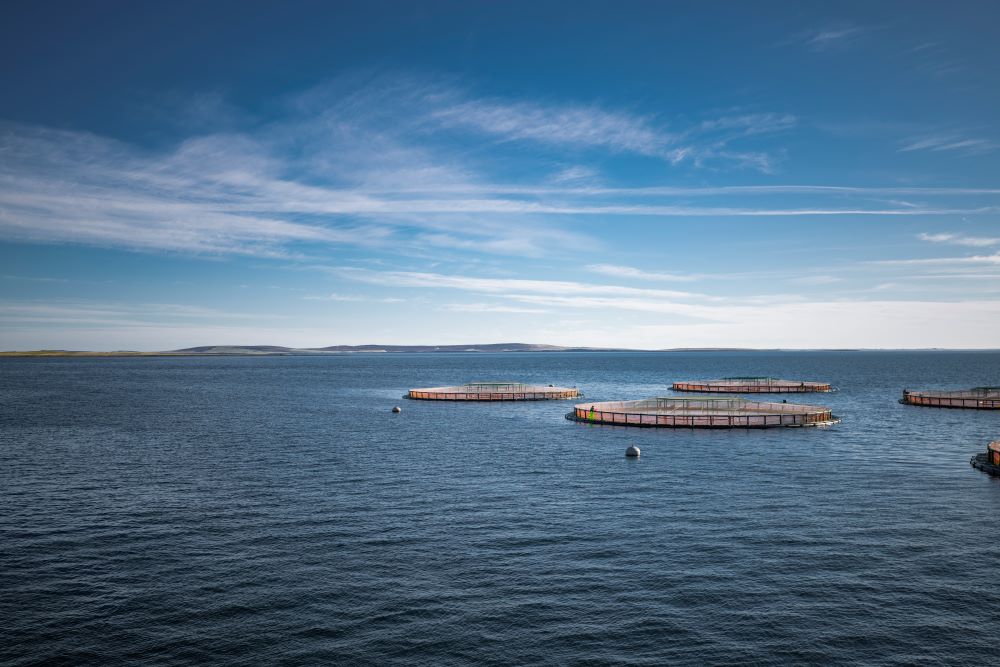

“There is a profound imbalance of power that runs deep through the existing regulatory regime. This has caused science to be ignored, the precautionary principle to be abandoned, and the voices of local stakeholders to be marginalised in favour of multinational business.” Orkney Trout Fishing Association
Scottish Farmed Salmon is the UK’s top food export and represents 11% of Scotland’s total exports, with sales from Orkney alone up 19% year-on-year, rising from £65 million to £77million. The industry, however, is under closer inspection as the public become concerned about the fish mortality numbers – 17.4 million last year. This week MSPs in the Scottish Parliament continued in their follow up to the recommendations made by their colleagues in 2018.
On Wednesday 14 November the Rural Affairs & Islands Committee concluded its evidence taking. Answering their questions as to what progress had been made were:
- Mairi Gougeon, Cabinet Secretary for Rural Affairs, Land Reform and Islands, supported by
- Charles Allan, Senior Delivery Lead, Aquaculture, Fish Health and Biosecurity,
- Jill Barber, Senior Delivery Lead, Aquaculture Programme and
- Hazel Bartels, Senior Delivery Lead, Aquaculture Programme, Marine Directorate, Scottish Government.
In November 2018, the then Rural Economy & Connectivity Committee (RECC) said that urgent action needed to be taken to improve the regulation of the Scottish salmon farming industry and to address fish health and environmental challenges.
It set out a range of recommendations about how challenges, such as the control of sea lice, rising fish mortalities and the need to reduce the sector’s impact on the environment, should be addressed. Some of these recommendations required urgent action. The MSPs also said that the current standards of regulation of the sector was ‘not acceptable’. Six years on how have the calls for urgent action been addressed, if any.
Previously The Orkney News reported on the appearance of representatives of the Farmed Salmon industry to the committee:
The industry robustly defended itself but today it faces additional challenges brought on by the climate emergency and new threats to the health of fish with blooms of micro jelly fish ( hydrozoans) which were blamed for a significant rise in farmed salmon mortalities, 2.8 million in the month of September of 2022.
Mairi Gougeon, Cabinet Secretary for Rural Affairs, Land Reform and Islands, in the Scottish Government, began her evidence to the committee confirming the support of the government to the Farmed Salmon Sector. She highlighted the contribution it made to the Scottish economy, representing 11% of Scottish exports and the numbers of jobs it provides, not just in fish farms, but in the supply chain. Amounting to 12,000 according to her figures.

The MSPs acknowledged the importance to rural and island communities of Salmon Farms but noted that employment in the sector was falling due to increased mechanisation.
In a written submission to the committee the Orkney Trout Fishing Association (OTFA) state:
The industry is capital intensive. While production has increased rapidly over the years, employment has not. In 1990 1,165 employees produced 32,350 tonnes of salmon. In 2022 1,260 employees produced 169,194 tonnes. The industry invests in capital, not people. Production continues to increase, adding to pressure on the environment, while employment barely changes. This trend will only continue if the industry is allowed to grow. Increased automation, increased tonnage, increased pollution, but no significant increase in employment. Orkney Trout Fishing Association
OTFA concedes that in rural and island communities Salmon Farms are a significant employer however:
” In 2022 the industry employed 170 full time workers in Orkney; the value of output was £61m. This is only 2.8 employees per £1m output. By comparison Scottish agriculture employs approximately 23 employees per £1m output.”
The MSPs raised numerous concerns about monitoring and the slow rate of progress in taking action on recommendations from the previous inquiry.
With a 25% mortality rate, which no side of the debate felt was good, there was a multitude of excuses for the slow rate of change. The industry has been given four years to adapt existing farms to SEPA’s new sea lice regulatory framework (SLRF).
MSPs also wondered why there wasn’t a community benefit scheme in place as happens with windfarm developments. The Cabinet Secretary explained that currently money is generated from the issuing of licenses and this goes to local authorities. Any change would require discussions with all those involved, but especially COSLA, the organisation which represents Scotland’s local councils.
The committee received written evidence to consider from the conservation charity WildFish Scotland who want to see an independent Cost-Benefit Analysis of Scotland’s salmon farming industry, to consider its wider economic impacts. In their letter they state:
We fully appreciate the need for high-quality jobs in Scotland’s coastal communities, both on the west coast and the northern isles. However, this must not come at the expense of damaging our shared natural assets; particularly as climate change and warming waters increasingly mark the open-net salmon farming industry as one whose time is finite.
The number of new full-time jobs in the Highlands & Islands region created by the industry since 1990 is just 253. The recent Fish Farm Production Survey, published last month, showed that the number of jobs on salmon farms decreased in 2023. WildFish Letter
The use of wrasse was also brought up in the sessions. Wrasse are used as cleaner fish instead of a reliance on chemical treatments. Wrasse are caught in the wild but they are a keystone species in rocky reefs and kelp forests, preventing urchin barrens from forming. Marine Scotland set out a new scheme putting in place various mandatory measures regarding the wrasse fishery.
According to evidence submitted by Coastal Communities Network Scotland:
Appropriate Assessments of removing wrasse from reef/kelp SACs are a legal requirement, but the Marine Directive has done none. The fisheries management measures introduced after the 2018 Inquiry are inadequate – Scotland needs similar wrasse fisheries measures to those introduced in England, with minimum & maximum landing sizes, spatial closures, and a seasonal closure during the wrasse breeding season. If the Scottish Government delays inshore fisheries management plans for two more years, including the wrasse fishery, then meaningful action on the RECC recommendations 26-28 will have been postponed for at least eight years. The use of wrasse as cleaner fish, and then their slaughter, is unethical. It should be halted. Coastal Communities Network Scotland
The slow rate of action being taken since the RECC’s recommendations made in 2018 is summed up by the OTFA:
“We must record our frustration having been forced to make the same observation over a period of twenty years. It is deeply upsetting that our concerns of many years have been systematically ignored, while the passage of time has proven nearly all of them to be true.
“Our wild fish stocks are on a knife edge, and sea lice numbers are out of control.”
Click on this link to access all the reports on the Salmon Farming Inquiry: Salmon Farming in Scotland
And you can watch the session here:

Fiona Grahame


Leave a Reply to Scottish Farmed Salmon Accounts for More Than a Quarter of all UK Seafood Sales – The Orkney NewsCancel reply