
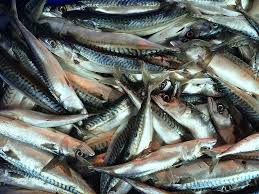

Research by the Rowett Institute, University of Aberdeen published in Nature Food, found oily fish caught and farmed in UK waters could provide 73% of the daily recommended intake of Omega-3 and 46% of Vitamin B12.
But the study showed most of this salmon, herring and mackerel is sold abroad, while the majority of the seafood eaten here is imported prawn, cod, salmon and tuna.
The Rowett Institute’s Professor Baukje de Roos explained:

“For the first time, we mapped what seafood we produce, what is imported and exported, and how this relates to what we eat and what we should be eating for optimal human and planetary health.
“Dietary recommendations for fish consumption have not been particularly effective in increasing fish intake in the UK. We may need more targeted messaging on, and a better understanding of, how much fish we need, and which fish we should eat.”
Persuading people to eat more local seafood offers a significant opportunity both to meet climate targets and improve public health, the report states.
At present, the figures show, consumption of fish is less than half what is recommended by UK authorities despite the proven health benefits, not least in reducing heart disease.
The researchers say this is also a missed opportunity when it comes to hitting net zero targets as seafood provides essential nutrients at a much lower emissions rate than other animal-based protein sources.
Overall, the UK is a net importer of seafood. As per the International Standard Statistical Classification of Aquatic Animals and Plants, marine fish dominate imports, followed by crustaceans such as prawns—one of the species that we commonly refer to as the ‘big 5’ dominating the UK market (e.g. cod, haddock, salmon, tuna and prawns). Of the species we eat in the UK, 80% is made up of these 5 species. Household food purchase data, which include eating out, revealed that the majority of seafood purchased are fish dishes, such as fish curries and fish pies. Consumption data suggest that most consumed seafood categories are marine fish and molluscs. Seafood supply mapping reveals production and consumption mismatches and large dietary nutrient losses through exports in the United Kingdom
The work is part of the Scottish Government’s strategic research program and used a unique database created for the project which linked more than a decade’s worth of data on seafood production, trade, purchases and consumption – right down to individual species level.
It is hoped the results can also be used to shape policies around the world, benefiting high-income countries that rely on imports and protecting poorer exporting countries’ stocks.
Click on this link to access, Seafood supply mapping reveals production and consumption mismatches and large dietary nutrient losses through exports in the United Kingdom, published in Nature Food.
“The UK is a large producer of herring and mackerel, which are relatively cheap for consumers to buy, and these species could significantly contribute to the provision of omega-3 fatty acids, vitamins B12 and D in the UK population,” the paper concludes.
“But most herring and mackerel are exported, indicating that consumer preferences and demand, rather than a limited supply, determine current patterns of fish production, trade and consumption, including consumption levels falling below recommendations. This highlights the need to explore opportunities and interventions that increase consumer demand for fish.”

Dr Anneli Löfstedt, who was part of the research team, said:
“We used to eat a lot of herring – herring girls would travel down the country, from Shetland to Great Yarmouth, to process and package the silver darlings coming from the North Sea. It was an important part of our culture, and we should try, somehow, to revive the demand for oily fish. Tinned fish may offer an excellent opportunity to do just that.”
Fiona Grahame




Leave a Reply