
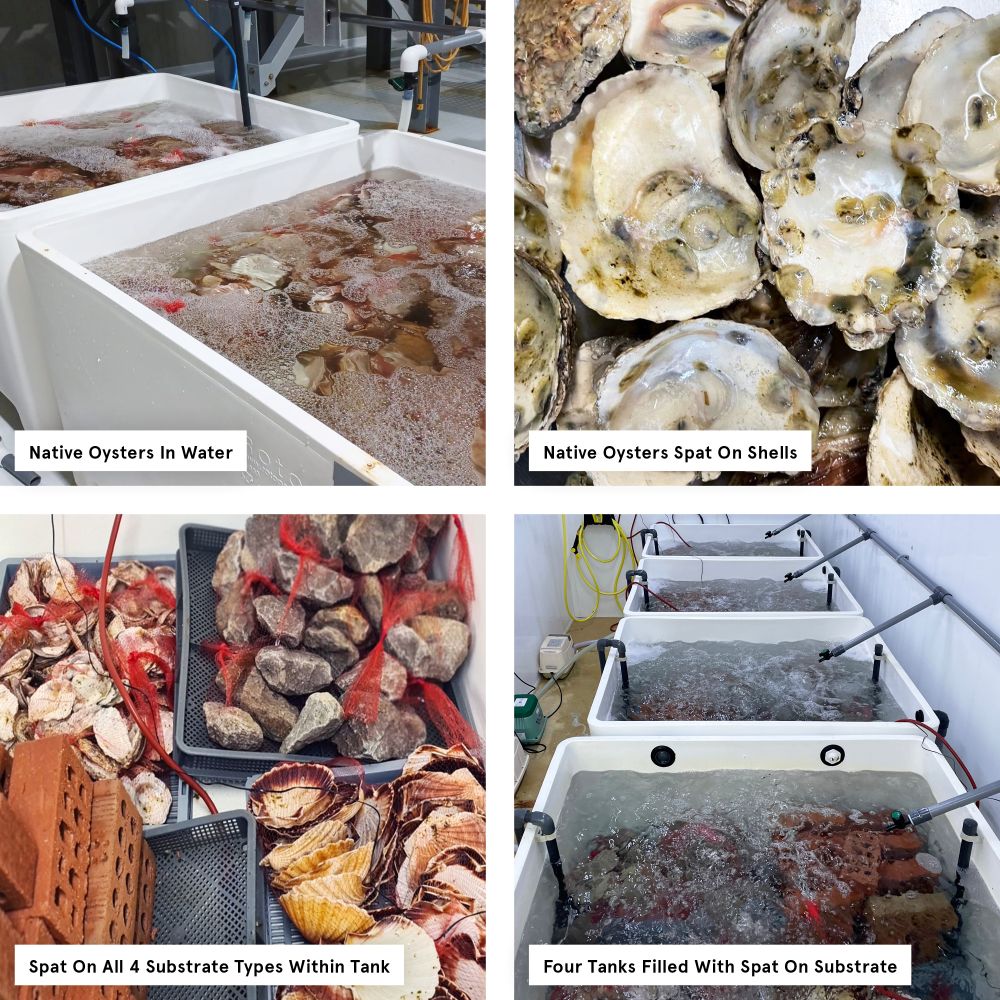
A feasibility program that proves large-scale native oyster reef restoration can be established inside offshore wind farms across European waters has just been completed.
Over the six months of the feasibility testing, RWE and The Oyster Restoration Company jointly developed: substrate testing and ecological assessments, reef-base engineering solutions and the evaluation of deployment logistics, the analysis of the permitting and regulatory pathways and the blueprint for a monitoring and verification frameworks.

Dr Nik Sachlikidis, CEO of The Oyster Restoration Company said:
“The question is no longer if we can restore oysters at scale offshore.
“Together with RWE, we’ve combined hatchery capacity, engineering know-how, and science to deliver a pathway for measurable biodiversity gain. Practically, affordably, and now.”
Flat oysters are an important species because they can create reefs that provide food and breeding grounds for many other species. Due to the harmful impacts of factors such as overfishing, pollution, and parasites, only 5% of the pre-industrial population remains across the North Sea.
This project is a research initiative carried out at TORC’s hatchery in Scotland with the aim to evaluate different natural and artificial hard substrates, such as shells or bricks, and to decide which could deployed to maximize the creation of new reefs.
Dr Umberto Binetti, Marine Biodiversity Expert at RWE, added:
“By acting early, RWE is increasing its preparedness for contributing to benefit marine biodiversity in relation to offshore wind projects. What we have accomplished with The Oyster Restoration Company sets the basis to speed up the deployment process, and provides a tool to facilitate the engagement with all the relevant stakeholders. “

The results from this project are expected to support Offshore Wind’s ambitions to contribute to the restoration of important marine habitats across wide areas of the North Sea in the UK and beyond.

Leave a Reply