
Children whose parents or carers work in the Armed Forces are not receiving the support they need in education, especially around assessments and exams, according to a new report.

Charity Forces Children Scotland has produced a report for the Children and Young People’s Commissioner Scotland which explores the experiences and impact being from a Forces family can have on a child, and what supports need to be in place to ensure their rights to education are met.
The publication – Camouflaged in the education system: The experiences of children and young people from Armed Forces families – follows Commissioner Nicola Killean’s wide-ranging report into education last year.
The Commissioner warned that the whole education system needs changed to make it work for all children. She made a series of recommendations to the Scottish Government and education authorities, including to fully implement the Hayward Review of exams and qualifications.
Erin, a young person who worked on the report, said:
“In primary and secondary schools, it is often hard to get the additional support from teachers and officials within education whose job is to provide that very support.”
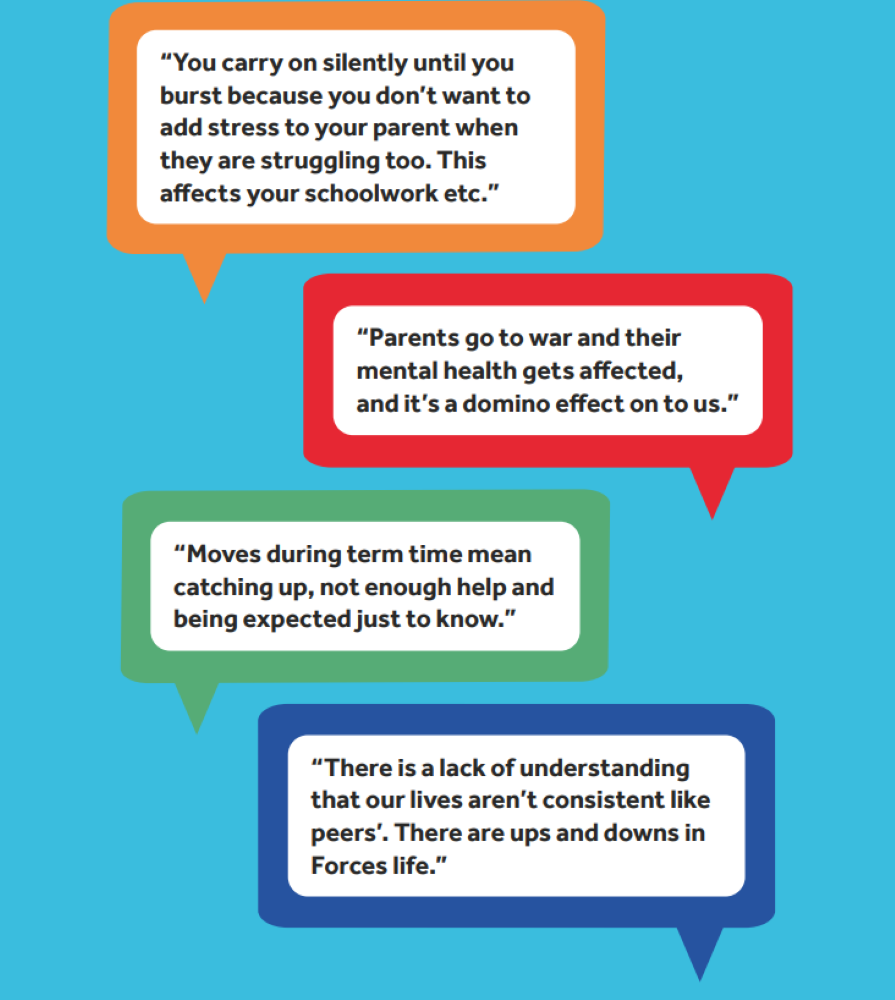
There are around 13,000 Forces children in Scotland and the report includes their views which were shared in a series of workshops. The children who helped inform the report said they felt high-pressure exams did not take into account Forces life – impacts like changing schools, missing out on school work, or anxiety about parents’ safety affecting concentration when sitting exams.
Some of the new report’s recommendations mirror what the Commissioner has long called for, such as children being meaningfully involved in decisions that affect them, reform of exams and assessments, and a greater understanding of children’s life experiences.
But it also focused on issues specific to Forces children, like multiple school changes and worry about parents being deployed to warzones, an issue in sharp focus with the conflict in the Middle East.
Steven Sweeney, Forces Children Scotland’s Chief Executive Officer, said:
“At a time when global conflict dominates the news, many children from Armed Forces families are quietly carrying worries that most of their classmates never have to think about.
“Over the past couple weeks, we’ve heard from children and young people about feelings of confusion and anxiety, and the need for sensitivity and understanding from the adults around them. When faced with the realities of service life in a time of global conflict, the feeling of unease can follow them into the classroom.
“The children who contributed to this report spoke honestly about the impact of moving schools, starting over again and again, and trying to keep up with learning while coping with separation and uncertainty at home. Their message is not that they want special treatment. What they are asking for is understanding, stability and support that moves with them. Schools have a vital role to play in providing that sense of security.
“By listening to their voices and acting on what they have told us, we can make sure Forces children are not camouflaged in the education system but recognised, supported and able to thrive.”

Nicola Killean, Children and Young People’s Commissioner Scotland, said:
“Every child has the right to an education that develops their personality, talents, and abilities to their full potential but this report highlights that isn’t always happening for Forces children.
“Their unique experience needs to be understood. They deal with frequent moves, loss, starting again and trying to fit in. They may cover the same work, or not do sections of the curriculum, making exams and assessments particularly stressful for them.
“We know education staff are under pressure, with a lack of resources limiting the support they can provide to children. That must be addressed.
“Scotland also can’t continue with an exams system that doesn’t meet children’s needs or recognise their strengths. There is widespread agreement that the recommendations of the Hayward Review of qualifications need to be done, with the right resourcing to support it. The Scottish Government should show leadership by committing to its full implementation. I know that some local authorities are doing excellent work in piloting different approaches to recognising children’s wider achievements, with less emphasis on exams. This approach shouldn’t be dependent on their postcode.
“Education reform will help not only Forces children, but all children.”


Leave a Reply