
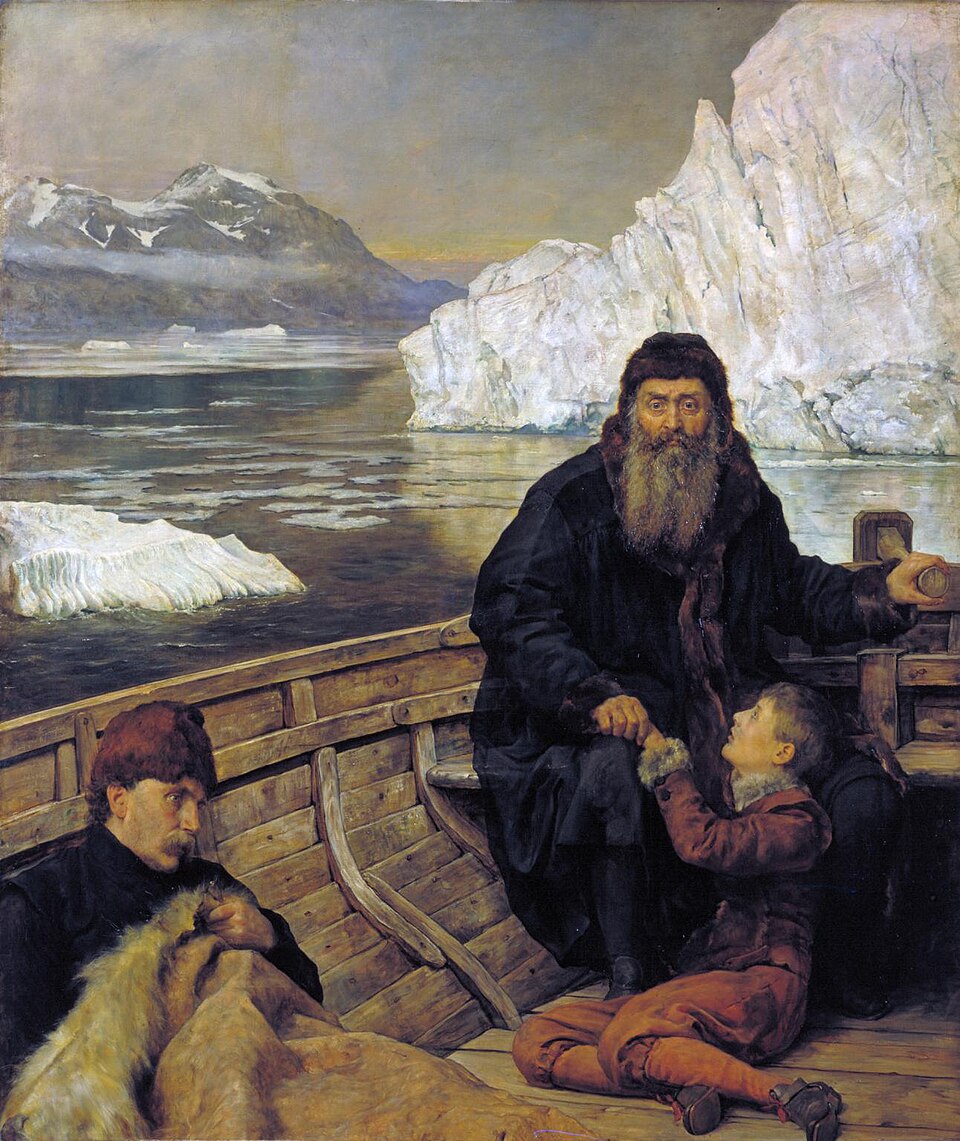
On 2 August 1610 English explorer Henry Hudson entered the bay later named after him, the Hudson Bay.
It was the search for a Western route to the East Indies and China that encouraged the exploration of the very northern parts of North America.
Henry Hudson was on his fourth voyage to North America. He sailed around Greenland‘s west coast and into the bay (later called Hudson Bay by the explorers who followed him), mapping much of its eastern coast. His ship Discovery became trapped in the ice over the winter, and the crew survived onshore at the southern tip of James Bay.
In the spring, as the ice receded, Henry Hudson expressed a desire to continue exploring the uncharted region. However, on 22 June 1611, the crew mutinied. They left Hudson, his son and six others adrift in a small boat. No trace was ever found of Hudson and the other men stranded with him.

In May 1612, Sir Thomas Button sailed from England with two ships to look for Henry Hudson, and to continue the search for the Northwest Passage to Asia.
The Eastern Cree name for Hudson and James Bay is Wînipekw (southern dialect) or Wînipâkw (northern dialect), meaning muddy or brackish water.





Leave a Reply