
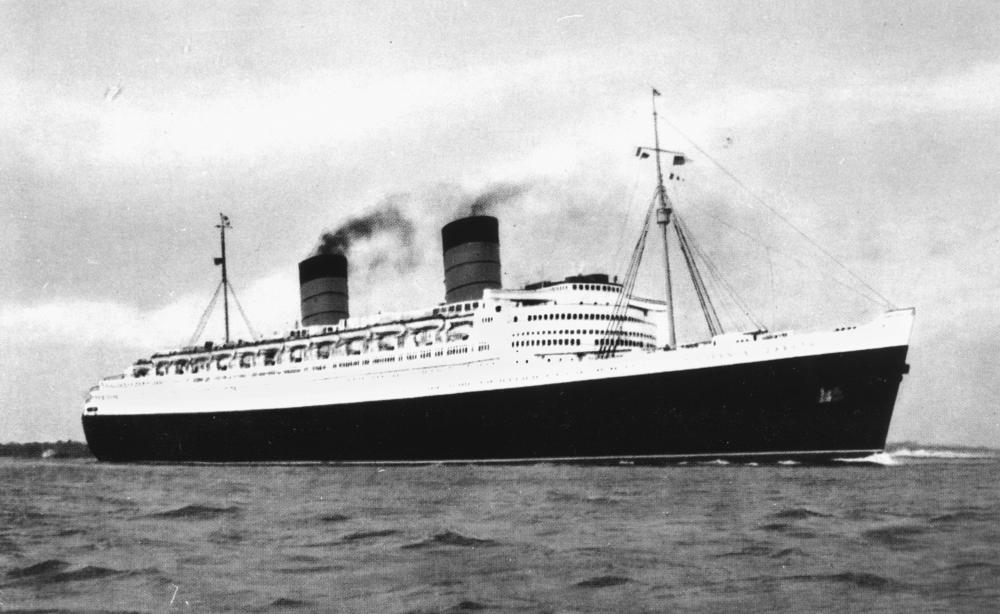
On 27 September 1938, Cunard’s Ocean Liner, Queen Elizabeth was launched at Clydebank, Scotland.
Built by John Brown and Company as Hull 552, she was named in honour of Queen Elizabeth, the wife of King George VI. Her design was an improvement of that of Queen Mary, (her sister liner) resulting in a vessel 12 feet (3.7m) longer and several thousand tons greater GRT, making her the largest passenger liner ever built for a record 56 years.

Queen Elizabeth sat at the fitting-out dock at the shipyard painted in Cunard colours until 2 November 1939, when the Ministry of Shipping issued special licences to declare her seaworthy. Months later Cunard received instructions from the government, ordering the ship to leave Clydeside as soon as possible and “to keep away from the British Isles as long as the order was in force”.

Queen ELizabeth entered service in March 1940 as a troopship in the Second World War, and did not make her first commercial voyage as an ocean liner until October 1946.
Fate: Caught fire and capsized, wreck partially dismantled between 1974–75, rest buried under land reclamation.


.jpg)
.jpg)
Leave a Reply