
By Fiona Grahame
This article first appeared in the May edition of iScot magazine.
“Music is a higher revelation than all wisdom and philosophy” (Beethoven)

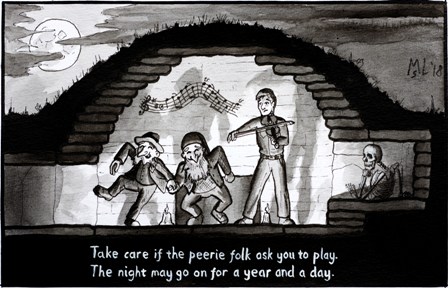
Over the next few months Orkney will abound with a cacophony of music festivals. The internationally renowned St Magnus Festival with its mixture of classical works through to the more experimental. The Orkney Folk Festival also of global significance sells out most performances before the tickets even go on sale to the general public. Orkney also hosts festivals for Jazz, Blues and Rock.
The success of the islands’ music festivals is no accident. From a very early age children are encouraged to take up an instrument. This can be done through the school system with highly skilled teachers and the provision of a free instrument for the selected student’s primary education. The schools provide opportunities to play in small groups and in orchestras bringing together students across the islands for a few days culminating in a packed out concert.

Traditional music is not forgotten and all ages come together through the Traditional Music Project founded in 1988 to support fiddle and accordion playing. Orkney has pipe bands: Kirkwall City, Stromness RBL and Rendall. Singing is catered for too whether you want to sing as part of a choir or as an individual.

The standard of performance in Orkney is exceptional for such a small place. Musical theatre draws in the crowds and although these are amateur productions they are professional in their execution.
The result is that for its size Orkney has supported an astounding number of musicians with an international recognition for excellence. Folk musicians like Ivan Drever, young bands like Fara and Master of the Queens Music the late Sir Peter Maxwell Davis.
In Orkney the importance of music is seen as an integral part of the community and of education. Across Scotland Local Authorities are slashing the music budgets in Schools and of instrumental tuition. In some places only those children who can afford to pay will be able to play.
The language of music and rhythm: learning an instrument, reading notation, appreciating composition contributes to a person’s well being absorbing them into the creative process. When you play a musical instrument motor systems in the brain activate to control the fine and gross movements needed to produce a sound. Reading music employs the brain in deciphering the notation and converting it into physical movements. Responding to both the process and the music it creates produces an emotional reaction. To think that learning and playing a musical instrument is not an essential part of an educational programme reveals a stunted understanding of how we learn.


Einstein played violin, Edison the piano and Feynman famously the bongos. The mathematics and physics of music is a fascinating study in itself.
Perhaps most importantly of all is the satisfaction a person gets from playing an instrument or singing. The sheer joy of producing sound and rhythm.
The education decision makers who place importance on standardised tests in maths and language at the expense of other areas of the curriculum fail to understand the learning process. The one size fits all compartment that children in our inclusive schools are to squeeze into is counter to the founding principles of the Curriculum for Excellence where all areas of the curriculum should be equally valued.
Orkney has some of the highest performing schools in Scotland with 91% of school leavers having positive destinations. 57% will go onto higher and further education with the rest into employment. Being involved in music has not held Orkney students back and indeed some will go on to have successful careers in the industry. Involvement in music is why Orkney students are successful in whatever path they choose to follow.

“Music, when soft voices die, /Vibrates in the memory” (Shelley)
Music Festivals in Orkney 2018

Jazz: 20th -22nd April
Folk: 24th – 27th May
St Magnus International: 22nd – 27th June
Rock: 31st August – 3rd September
Blues: 28th – 30th September


Leave a Reply to Eamonn KeyesCancel reply