
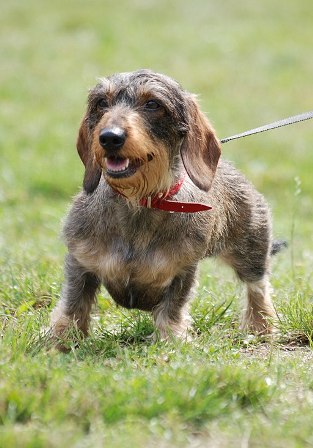

People keen to have a dachshund as a pet dog after seeing one take the top spot at Crufts on 8th of March, are being advised of the serious health problems this breed can suffer from.
This year’s Crufts winner, Maisie, a wire haired dachshund, featured alongside a Best in Show line-up that also included a Miniature Smooth Haired dachshund and a Basset Hound, which is another breed bred to have a long, low body and short, stubby legs.
Their extreme body shape makes all six varieties of dachshunds– Standard Long-, Smooth-, and Wire-haired, and their miniature versions– at risk of serious spinal and neurological issues which usually require surgery to fix. These problems may not be immediately obvious, but often cause them life-long discomfort and may need costly treatment.
Intervertebral disc disease (IVDD) tops the list of common health issues, which is a condition which causes the dog to be unable to walk and can seriously compromise the dog’s quality of life. Research shows that the risk of IVDD in dachshunds is 10-12 times higher than other dog breeds, with at least one-fifth of all dachshunds showing clinical signs in their life. The median age of onset of disease is between 5-7 years, with the Standard and Miniature Smooth Haired and the Miniature Wire Haired having the highest prevalence of this disease.
These health issues are a specific concern as recent figures show dachshunds may be on their way to pip their flat-faced cousins to the top spot as the UK’s most fashionable breed, helped along by their Instagram, advertising, and celebrity appeal among the likes of Adele and Declan Donnelly.
Their Miniature cousins lead this demand, with registrations for the Miniature Smooth Haired dachshund showing an almost 200% jump in the past decade. This rise comes at a time when breed registrations for flat-faced dogs such as Pugs and French Bulldogs have fallen for the first time in ten years following sustained campaigns by veterinary and animal welfare organisations to raise awareness about their health issues.
While these are official figures, a 2018 BVA survey of vets also showed that the high demand for these tiny dogs has also made them among the list of top breeds that vets suspect of being illegally imported into the country.
BVA’s policy on extreme conformation can be viewed at: https://www.bva.co.uk/take-action/our-policies/extreme-conformation/





Leave a Reply