
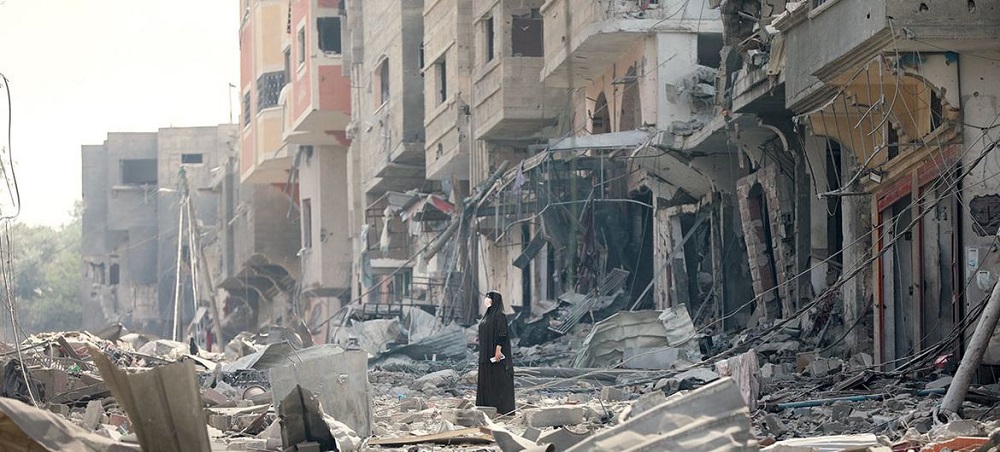
Campaigners seeking an immediate ending to the bombardment and a long term peaceful resolution in Gaza will again be meeting in a vigil on the steps of St Magnus Cathedral, Saturday 25th November from 1 to 2pm.
To date, over 1.7 million people in Gaza are internally displaced.

With hopes for a truce UN relief agencies have been preparing to go into Gaza continued to build up stocks of desperately needed aid despite delays in the implementation of a temporary halt in fighting and the release of hostages held by Hamas militants. A deal on Wednesday to release hostages has been welcomed by UN chief António Guterres, who added that the UN stood ready to “maximize” the positive humanitarian impact of the agreement.
UN World Food Programme (WFP) chief Cindy McCain said that the agency was “rapidly mobilizing to scale up assistance inside Gaza” once safe access is granted.
Latest UN humanitarian reports indicated that wheat flour is no longer available in markets in the north of Gaza and that no bakeries are functioning owing to a lack of fuel, water, flour and structural damage.
75,000 litres of fuel entered Gaza from Egypt on Wednesday following an Israeli decision last week to allow the “daily entry of small amounts of fuel for essential humanitarian operations”, according to UN humanitarian affairs coordination office OCHA. This falls well short of the 200,000 litres of fuel per day which are needed.
The fuel is being distributed by the UN agency for Palestine refugees, UNRWA, to support food distribution and the operation of generators at hospitals, water and sanitation facilities, shelters, and other critical services in the south of the Strip, as access to the north has been cut off by Israeli military operations.
On Wednesday 190 wounded and sick people, their companions and medical workers from Al-Shifa hospital in Gaza City were evacuated. Evacuated dialysis patients were transferred to Abu Youssef An Najjar Hospital in Rafah, Gaza, while other patients were transported to the Strip’s European hospital in Khan Younis. An estimated 250 patients and staff are believed to be at Al-Shifa, which is no longer operational.
WHO has documented 178 attacks on healthcare in the Gaza since 7 October and out of the enclave’s 36 hospitals 28 are not functional anymore.
The eight remaining hospitals, all in the south, are “overwhelmed”, Dr. Peeperkorn told journalists, and all efforts must be made to keep them functional and expand their bed capacity.
The enclave had some 3,500 hospital beds prior to the current escalation and that number is now down to less than 1,400.
Fiona Grahame


Leave a Reply