
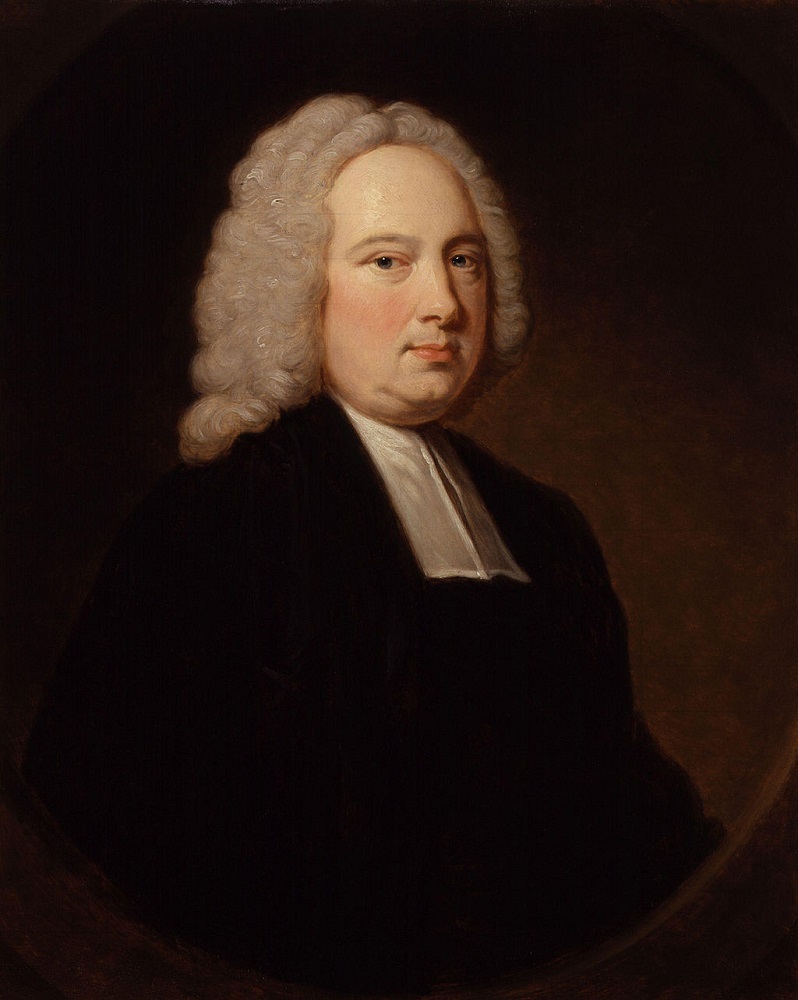
On the 31st of December 1744 English astronomer James Bradley announced the discovery of Earth’s nutation motion or wobble.

Bradley’s star measurements in 1727–32 revealed what he called the “annual change of declination in some of the fixed stars,” which could not be accounted for by aberration. He concluded that this was caused by the slight and uneven nodding motion of the Earth’s axis (nutation) that resulted from the changing direction of the gravitational pull of the Moon. But he withheld this announcement until he had made careful confirmatory observations during one complete set of revolutions of the Moon in its orbit. For this achievement the Royal Society of London awarded him the Copley Medal in 1748. Britannica
James Bradley FRS (1692–1762) was an English astronomer and priest who served as the third Astronomer Royal from 1742. He is best known for two fundamental discoveries in astronomy, the aberration of light (1725–1728), and the nutation of the Earth’s axis (1728–1748).
These two discoveries were called “the most brilliant and useful of the century” by Jean Baptiste Joseph Delambre, historian of astronomy, mathematical astronomer and director of the Paris Observatory. In his History of astronomy in the 18th century (1821), Delambre stated:
“It is to these two discoveries by Bradley that we owe the exactness of modern astronomy. This double service assures to their discoverer the most distinguished place (after Hipparchus and Kepler) above the greatest astronomers of all ages and all countries.”
His discovery of the aberration of starlight, an apparent slight change in the positions of stars caused by the yearly motion of the Earth provided the first direct evidence for the revolution of the Earth around the Sun.




Leave a Reply