
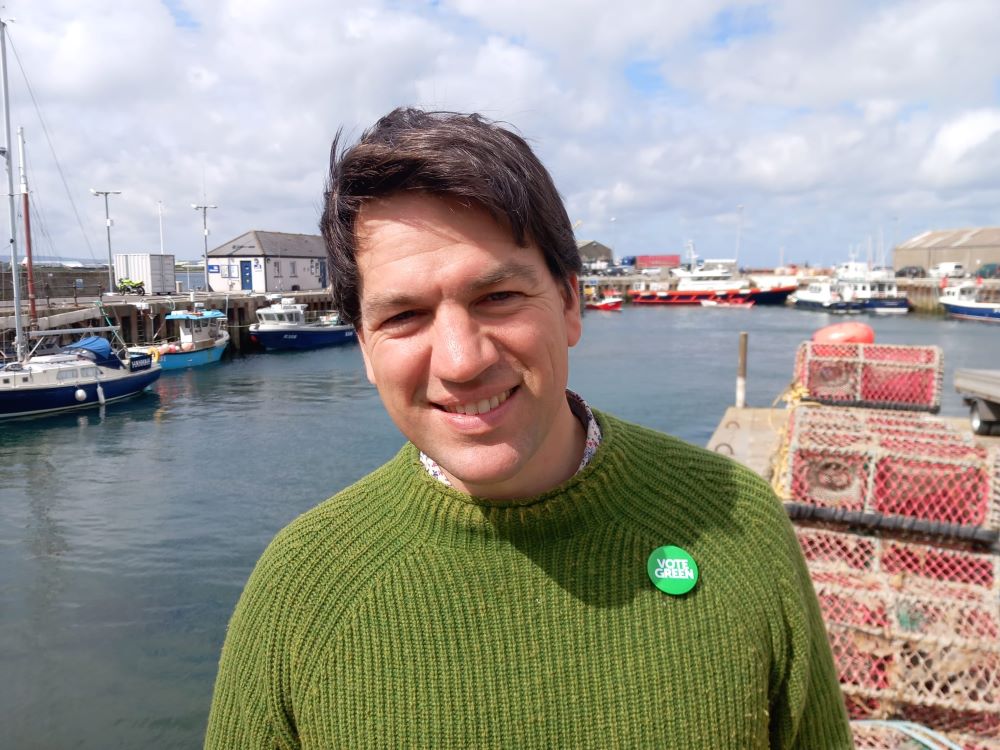

Dr Alex Armitage, Scottish Green Party Candidate for Orkney and Shetland, asks “how can we stop drugs from wreaking havoc in our communities?” Taking drugs is something that humans have done since pre-history. Yet using drugs can be a risky thing to do, and throughout history people have come to harm because of their drug use. In 1971, the Misuse of Drugs Act was passed by the UK Parliament; an attempt to reduce drug related harm. The logic was that if drug use was banned, less people would use drugs, and therefore less people would come to harm.
That was the theory, but what has happened in practice? In fact, the opposite happened – and here’s how. The prohibition of drugs has handed the market in illicit drugs over to criminal, profiteering, gangs. Highly addictive substances, vulnerable people, and the profit motive are a dangerous mixture and the effect on human health and wellbeing has been catastrophic. In the 1960s, just a few thousand people in Britain used drugs problematically, now that figure is in the hundreds of thousands. Each of these folk is at high risk of severe mental and physical health problems. Our NHS, Police, Social Services, and Criminal Justice services spend billions each year trying to mitigate the harm caused by drug use; catastrophically, over a thousand people in Scotland die of drug overdose each year. In the midst of this harm, organised criminals in the UK profit in an illicit market worth £10bn a year.
The time has come to reconsider the Misuse of Drugs Act.
Dr Armitage notes
“I am a children’s doctor. If I have a sick child in front of me, it’s my duty to provide them with treatment to make them better. If, unexpectedly, my chosen treatment has the opposite effect, leading to a deterioration in my patient’s condition, I must then stop, reconsider, and prescribe a different treatment. Continuing with the original treatment, in the light of clear evidence that it is making things worse, would be grossly negligent.
“The same principle should apply with drug policy – but successive governments have been grossly negligent for decades. I have a plan to significantly reduce drug related harm – and not just harm related to the use of drugs – but the harm connected to the abuse, violence, corruption and destruction associated with the drug trade too.”
Dr Armitage has a three step proposal to stop drugs wreaking havoc.
Step one: Protect people who use drugs. Problematic drug use is a health issue and not a criminal one. Vulnerable people who use drugs need health and social care professionals, not the criminal justice system. We need to decriminalise drugs.
Step two: Reduce the risk of drug administration. Supply clean needles, alcohol swabs, and syringes. Open safe consumption rooms where people can go and use drugs in a safe environment – and perhaps see a doctor, support worker, or housing officer at the same time. Roll out naloxone – the heroin antidote – to police and fire crews, in first aid kits and with every public defibrillator.
Step three: End prohibition. It didn’t work with alcohol in 1920s America and it’s not working in Britain. We need to remove the profit motive from supply of drugs. We can put organised criminals out of business by creating a legalised, regulated system of drug supply. Drugs can be manufactured in safe doses and made available from licenced premises at fixed prices. The riskiest drugs could be supplied only on prescription – as is the case currently with Heroin Assisted Treatment in Glasgow. A legal, regulated market can be controlled by officials charged with a duty to safeguard public health. Marketing of drugs should be completely banned, including of currently legal drugs such as nicotine vapes and alcohol.
The moral panic that gushes from the right-wing gutter press as soon as “legalise drugs” is mentioned, is entirely predictable. However, a sensible drugs policy that reduces harm for the user and removes criminal profiteers from the drugs market is an obvious common-sense step to take. The challenges of the 21st Century require us to think critically, follow evidence and stand up against prejudice and do the right thing for people and our planet. That is mine – and the Greens’ approach to politics.
A General Election has been called for 4 July 2024. Register to vote by 11:59pm on 18 June 2024. Register to Vote
At this UK General Election, 4th July, you will require Voter ID if you are voting in person. Find out more and apply for free voter ID now – Voter ID
Candidates in Orkney and Shetland


Leave a Reply