
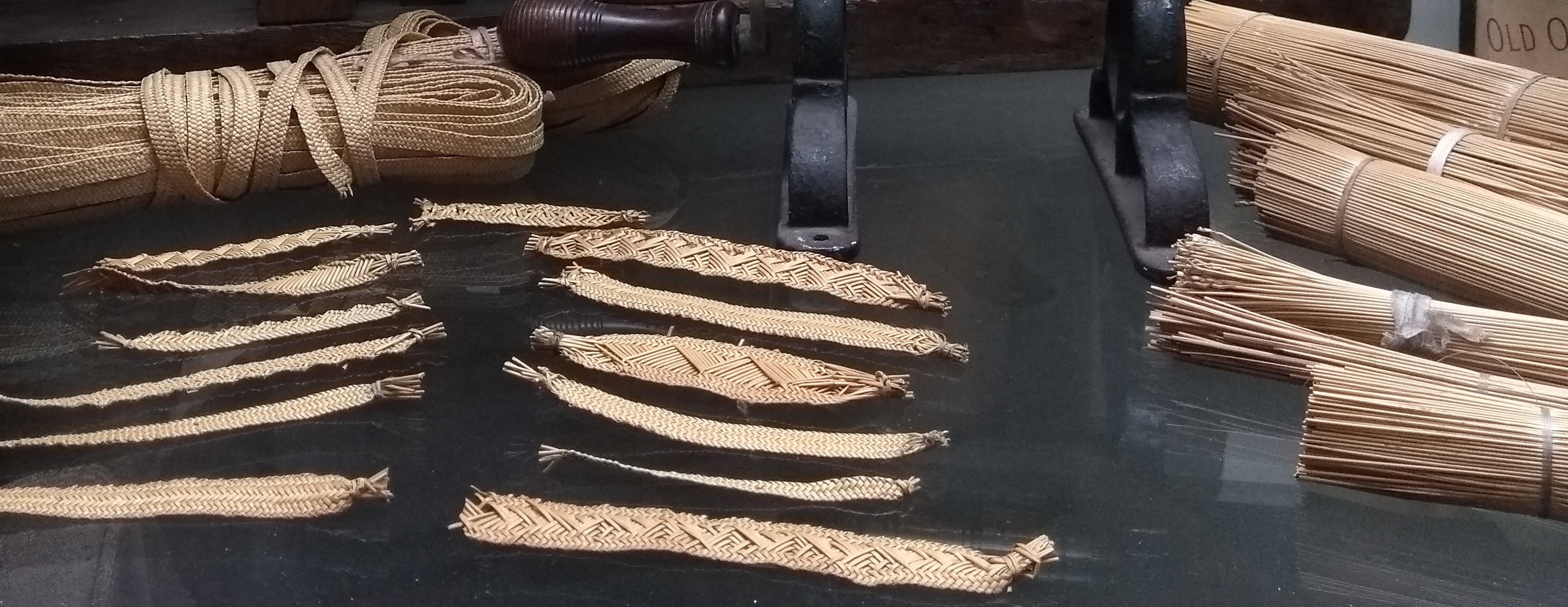
From the archives of The Orkney Herald, 9th August 1949, written by P. Sutherland Graeme.
In April 1804, Admiral Graeme shipped from Leith three hogsheads of Dutch Linseed for distribution amongst his Holm tenants. The price he had to pay was £6 per Hogshead. [ A Hogshead was approximately 56 – 61 gallons (227 litres) and was a measurement used in barrels of products, in this case Linseed] He hoped that this could be cured, though he had been told that after several bad seasons, flax growing was not so popular as formerly. In a letter to his factor he wrote:
“We have had various statements about the situation in Orkney. Some represent the poor in great distress, particularly in Kirkwall and the North Isles. For which purpose a Petition has been signed by us to the Lord Advocate to see if any public aid could be got, the same as Shetland has. But I rather suspect they had better not trust to it. I have a letter from our Minister; he says nothing about the poor. I have seen Laughton who says the bere crop was tolerable in Holm, but the oats very bad. If you want meal for the kelpers, I suppose you can purchase it in Kirkwall as cheap as I can send it down. And if the poor are in very great distress and you think it absolutely necessary to support them, you will let me know what you think I should do. Perhaps it might be necessary to give some meal to be distributed by you or the minister.”

Replying 4 months later, Petrie said that he had distributed the Linseed: tho’ it had not answered well for some years, this year it promises exceedingly well and if got safely to maturity, will be a great help to tenants. As to the state of the poor, you will know that the Government, upon your Petition, has sent supplies. Mr Smith has got 80 bolls to divide amongst the poor of the parish of Holm, which indeed they stood much in need of as many had spent their all in buying the two last years. I know not if more will fall to his share, but this will be a great relief and supply the necessary poor until a new crop is got in, over all Orkney promises better than the last two years.
The promise of a good crop in 1804 was hardly fulfilled.
Petrie wrote early in October: ” We had good harvest weather until towards the end, when we had a bad day of wind and some hail, which did much hurt to those who had not cut down. In Holm they had about one days cutting which was very much shallow. But upon the whole I think it a tolerable good crop.”
In December 1804, Admiral Graeme heard that David Balfour, younger brother of John Balfour of Trenaby, at one time MP for Orkney, was proposing to sell by public roup a small piece of land in the township of Aikerbister in Holm at the upset price of £50. He wrote to Petrie asking him to attend the sale and to give a good deal more than it is worth, lest it should get in the hands of some troublesome fellow.
The factor attended the sale. The highest price offered was £35 and afterwards Petrie offered £40 which was accepted.
“This piece of land” he wrote, “is exactly the same quantity for which he paid £26 to William Craigie a few years ago and was dear enough, but as this was the only remainder in that town which did not belong to you, it is much better to give above the value than to fall into the hand of another who might give you trouble about it. “
It would be interesting to be able to identify these two small bits of land. The township of Aikerbister comprised the area in which Breck now stands.
Another property in Holm which already figured prominently in these pages, figures in the correspondence in 1805.
“I hear” wrote Petrie, “that some time soon Mr Balfour is also to sell a spot of land in the Hill of Holm called Hunclet, which the late Colonel Balfour paid £24 for twenty years ago. I do not reckon it worth about £40 or £50 at highest as it pays so high to the superior. I am told they will expect it to sell for £100. What it may give at a public sale is quite uncertain, but it would be much for the quiet of the parish that it also fell into your hands, as it lies in the middle of the Public Hill. “
The Admiral answered: “If Hunclet is sold it will be more necessary to get it than the other and you had better follow the same method. I wish you may get it for £50.” Though there is no future mention of Hunclet, it is known that the Admiral, in fact, purchased it, though the figure is unascertainable.
One other farm comes into the picture during 1805. Apparently John Garrioch, the Admiral’s butler, had written to Petrie asking if he could find a little house in Holm for his father to live in. Garrioch suggested the possibility of Roy being available, but the factor replied that, “Rowland, the present possessor, was recommended and brought from Kirkwall by Admiral Graeme’s family to accommodate him in the weaving line. Petrie also wrote to the Admiral about Garrioch’s request:
“I thought it rather hard to turn Rowland adrift when his services were no longer needed without any just reason and as I were not in the practice of doing such things, I desired John to speak to you about it if he thought proper.”
A letter from Petrie in March 1805 makes mention of the first time of Orkney’s new industry.
“I daresay it will be very difficult this year to set hands to burn the Kelp through Orkney as there is so great a demand for men to Davis Straits and Greenland, a great number of ships giving high wages, and also there is a great strawplaiting going on in Kirkwall and so great encouragement that all the girls are flocking to it. The world is always getting worse.”

The Admiral answered that he had heard that the straw manufactory was being carried to a ridiculous extent adding that it is a thing that cannot last. His prognostication was not correct, for in many places in Orkney it lasted 35 to 40 years longer.
According to the Second Statistical Account ( 1839 – 1841) there were then two agents for the industry, one in Kirkwall and one in Stromness. By 1839 Strawplaiting was dying out in Stromness owing to the caprice of the fashion, but work on a small scale was still being carried on in some private houses. In Sandwick almost all the younger women were plaiting in 1839 and some business was still being done in Firth, Stenness, Walls, and Flotta. In Westray plaiting had practically died out by 1841. In Birsay and Harray, where the industry was only started in 1807, 450 women were employed, earning 1s 6d to 2s weekly, the plait being sent to Liverpool and Manchester. The Statistical Account records that in the whole county of Orkney, some 2000 girls were employed in plaiting ” for ladies bonnets”. Holm is not mentioned as interested in the business, even in the early days, though no doubt a number of the 1000 women stated by Petrie to be employed in plaiting elsewhere, came from the parish.

The Strawplaiters of Orkney by Fiona Grahame is available from all good booksellers priced £9.99.

Leave a Reply