
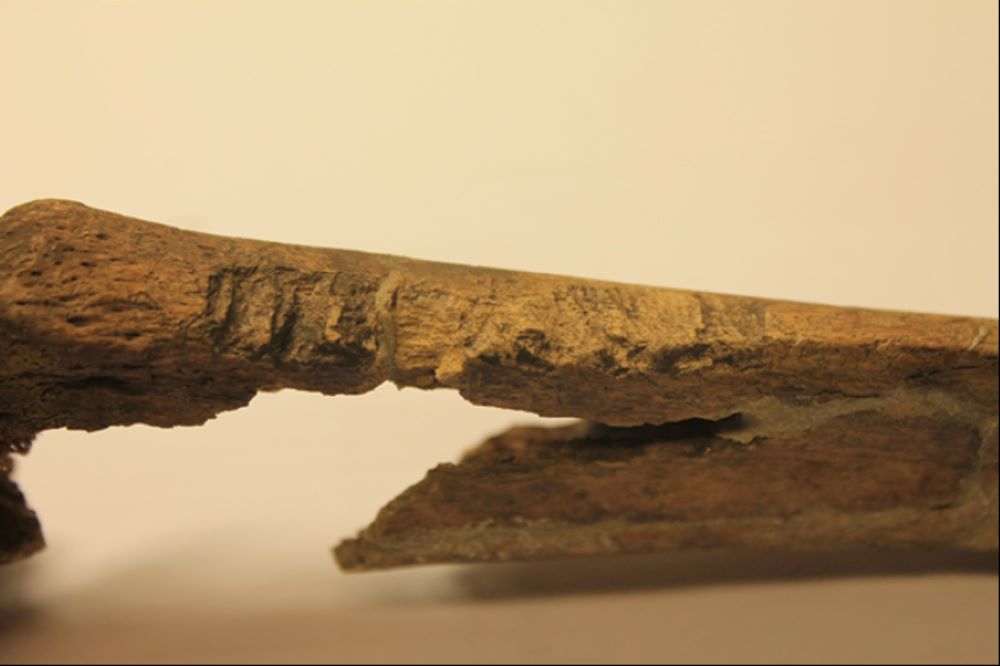
Researchers analysed skeletal remains from Viking Age Norway and Denmark and found that 33% of the Norwegian skeletons showed healed injuries, indicating that violent encounters weren’t uncommon.

In a new study by researchers at the University of South Florida it suggests that society in Viking Age Norway was more violent than that in Denmark during the same period.
University of South Florida sociologist David Jacobson is part of an interdisciplinary team that combined archaeology and sociology along with the study of skeletons and of runestones to reveal key differences in how violence, social hierarchies and authority influenced these dynamics in the two regions. The other scholars on the team are from Norway and Germany.
David Jacobson explained:
“The interdisciplinary approach taken in this study shows us how social and political patterns can be revealed, even when there are a paucity of written sources.”
Researchers analyzed skeletal remains from Viking Age Norway and Denmark and found that 33% of the Norwegian skeletons showed healed injuries, indicating that violent encounters weren’t uncommon. By comparison, 37% of the skeletons showed signs of lethal trauma, highlighting the frequent and often fatal use of weapons in Norway.

A notable feature in Norway was the presence of weapons, particularly swords, alongside skeletons in graves. The study identified more than 3,000 swords from the Late Iron Age and Viking periods in Norway, with just a few dozen in Denmark. These findings suggest weapons played a significant role in Norwegian Viking identity and social status – further emphasizing the culture’s connection to violence.
In Denmark, the findings show a different pattern. Danish society was more centralized, with clearer social hierarchies and stronger central authority. Violence was more organized and controlled, often linked to official executions rather than acts of personal violence.
For example, skeletal remains in Denmark showed fewer signs of weapon-related injuries but included evidence of executions such as decapitations. Skeletal evidence suggests about 6% of Viking Danes died violently, almost all from executions.
Denmark’s more structured society also had a smaller percentage of graves containing weapons than Norway’s. Instead, social order was maintained through political control, reflected in the construction of large earthworks and fortifications. These monumental structures, particularly during the reign of King Harald Bluetooth in the 10th century, demonstrated Denmark’s greater capacity for coordinated labour and more organised social hierarchies.
The study suggests that Denmark’s more rigid social structure meant that violence was less frequent but more systematically enforced through official channels, such as executions. Meanwhile, Norway’s more decentralized society experienced more peer-to-peer violence, as indicated by the higher levels of trauma found in skeletons.

“The findings of these patterns suggest that we are talking of distinct societies in the regions of Norway and Denmark,” Jacobson said.
“This is quite striking, as the assumption has been that socially Viking Scandanavia was largely a singular space.”
Note: Scholars from the University of Oslo, Deutscher Verband für Archäologie in Germany and the Norwegian University of Science and Technology also were part of the research team.
Click on this link to access, Violence as a lens to Viking societies: A comparison of Norway and Denmark, published in Journal of Anthropological Archaeology.
The Viking Age began in the year of 793 with an attack on the Lindisfarne monastery in England, which is the first known Viking raid. The event that marks the end of their glory days is the slaying of King Harald Hardrada at the Battle of Stamford Bridge in 1066. Visit Norway
The Orkney News has a series of articles relating the tales of the Norse Earls of Orkney. Use the search engine to find them.


Leave a Reply