
By Fiona Grahame
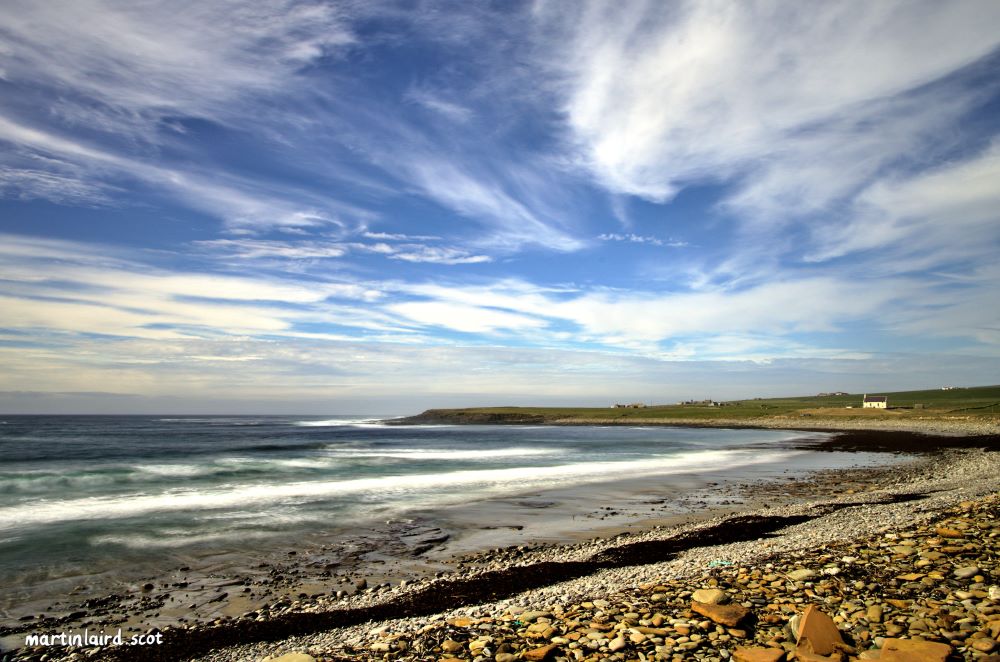
On Monday 15th March 1858, George Petrie, antiquarian and Sheriff Clerk of Orkney made his way with as much haste as was possible from his home in Kirkwall to the Bay of Skaill, Orkney. What made George Petrie rush out to Skaill was the finding a few days earlier on the 11th of March of a magnificent hoard of silver by a young boy, David Linklater.

David had accidentally come across the Viking hoard of silver down a rabbit hole. It had been deposited at the Bay of Skaill, Orkney, in the 10th century. By the time George Petrie got out to Sandwick in the West Mainland finds from the hoard were in the possession of at least four people. George Petrie explained that all finds were the property of the Crown and, with a small monetary compensation paid to the finders, he took possession of the silver. He worked quickly and by the 20th of March all the silver that could be accounted for was lodged with The Society of Antiquaries of Scotland in Edinburgh. Today the Skaill Hoard is in the National Museum of Scotland, also Edinburgh.
Although the Orkneyinga Saga would like us to think of the Vikings as fierce warriors, feared wherever they raided, that image is not anywhere like the full picture. The Norse who settled in the islands of Orkney were farmers. The lands of Orkney were fertile and the location of the islands meant they were also ideal for raiding and trading. The Vikings were expert at all three pursuits.
As traders, silver drove the economy of the Vikings. In 2014 the Galloway Hoard was discovered in the South of Scotland. It is the richest collection of rare and unique Viking age objects ever found in the British Isles. Most of the Galloway Hoard is silver bullion. The coinage is Anglo Saxon, Carolingian, and dirhams from the Islamic caliphates of Central Asia.
The Galloway Hoard also contains more gold than any other hoard found in Britain and Ireland. As well as the silver bullion and coins, the Hoard contains arm bands,brooches, and other items of jewellery. Its most impressive artefact is a silver gilt vessel filled to the brim with items which had been carefully wrapped and packed into the vessel. The textiles include silk.
Most of the Norse settlers in Orkney wore clothes made of linen and wool. The women were expert weavers of cloth. Wool was produced by local sheep and linen from flax grown on their farms. In the grave of a Viking woman in Sanday, The Scar Boat Burial, a carved whalebone plaque used as a linen smoother was found. It dates from c875 to 950 AD. Spindle whorls, loom weights, and other items connected to weaving have been found in large amounts. These were all common items in daily use.
The linen shirts worn by the richer men in Orkney were finely made and embroidered by the women. The most famous linen shirt is the one made by Frakokk and her sister Helga for her son Earl Paul. His brother Earl Harald was envious of the linen garment ‘as white as snow’ and stitched with gold thread. “Whose is this treasure?” he asked of the women. When they told him it was for his brother Paul he immediately took it. They tried everything they could to prevent him putting it on but he ignored their pleas that it would put his life at risk.
Once the beautiful linen shirt was on his back ‘his flesh started to quiver and he began to suffer terrible agony’. He died soon after. It is said that the shirt contained a poison or was in some way bewitched by the two women and was intended for Helga’s other son Earl Paul who they had planned to murder with it.

True or not, the story does show that the linen garments produced by the Norse women could be of the finest quality and decorated and embroidered with expensive threads.
Silk, however, was not a common item but was the result of the lucrative trade which Vikings carried on with the East. This textile was reserved for the wealthy, with bright blue, red and purple the preferred colours as these conveyed the image of great wealth.
In 1868, another accidental find, but this time in Denmark, uncovered the burial of a very wealthy Viking and amazingly the clothes the man was wearing had survived enough that they can be identified. The grave from Mammen revealed a man dressed in a costume decorated in purple and red silk. It was embroidered in red and blue.
The Vikings traded furs and people for the silks. Payment was also made to them in silver coinage which they could then melt down to make bars of silver bullion. This portable wealth could be tested by anyone receiving it and pieces cut off as required – called hack silver.
The hoards contain items of jewellery most likely the result of raids from Anglo Saxon England and Ireland. Most of the valuable loot from raids would have been melted down to make the items of jewellery which the Vikings, both men and women, loved to wear. They had a particular fondness for amber.


Brooches and pins had a practical purpose holding together clothing but they were also decorative. Cloaks would be fastened with shell shaped brooches and there are beautiful examples of these in many museums, including the one in Orkney.
Glass beads for necklaces, pendants, silver armbands, and twisted silken cords: just some of the beautiful decorative items which have been unearthed in Viking burials and hoards. Today the designs produced by many of Orkney’s skilled jewellery makers are influenced by the Medieval Viking craftsmen . The image of Vikings raping and pillaging wherever they put ashore might be the one most commonly held but it is their artistry and craftsmanship that has left a lasting legacy in Orkney.
Even in the logo of The Orkney News.

This is one in a series of articles written for the Orkney News and published in iScot Magazine featuring the Norse Earls of Orkney.

Leave a Reply