
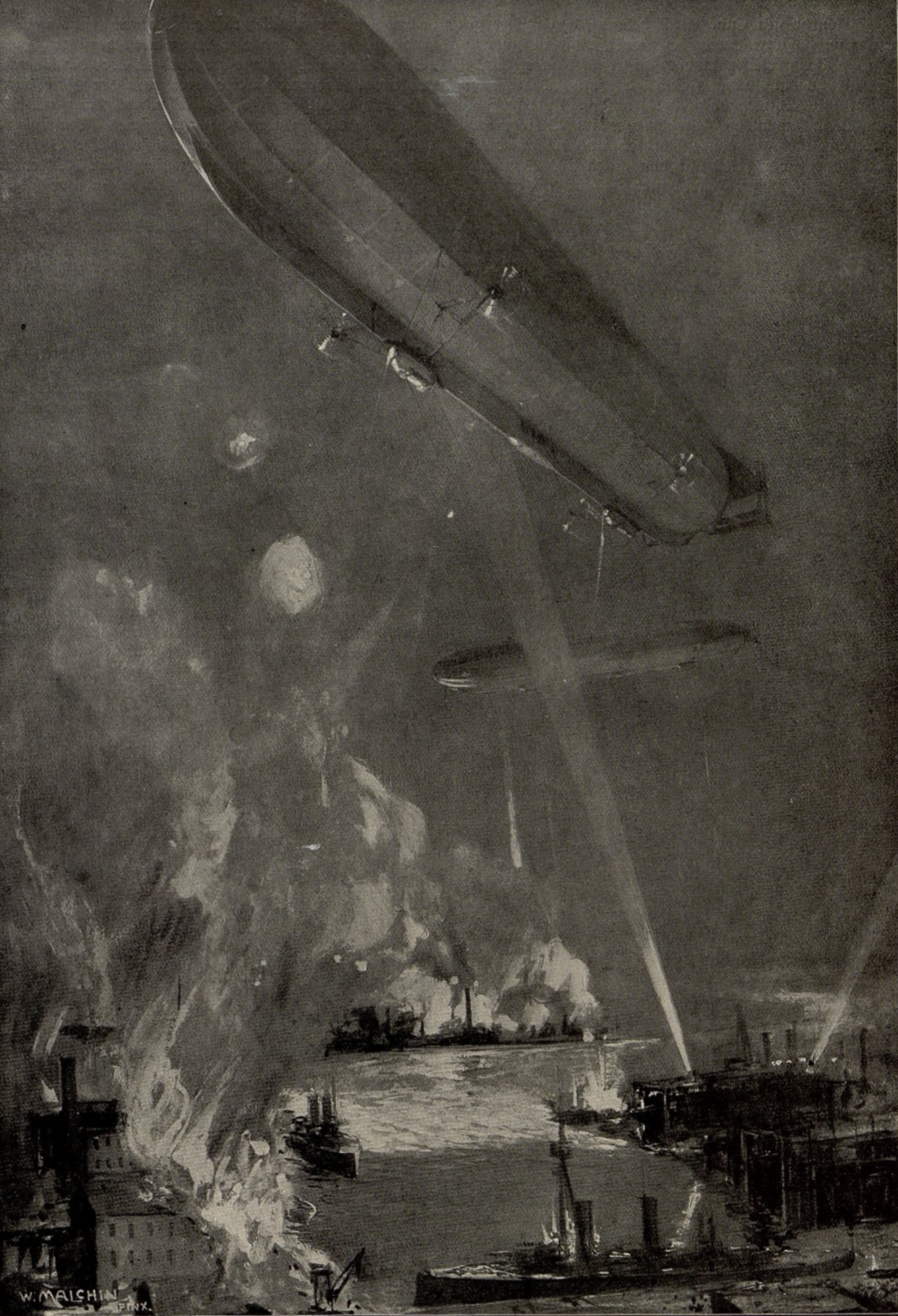
On 19th January 1915 the English coastal towns of Great Yarmouth, Sheringham, King’s Lynn were attacked from the skies when two German zeppelin airships dropped bombs on them and the surrounding Norfolk villages.
Four people were killed and sixteen injured in what was to become a real threat to East coast towns in England and Scotland during World War 1.

The 1914 – 18 war was waged on land, at sea, and in the air. The warnings had all been there. On 6th April 1914 the German Army Zeppelin Z VI bombed the Belgian city of Liège, killing nine civilians.
Britain’s towns were totally unprepared for attack from the air and later raids were to produce even more death and destruction.


Voices of the First World War: Zeppelins Over Britain
In 1916 Leith was attacked by a Zeppelin raid on the night of the 2nd/3rd April. One of the bombs landed on a bonded warehouse. The resultant fire could be seen for miles around. Two people in Leith were killed. Bombs also fell on Edinburgh where there were more fatalities.
On 14th of March 1899 Count Ferdinand von Zeppelin took out a US patent for a ‘navigable balloon’. It became known as a Zeppelin airship. Zeppelin had been working on the design for over 20 years. By 1910 the first commercial flights took place.

After the war restrictions were placed on the construction of large airships in Germany. These limitations were lifted in 1926 and large luxurious airships were built and plied the trans Atlantic route.
In 1937 the infamous disaster of the Hindenburg hastened the demise of the industry.



Leave a Reply