
On Sunday, 19th January 2025, a ceasefire in Gaza began. An exchange of people taken captive by both sides has started.
The UN World Food Programme (WFP) acted swiftly, with convoys entering Gaza early on Sunday from Egypt and via Ashdod, Israel.
The survivors of the Gaza Genocide are returning to the obliterated communities, determined to rebuild.
The ceasefire is a fragile one and whilst it holds it is vital that humanitarian aid gets in to the survivors who still have no shelter except flimsy tents in winter. The water systems are destroyed. Farms bombed into oblivion. Starvation and disease are ongoing threats.
As well as the appalling level of death inflicted on an innocent civilian population, Gaza’s ancient sites of international historical importance have also been damaged and in some cases destroyed. The Orkney News has featured several of these sites, including ancient manuscripts now lost to the world forever.
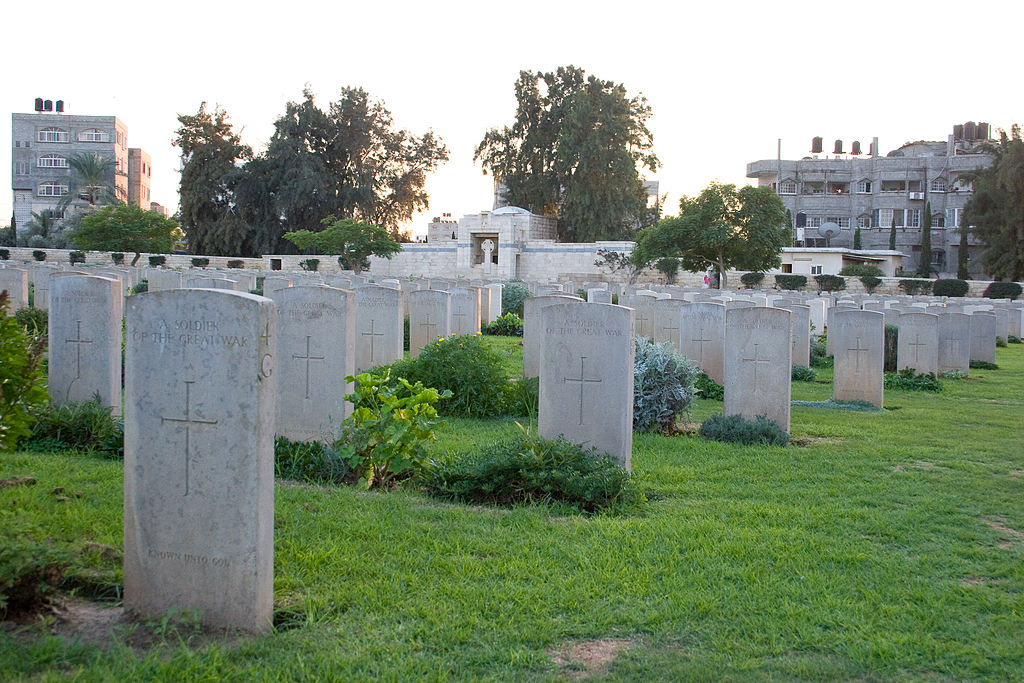
The Gaza War Cemetery

The Gaza War Cemetery once had an avenue of trees which led to this place of remembrance where the graves of 3,217 men of the First World War, 781 of them unidentified, lie buried. Of the British Soldiers, the great majority belong to the 52nd (Lowland), the 53rd (Welsh), the 54th (East Anglian) and the 74th (Yeomanry) Divisions. The Indian section of this cemetery were originally commemorated by a nameless memorial with their names added to a cemetery register. In 2000, their names were added to the memorial.
There are 210 Second World War burials. The site also contains 30 post war burials and 234 war graves of other nationalities. Both cemeteries have suffered damage, but the extent is currently unknown.
The Commonwealth War Graves Commission evacuated its team and their immediate families to Egypt in May 2024. The team has almost 100 years of dedicated service to the Commission.
Like all CWGC cemeteries the site was kept in immaculate and respectful condition by the team in Gaza until they were forced to flee to Egypt. Generations of one family had tended the graves.
The Commonwealth War Graves Commission has produced an excellent series of short films, Silent Cities, about the work they do around the world and those that tend the graves of the fallen.
In this episode, CWGC Director General, Claire Horton CBE, talks to the Head Gardener in Gaza, Ibrahim Jaradah. Ibrahim’s family have been tending to the World War graves in Gaza for over 100 years, his great grandfather having joined the Imperial War Graves Commission in 1922.
Head Gardener Ibrahim Jaradrah said:
“My family’s roots and the connection with the Commission go back to my great-grandfather Rabee, who was working with the Imperial War Graves Commission at Beersheba War Cemetery in the 1920s.
“In 1948, my family moved to Gaza and then took on the responsibility for the Gaza Strip sites. My great-grandfather passed on his knowledge and experience to my grandfather Ibrahim MBE to complete the march of my family, then on to my father, and then to me.”
The gardeners of the Gaza War Cemetery continued to tend the graves even when water and fuel supplies for their machinery ran out. They repaired 300 gravestones which were damaged by Israeli bombing. They grew flowers, Jasmine, Bouganvillea and Chrysanthemums, until they too were forced to leave.
When it is safe to do so they will return to again tend the graves of our fallen, clearing the remains of bombs, repairing grave stones, and planting flowers.

Fiona Grahame



Leave a Reply to Bulldozed by Israel – The Orkney NewsCancel reply