
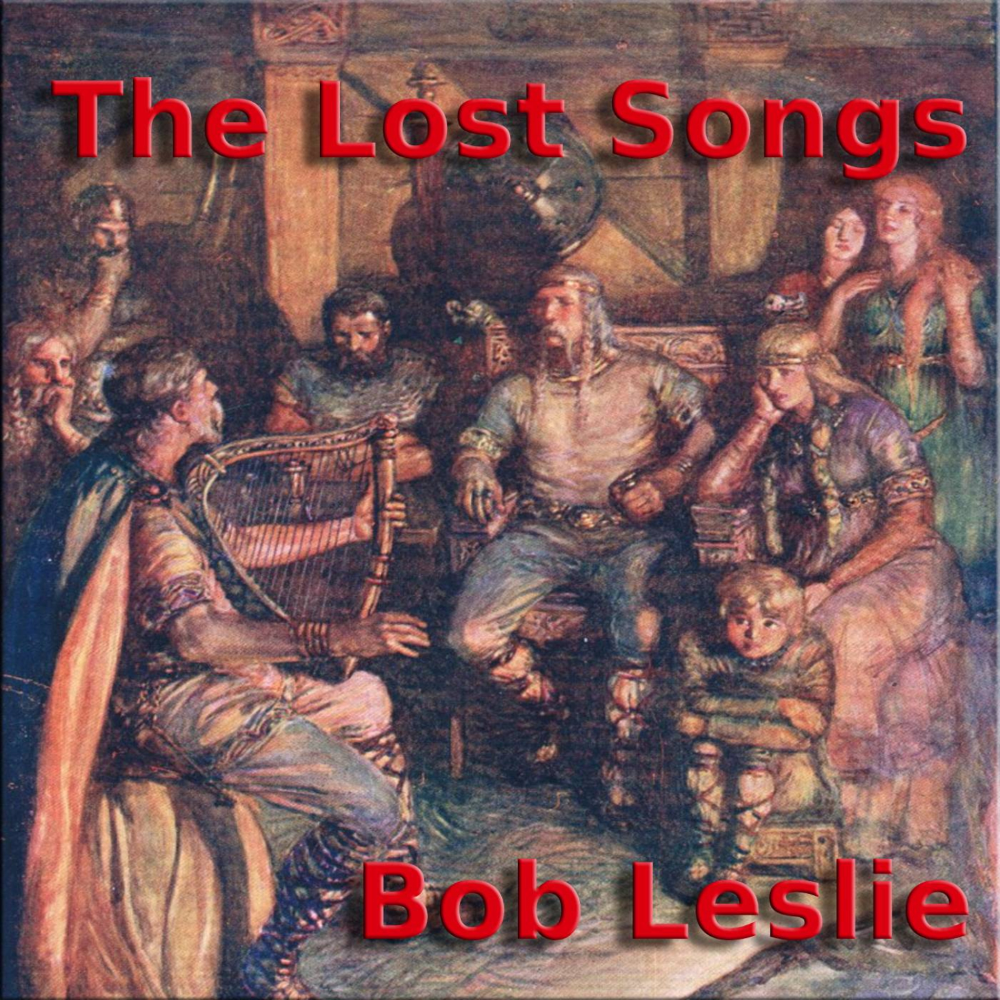
Bob Leslie is a half-Orcadian singer-songwriter (Stronsay, Stromness, and Graemsay via his dad, Jack Leslie) based in Glasgow.
He appeared on these pages before when he wrote a song about his granny’s cousin, Jock Skinner, who had a pet otter called Tarka.
This time round, he’s written one about the effects of the islands’ change of language on traditional song.
Norn, a form of Norse, was the main language spoken in Orkney and Shetland for around 800 years before it slowly declined.
After a conversation with an organiser at the Orkney Folk Festival last year – who cited the disappearance of the Norn language as a reason for the small proportion of traditional song vs instrumental music in the islands compared to mainland Scotland, Bob put his researcher’s hat on and gathered the materials used in his new single: The Lost Songs.

After the islands became the dowry to a marriage between the Scots and Norwegian royal houses, Scots became the language of the law, and Norn, as the daily tongue of the common folk, started to fade. The last native speaker died in 1850.
We know they had songs of all kinds, as they’re mentioned in saga and poems, and we know they had a range of instruments to accompany them as field archeologists have dug them up – drums, harps, lyres, rattles and more.
However, pretty much all that survives of the songs are two lines used as a refrain in the ballad King Orfeo:
‘Every year, when the woods turn green, the deer will run’
“Scowan er la grae,
far yorten han grun orla …”

The song that came from Bob’s investigations can be previewed free of charge at
https://bobleslie.bandcamp.com/track/the-lost-songs


Leave a Reply