
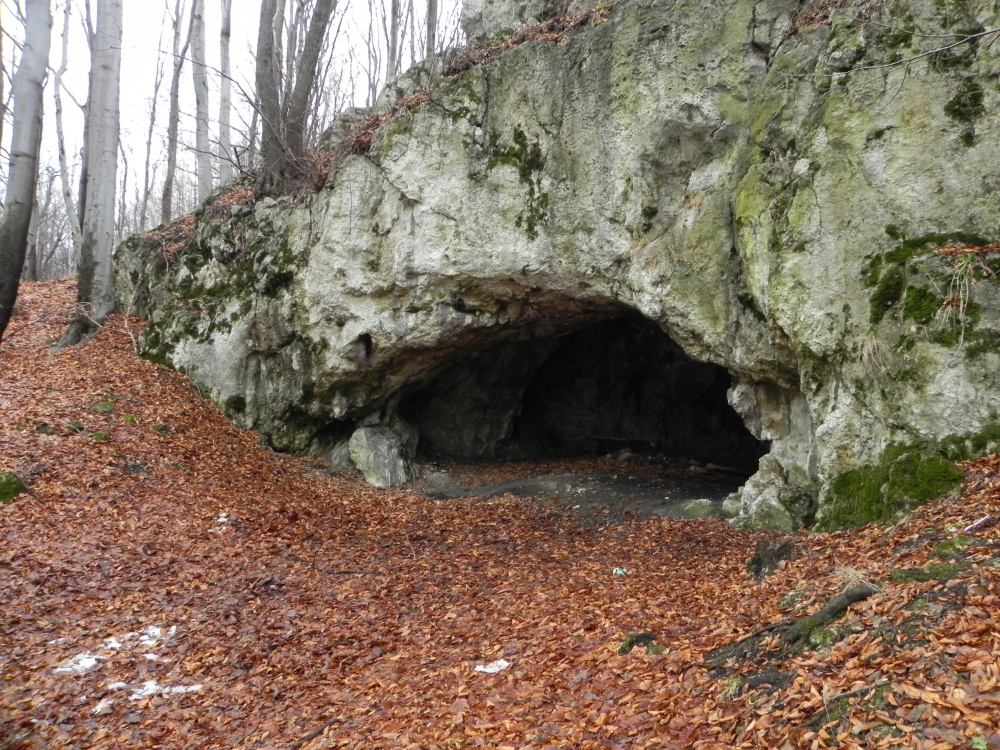
The Maszycka Cave in Poland is a significant excavation site for the late Upper Palaeolithic times.

In 1883, Godfryd Ossowski discovered in the Maszycka Cave. He excavated fragments of skeletons (mainly skull bones) of at least 16 people, among them 5 women, 3 men and several children. Stone and bone tools were also found as well as the remains of hunted Ice Age animals.

Further excavations in the 1960s yielded more human remains, so that a total of 63 bones from ten individuals dating back 18,000 years were available for examination. This is one of the most important collections of human remains from the late Upper Palaeolithic.
Using modern methods, an international team identified 36 bone fragments, which showed signs that the individuals were dissected immediately after death. Cut marks on skull fragments indicate that the muscle attachments and scalp were removed before the long bones were smashed to get to the bone marrow.
Francesc Marginedas from the Catalan Institute of Human Paleoecology and Social Evolution explained:
“The position and frequency of the cut marks, as well as the targeted smashing of bones, leave no doubt that their intention was to extract nutritious components from the dead.”
The Magdalenian are known for their impressive art – such as the famous cave paintings at Lascaux.
“The wide range of artistic evidence points to favourable living conditions during this period. It therefore seems unlikely that cannibalism was practised out of necessity,” saidProfessor Thomas Terberger from the Department of Prehistory and Early History at the University of Göttingen.

Marginedas added:
“It is possible that this was an example of violent cannibalism. After the last Ice Age, there was population growth, and that may have led to conflicts over resources and territories. And there is evidence of isolated incidences of cannibalism in connection with violent conflict.
“Furthermore, human remains were found mixed with settlement debris in the Maszycka Cave, which indicates that the dead were not treated with respect.”
The researchers say that the results help to improve our understanding of the cultural development and group-dynamics in the Late Ice Age society.
Click on this link to access, New insights of cultural cannibalism amongst Magdalenian groups at Maszycka Cave, Poland, published in Scientific Reports.




Leave a Reply