
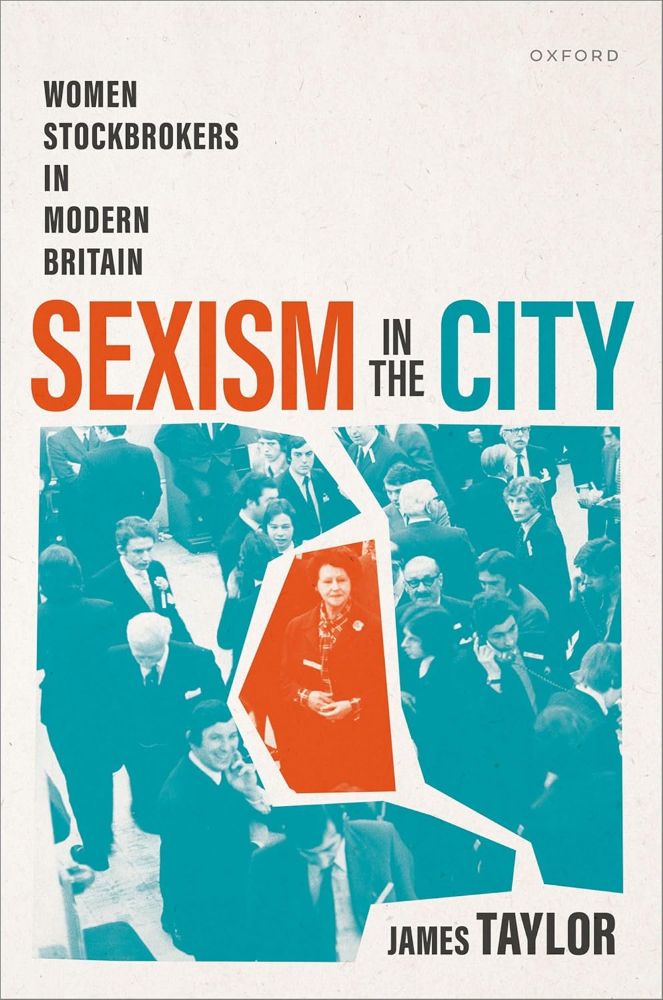

Sexism in the City, by Professor of Modern British History at Lancaster University, James Taylor, is the first book to trace the history of women stockbrokers in the UK from the late nineteenth to the late twentieth centuries.
Forgotten pioneers, these businesswomen fought against the odds to establish successful brokerages across the country and in the process, challenged society’s beliefs about women and money.
The book tells the story of how the nation’s stock exchanges denied these women membership for generations, mobilizing increasingly desperate arguments to try to justify their exclusion, until women finally won the right to join the London Stock Exchange in 1973.
Professor Taylor explained:
“If we look beyond the official exchanges—and beyond London—a more diverse financial environment comes into view.
“Women have been working in finance for much longer than we think. In many cases, they built successful careers, and some even became minor celebrities in their day.”
Though historians have recently reassessed women’s roles in the development of capitalism, highlighting their involvement as investors and entrepreneurs, they have assumed that because women were not members of stock exchanges, they were not active as financial intermediaries until modern times.
By spotlighting the lives and careers of women who worked as stockbrokers outside male-monopolized institutions, the book reframes the historical development of finance in several ways.
It highlights the extent to which the seemingly gender-neutral institutions and practices of finance were, in fact, based on gendered ideologies and exclusions.
It argues that focusing on institutions only reveals part of the financial ecosystem, meaning that we miss what was happening outside the formal market.
And it challenges London-centric interpretations of financial history, asking questions about the financial cultures existing outside the metropolis.
The history uncovered in Sexism in the City also helps to address problems with financial culture in the twenty-first century.
On 8 March 2024, International Women’s Day, the UK Treasury Committee published its final report on its Inquiry into Sexism in the City (the Inquiry).
The final report states:
Our predecessor Committee in 2018 highlighted the underrepresentation of women in senior positions and the large difference in average pay between men and women in the well-paid sector. It identified a range of barriers faced by women in financial services that contributed to this gender inequity, including poor workplace cultures, unconscious bias and the impact of maternity leave and childcare. The report made a range of recommendations aimed at reducing these barriers and improving gender diversity.
Five years on, we launched our current inquiry into Sexism in the City to find out how much had changed. Disappointingly, the answer appears to be “not much”.
And it continued:
It is shocking to hear how prevalent sexual harassment and bullying, up to and including serious sexual assault and rape, still are in financial services, and how poorly firms handle allegations of such behaviours. We were particularly concerned to hear of the widespread misuse of non-disclosure agreements (NDAs), which have the effect of silencing the victim of harassment and forcing them out of an organisation, while protecting perpetrators and leaving them free to continue their careers and go on to abuse others.
Professor Taylor’s book poses that current reform initiatives are unlikely to succeed unless they acknowledge that for hundreds of years, professional identities and institutional structures in finance have been based on the denigration and marginalization of women.
Acknowledging the efforts of those female stockbrokers who challenged misogynistic beliefs and defied men’s monopoly of high finance by forging their own careers is the first step towards imagining a different kind of market, added Professor Taylor.
The book. Sexism in the City, launched on 27 March.




Leave a Reply