
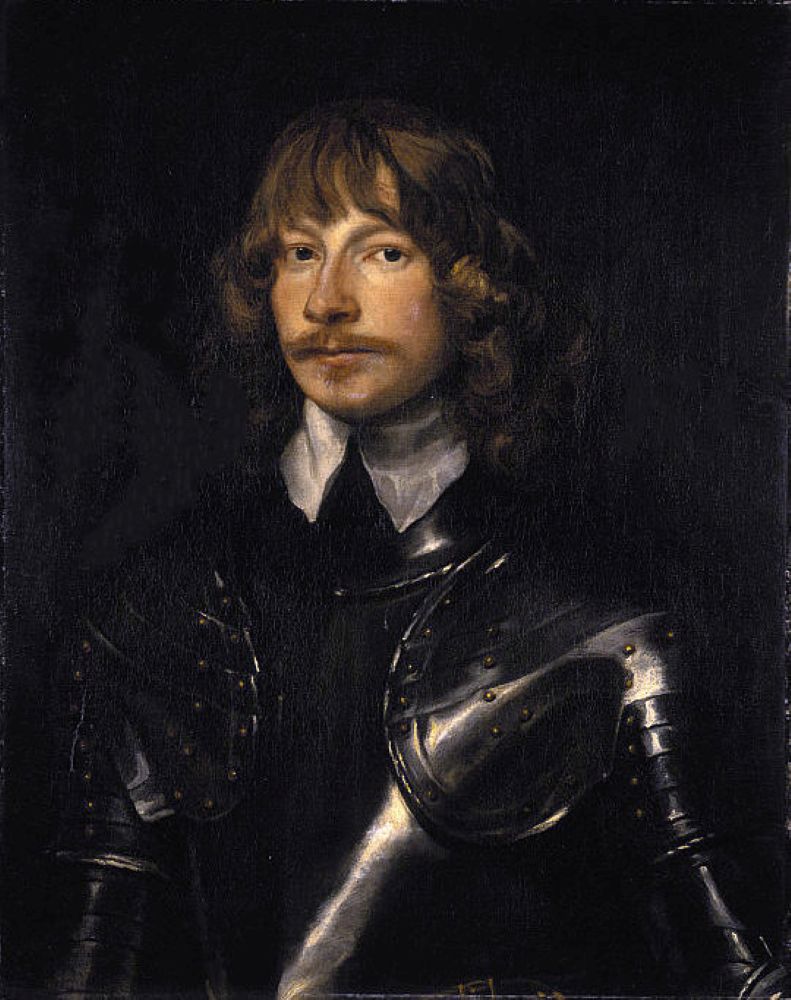
On 27 April 1650 a Royalist army under James Grahame Marquess of Montrose was defeated at Carbisdale, near Culrain, Sutherland.

Montrose had sailed to Orkney from Europe as Captain General of the forces of Charles II (later to be King Charles II).
On 20 January 1649, a High Court set up by the English Parliament charged King Charles I of high treason ‘against the realm of England’. He had been handed over to them by Scottish forces who he had surrendered to, for repayment of a debt. Ten days later he was executed.
Scotland and its Parliament were under the control of Covenanter, Archibald Campbell, Marquess of Argyll. Opposition in Scotland had been led by James Grahame, Marquess of Montrose who had been in exile in Europe since 1646.
On the death of Charles I, his son was declared “King of Great Britain, France and Ireland” by the Scottish Parliament . It had conditions. He was not permitted to enter Scotland unless he imposed Presbyterianism in England and Ireland too.
Roused by the regicide committed by Oliver Cromwell’s English Parliament, Montrose, appointed by Charles II as Lieutenant Governor of Scotland and Captain General of all his forces in Scotland, was to mount his last campaign.
It started in Orkney.
Orkney was a Royalist stronghold and had been pawned off by King Charles I as security for a debt to the Earl of Morton, for £30,000 sterling.

Montrose set off from Gottenburg where the wintry conditions of the North Sea destroyed a great part of his fleet. Waiting for him in Orkney were 4 – 500 Danish mercenaries and 1000 Orcadians rounded up by the lairds . Setting sail from Holm, Orkney on 9th of April 1650,they were to meet their fate at the last battle Montrose was to command at Carbisdale in Sutherland.
The battle would be more accurately described as a ‘rout’. The extra troops Montrose had hoped to have gathered did not come. The Orcadian farmers and fishermen were not trained in warfare and as the disaster unfolded most fled the field. It is estimated that 400 were either killed or captured. Two hundred are thought to have drowned trying to cross the Kyle of Sutherland in their terror to flee the Covenanting forces .

James Grahame was captured at Ardvrek Castle where he had been betrayed by Neil MacLeod of Assynt for a sum of money and a supply of oatmeal. He was hanged and dismembered at the Mercat Cross Edinburgh on 21st of May 1650. His limbs distributed around the land and his head placed on a spike where it remained for 11 years to be replaced by that of the Marquess of Argyll when he fell out of favour.
Orkney too was to pay a heavy price for supporting the Royalist cause. Placed under military occupation in 1652, a body of Cromwell’s soldiers were quartered in Kirkwall. New taxes were introduced to pay for their keep. A Military Governor was appointed to Orkney who sat on the bench with the Sheriff dispensing ‘justice’ to the people who came before them.

Fortified batteries were erected by the ‘Englishe’ soldiers to defend Kirkwall’s harbour. The kirkyard wall around the St Magnus Cathedral was pulled down and the wooden pews taken apart for construction materials.
Damage was further done inside the cathedral where the occupation troops’ horses were stabled. Marble slabs covering the tomb of Bishop Tulloch which for years had been where Orcadians would pay their debts was taken apart.
The military occupation had little popular support in the islands save for a minority of the clergy and 2 Kirkwall Burgh men.
The ‘Englishe’ soldiers too were mostly not fond of their posting to Orkney. In ‘The Character of Orkney’ one wrote:
“Butt heere’s enough of this, you may conclude
With mee, the people here are something rude,
Ill bred (except in breeding lice) ill made
And not too cleanly: butt it might be said…
Had wee nott conquer’d Orkney, Cromwell’s story
Had cleart noe more of honour in’t, and glory
Then Caesar’s; butt with this conquest fell
Under his sword, The fortune of Hell.”
Cromwell’s soldiers are said to have brought the growing of cabbages to Orkney which is most likely a myth but more likely they did bring venereal disease.

Some of the men settled in the islands and married Orcadian women. Sergeant William Emerson became a shoemaker and Deacon Harry Erbuie became a prosperous merchant.
King Charles II returned from exile in Europe. Restored to the throne in 1660, history was rewritten to wipe out the years of Cromwell’s ‘reign’ and have Charles succeed his father on his death in 1649.
In Orkney the ‘Englische’ fortifications are gone marked only by street names like ‘Cromwell Road.’

This story features in Rebel Orkney by Fiona Grahame and Martin Laird and available from all good booksellers worldwide.


Leave a Reply