
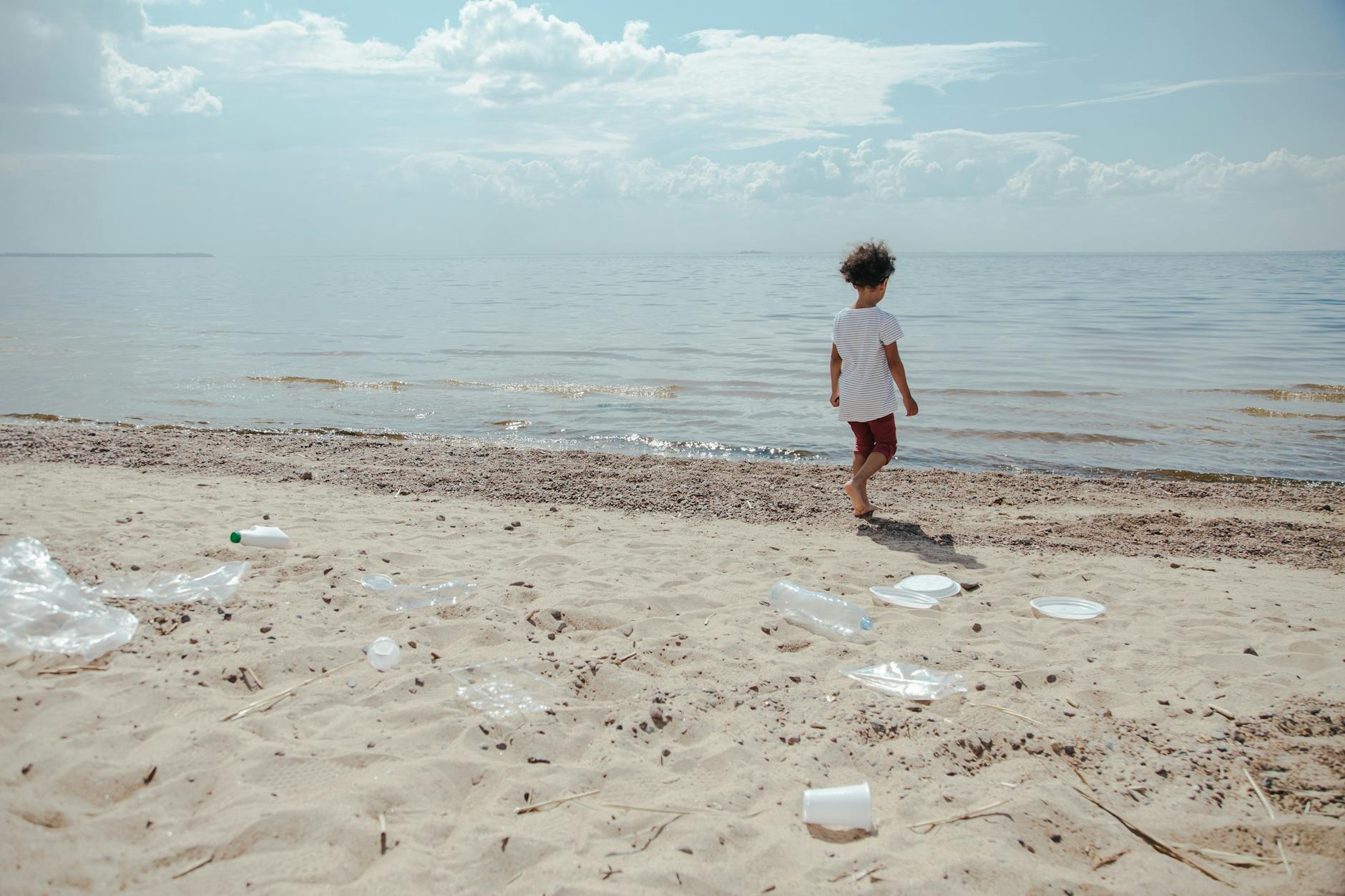
Ten days of international negotiations have ended with no agreement on how to word a legally binding document on plastic pollution.
2,600 participants, 70 government ministers, could not pull together to develop a treaty which would tackle the impending worldwide consequences of plastic on our lands and in our seas.
The INC, Intergovernmental Negotiation Committee has been tasked by the United Nations Environment Assembly to develop an international legally binding treaty on plastic pollution, including in the marine environment, which could include both binding and voluntary approaches, based on a comprehensive approach that addresses the full life cycle of plastic.
We produce 400 million tonnes of plastic each year. Every year 19-23 million tonnes of plastic waste leaks into aquatic ecosystems, polluting lakes, rivers and seas. The plastic which breaks down into micro sized pieces enters the food chain – and eventually into us.

At every stage of plastic production humans can be exposed to the potentially harmful effects of the process. Toxic chemical additives, can persist in the atmosphere for some time after being released. Research has also revealed that microplastics can harm our health, and act as vessels for pathogens to enter our system, increasing the spread of diseases. – Plastics and Human Health.
In Scotland, our Parliament in Edinburgh has taken action on areas it is able to within the Devolved system, to try and tackle at least some of the causes of plastic pollution. The supply and sale of Wet Wipes containing plastic will be coming into force soon. This will apply across the UK.

Scotland was the first country in the UK to ban plastic-stemmed cotton buds. A ban on the manufacture and sale of microbeads came into force in 2018.
Scotland was the first country in the UK to make it an offence for businesses to provide single use plastic items – which included plastic cutlery, plates and stirrers – in 2022, with exemptions for single-use plastic straws, to make sure that those who need them for independent living or medical purposes can still access them.
The UK Internal Market (introduced as a result of leaving the world’s largest free trade area, the EU) has been a limiting factor in what the Scottish Parliament has been able to do. Protecting the Environment is a key power held by the Scottish Parliament but the UK Government’s use of the UK Internal Market Act ensured that the introduction of a Deposit Return Scheme (DRS) was a non-starter.
The DRS was due to come into force in 2022, but ill thought out, rushed, and with the addition the impact the UK Internal Market Act would have had on it, has resulted in a delay and it will launch in October 2027. This means when you buy a drink in a single-use container you will pay a deposit, which you get back when you return your empty bottle or can. The Deposit and Return Scheme for Scotland Amendment Regulations 2025 were approved by the Scottish Parliament on 19 June 2025.
On the 21st of July 2025, the Independent Water Commission, chaired by Sir Jon Cunliffe, published a review of the water sector in England and Wales. While this review was not of the water system in Scotland, (Scottish Water is publicly owned) its findings are a wake up call to Scotland as well. Part of the review’s recommendations concerned microplastic pollutants – and just as their name describes, these particles are tiny, but run into the environment and the food chain, so over time are collectively extremely harmful to our health.
The Scottish Government is running a consultation on its draft Environment Strategy. It closes on 29 September 2025. The Scottish Government state that it is ” introducing ambitious actions to limit the use of single-use plastics. ” A small step in what is a massive global struggle against mountains of plastic polluting our planet’s lands and seas.

Fiona Grahame

Donate to The Orkney News
£2.00



Leave a Reply