
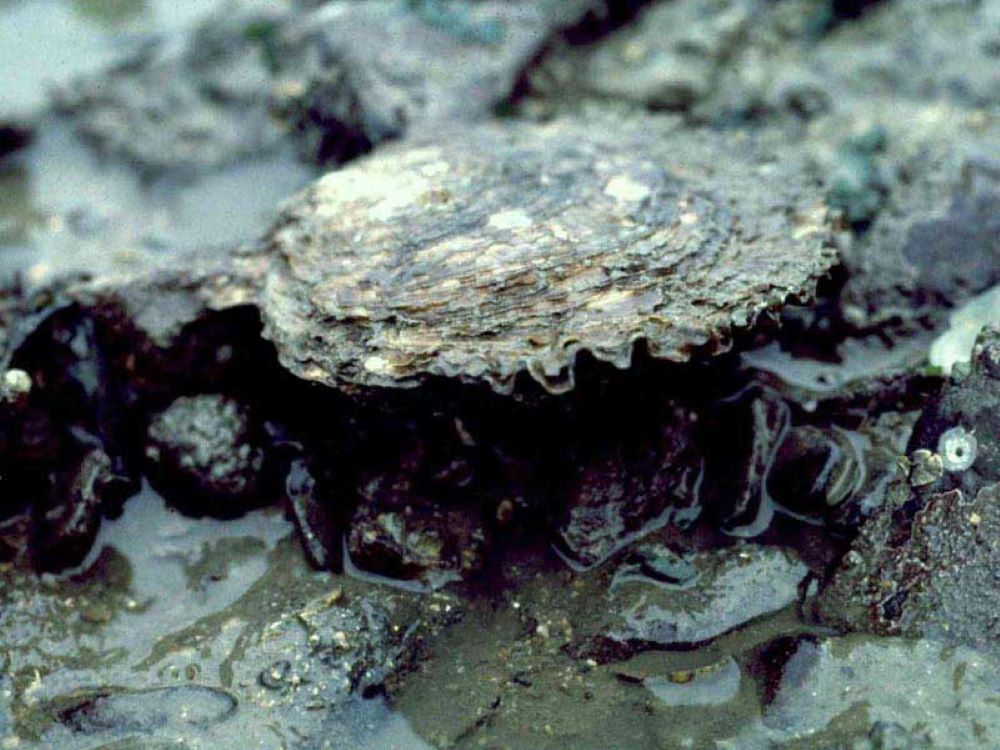
Scientists from the University of Aberdeen and NativeAqua, a native oyster farm, have been awarded £14,300 to investigate how to improve the resilience of the native oyster, in a bid to boost the numbers of the species.
The Native Oyster is important in supporting the marine ecosystem and as a product. An exciting project is being developed in Orkney by Northbay Innovations Ltd and Dennis Gowland to repopulate the Bay of Firth with Native Oysters.
Off New York’s shores lies the Billion Oyster Project (BOP): a bold, community-driven attempt to bring back something many thought was lost forever.
New York Harbor was once legendary for its oysters. The estuary held an estimated 220,000 acres of native oyster reefs – teeming with aquatic life: seahorses, herring, dolphins. Island Innovation.
Marine shellfish like oysters carry out a vital role in marine ecosystems however the UK’s native oyster species has suffered a drastic decline in recent years.
The research being conducted by the University of Aberdeen and NativeAqua will use novel data-driven genetic approaches to inform a new breeding programme. By analysing the genetic fingerprint of each species in a breeding programme they can then optimise which oysters to breed together for the strongest offspring. This approach is common in all agriculture farmed species, but has so far not been used to help the native oyster.
Dr Victoria Sleight, from the University of Aberdeen who is leading the project said:

“Marine shellfish, like oysters and mussels, are small underwater miracles. These animals carry out a vital role in marine ecosystems as they filter the seawater and extract nutrients for food in a process called filter feeding. “
“Not just absorbing nutrients from the water and helping to tackle harmful nutrient run-off from human land use, they also form complex three-dimensional reef habitats that other species live in and so boosting biodiversity.
“And these underwater miracles also taste delicious. They are an extremely sustainable, low-carbon, healthy and affordable source of protein for human diets.
“In our project, we aim to use a data-driven approach to improve the resilience of the native oyster. This species has suffered drastic decline due to overfishing of wild stocks and climate change. Because every healthy native oyster on a farm will release 1-2 million baby larvae into the ocean, farming and breeding this species to improve their resilience to climate change, will restore natural populations and enhance commercial shellfish aquaculture industries.”
Dr Tom Ashton, Co-Founder of Native Aqua who are the commercial partner on the project said:
“Native oysters are a notoriously difficult species to farm, they have poor robustness and slow growth. We aim to use scientific collaboration to develop a strong bloodline that performs well on commercial farms.
“The wonderful thing about Native oysters is that they spawn naturally whilst being grown for the table market, so aquaculture operations improve wild stocks. Our collaboration with Aberdeen will advance the development of quality farmed oysters and will leave a permanent positive legacy on the UK’s marine ecosystem.”
This is the first time that modern genetic analysis and selection techniques have been used to study this critical native species.

Funding for the one year project has been awarded from Scottish Universities Life Sciences Alliance and The Data Lab.
Founded in 2014, the Billion Oyster Project set out with a bold goal: to restore one billion oysters to New York Harbor by 2035. Alongside that, its vision includes creating 100 acres of oyster reef habitat and engaging one million people over time.
To date:
- Over 120 million live oysters have been reintroduced
- More than 2.5 million pounds of shells have been recycled from restaurants to serve as the substrate for growing oysters
- There are currently 18 active restoration sites, covering about 16 acres of reef area
- Over 30,000 students have been engaged through curricula and field work
- The project counts on 15,000 volunteers annually



Leave a Reply