
Three hundred and three temporary facilities have been set up in Gaza where schools have been destroyed to deliver education to children. Temporary Learning Spaces (TLS) are providing schooling to 154,000 children.
Whilst this is less than a quarter of school aged children in Gaza, it is a start. Education is highly valued by Palestinians. 4,300 teachers are working in the TLS.
UNRWA, the United Nations relief organisation, is also providing digital educational services. 7,600 teachers are using tech to deliver lessons in Arabic and Mathematics to 294,000 children. Two universities are also in the process of providing some in-person lectures.
Learning and play are vital to bring back at least some sort of stability into the lives of children whose lives changed completely over two years ago. Communities have been obliterated. Under the rubble of where their homes once stood lie human remains and unexploded ordnance.
Children in Gaza have been traumatised by the destruction of everything they once knew as familiar, and of witnessing things no one, especially a child, should ever see.
According to the Child Protection Area of Responsibility (CP AoR), following two years of escalated hostilities in Gaza, the collapse of education, health and social systems, compounded by displacement and repeated trauma, have eroded children’s sense of stability and safety; and they will require sustained, long-term efforts to recover.
In a September 2025 CP AoR assessment, the most common symptoms reported among children were aggressive behaviour (93 per cent), violence toward younger children (90 per cent), sadness and withdrawal (86 per cent), sleep disturbances (79 per cent), and education avoidance (69 per cent).
Caregivers also reported being overwhelmed and unable to provide adequate emotional support, while girls and children with disabilities were found to face heightened risks of violence, neglect, and unsafe access to water, sanitation and hygiene (WASH) facilities, particularly in overcrowded shelters and informal displacement sites. – OCHA
Many children have been separated from their families. Out of 1,344 children who were being taken care of, 166 were re-united with family members, and 215 were placed in temporary alternative care.
Children will bear the scars of the Gaza Genocide of these last two years not only mentally, but physically. Out of 6,000 amputations which have taken place since the start of the Israeli bombardment, children make up a quarter of them. That’s 1,500 children who have had one or more limbs amputated.
Amidst all these horrors, the people of Gaza have come together in communities to support one another. Mothers and young people have set up informal learning and play groups to provide children with activities to engage their minds and emotional needs. It’s a tremendous show of resilience in the face of unimaginable devastation and cruelty being exacted upon them by the Israeli bombardment.
The ceasefire is still officially in place, however, Israeli military strikes continue. Israel forces occupy over half of Gaza. Palestinian fishers out at sea, where access is prohibited, are arrested. Since the ceasefire, 245 Palestinians were killed, 627 were injured and 532 bodies were retrieved from under the rubble. These include 104 Palestinians killed between 28 and 29 October. Heavy rain has added to this desolation, flooding the makeshift tented camps with the debris of war and sewage.

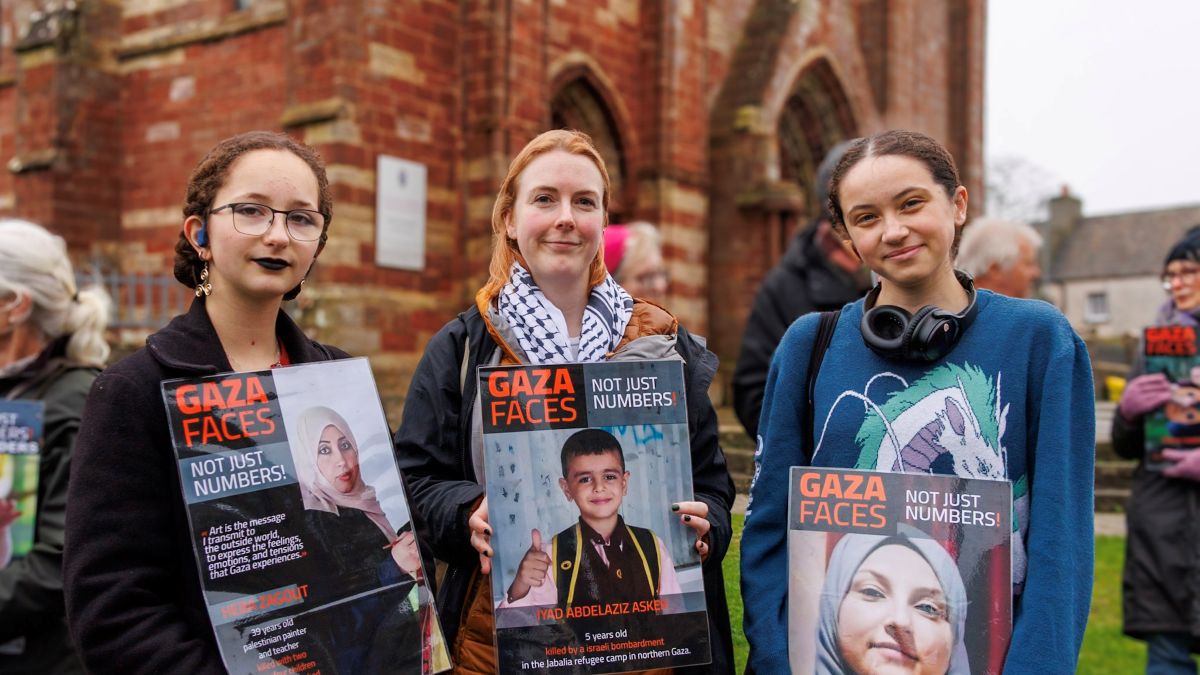
In Orkney, islanders will again stand in vigil today, Saturday 15 November on the Kirk Green, Broad Street, Kirkwall, between 1 and 2pm to remember the people slaughtered during the genocide. They invite anyone who wishes to join them in calling for a permanent ceasefire and a peaceful solution for all to meet with them.
Fiona Grahame

Leave a Reply