
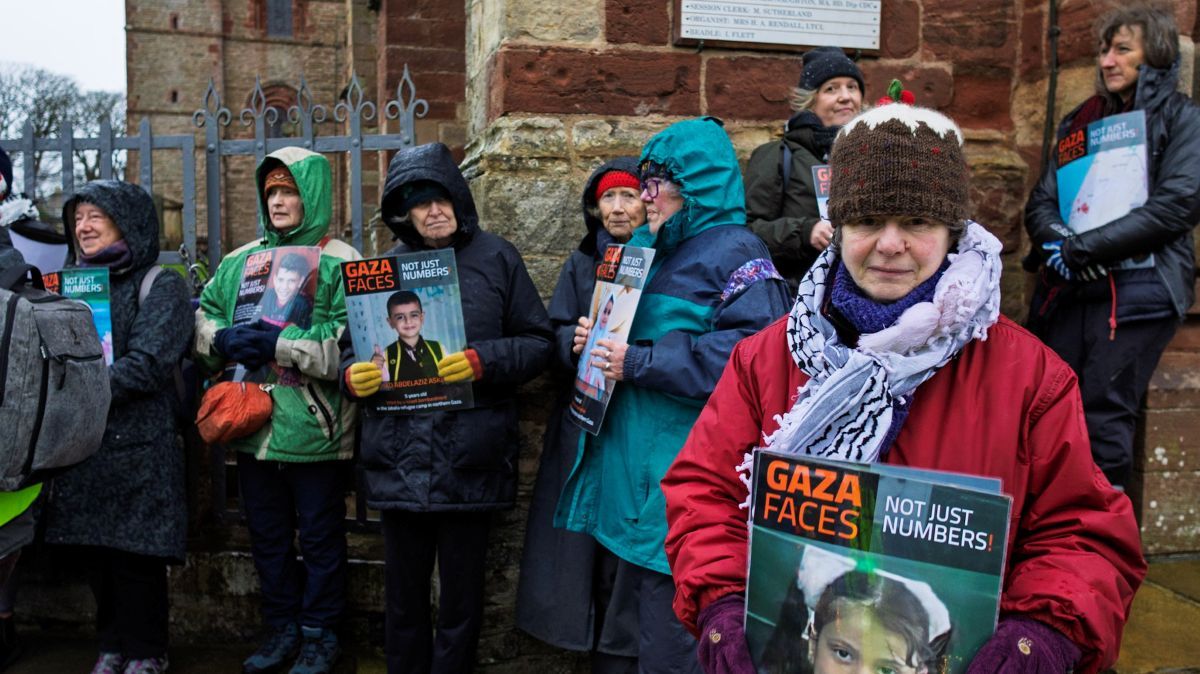
Six children have died in Gaza in December because of the shocking living conditions being endured by the civilian population and the limiting of Humanitarian Aid by the Israeli occupation forces. Seven-year-old Ata Mai drowned on 27 December during “severe flooding” in an improvised camp for internally displaced people in Sudaniyeh, northwest Gaza City.
Israel also announced that it will not permit 37 international aid agencies to provide support to the people of Gaza. In a joint statement, the foreign ministers of the UK, France, Canada, Denmark, Finland, Iceland, Japan, Norway, Sweden and Switzerland said INGOs were integral to the humanitarian response in Gaza and that any attempt to stem their ability to operate was “unacceptable”.
On 29 December the Israeli Knesset passed amendments to a law aimed at ceasing the operations of the UN agency assisting Palestine refugees (UNRWA). This move has been condemned by UN Secretary-General Antonio Guterres.
UNRWA is an integral part of the United Nations and Israel has obligations under the Charter of the United Nations and the Convention on the Privileges and Immunities of the United Nations.
“The Convention remains applicable to UNRWA, its property and assets, and to its officials and other personnel. Property used by UNRWA is inviolable.”
Israel continues to ignore such statements from the UN and is confident in doing so with the wholehearted backing of US President Donald Trump.
The Gaza Genocide continues.
The 37 INGOs received official notification that their registrations would expire on 31 December 2025. This triggers a 60-day period after which INGOs would be required to cease operations in Gaza and the West Bank, including East Jerusalem.
In Orkney islanders will meet in Vigil on the Kirk Green, Broad Street today, Saturday 3 January between 1 and 2pm in support of Peace and of the People of Gaza.

To hinder humanitarian aid being delivered by a starving population is a war crime.
Severe storms and flooding have hit Gaza and the flimsy makeshift shelters that families have erected in the rubble of their obliterated communities.
Food insecurity and malnutrition remain at critical levels. Airstrikes by Israel continue in contravention of the ‘Ceasefire’.
Between 17 and 29 December, out of 86 humanitarian missions only 46 got through, 22 were impeded, and Israel denied access to 5. – Humanitarian Situation.
The number killed in the Gaza Genocide continues to mount up.
Joint Statement by the UK and other Governments concerning Israel’s blocking of Aid Agencies getting into Gaza, Issued 30 December 2025.
“We, the Foreign Ministers of Canada, Denmark, Finland, France, Iceland, Japan, Norway, Sweden, Switzerland and the United Kingdom express serious concerns about the renewed deterioration of the humanitarian situation in Gaza which remains catastrophic. As winter draws in, civilians in Gaza are facing appalling conditions with heavy rainfall and temperatures dropping. 1.3 million people still require urgent shelter support. More than half of health facilities are only partially functional and face shortages of essential medical equipment and supplies. The total collapse of sanitation infrastructure has left 740,000 people vulnerable to toxic flooding.
“On 19 December, the IPC published their latest report which showed that while there has been some improvement since the dire reports of famine in August, the situation remains desperate. The majority of the population (1.6 million people) in the Gaza Strip face high levels of acute food insecurity. Whilst the amount of aid going into Gaza has increased since the ceasefire, the response remains severely constrained by persistent impediments on humanitarian access.
“We welcome the important progress that has been made to end the bloodshed in Gaza, secure the release of the hostages and turn the page on two terrible years of conflict. We also call for the remains of the final deceased hostage to be handed over swiftly, and for Hamas to disarm and renounce violence in line with the New York Declaration and UNSCR 2803 endorsing the Comprehensive Plan to End the Gaza Conflict.
“However, we will not lose focus on the plight of civilians in Gaza. We are therefore calling on the Government of Israel to take the following urgent and essential steps:
“Firstly, ensure that international NGOs are able to operate in Gaza in a sustained and predictable way. As 31 December approaches, many established international NGO partners are at risk of being deregistered because of the Government of Israel’s restrictive new requirements. Deregistration could result in the forced closure of INGO operations within 60 days in Gaza and the West Bank. This would have a severe impact on access to essential services including healthcare. One in 3 healthcare facilities in Gaza will close if INGOs operations are stopped. INGOs are integral to the humanitarian response and – working with the UN and Palestinian organisations – collectively deliver approximately $1 billion in aid across Palestine each year. Any attempt to stem their ability to operate is unacceptable. Without them, it will be impossible to meet all urgent needs at the scale required.
“Secondly, ensure the UN and its partners can continue their vital work. This is essential to ensure the impartial, neutral, and independent delivery of aid throughout the whole of Gaza. This includes UNRWA, which provides essential services, such as healthcare and education, to millions of Palestinian refugees.
“Thirdly, lift unreasonable restrictions on imports considered to have a dual use. This includes urgently needed medical and shelter equipment. The restrictions are holding up essential supplies in every sector and preventing the rehabilitation and repair of critical infrastructure.
“Finally, open crossings and boost the flows of humanitarian aid into Gaza. We welcome the partial opening of the Allenby crossing, but other corridors for moving goods to Gaza remain closed or severely restricted for humanitarian aid. This includes Rafah, which was noted explicitly in the Comprehensive Plan to End the Gaza Conflict. Bureaucratic customs processes and extensive screenings are causing delays, while commercial cargo is being allowed in more freely. The target of 4,200 trucks per week, including an allocation of 250 UN trucks per day, should be a floor not a ceiling. These targets should be lifted so we can be sure the vital supplies are getting in at the vast scale needed.
“Together, these restrictions limit the capacity for aid to be delivered at the scale needed, in accordance with international humanitarian law, or for repairs to be made to support recovery and reconstruction efforts. We now urge the Government of Israel to remove these humanitarian access constraints, and to deliver and honour the Comprehensive Plan to End the Gaza Conflict. This is necessary for an effective humanitarian response, successful recovery and reconstruction and lasting peace and stability.”
Fiona Grahame




Leave a Reply