
Elections to the Scottish Parliament take place on Thursday 7 May. In this series we look at what decisions are made in our parliament which affect daily lives in Scotland. So far we’ve looked at Education, NHS Scotland, and Transport.
Migration.
Powers over immigration, asylum and visas are retained by the UK Government. This means that the Scottish Parliament, and its Government have no powers over these key issues. Many in Scotland argue that it needs a bespoke Migration policy because its needs are different to those of rUK.
Scotland has an ageing population, like many Western nations. Scotland’s working population has been adversely affected in important sectors such as Social Care, and Hospitality, by the UK leaving the EU, the Covid-19 pandemic, and the UK’s control over granting Visas.
In May 2025 the UK Labour Government published a white paper policy document called Restoring control over the immigration system. The document proposed some changes to make it harder to move to and settle in the UK, with a view to reducing net migration.
Work related Visa grants have decreased for the whole of the UK: there were 183,000 visas granted to main applicants in all work categories in the year ending June 2025, 36% fewer than the year ending June 2024.
Social Care.

In the year ending June 2025, the number of Health and Care Worker visas issued to migrant workers in Caring Personal Service Occupations fell by 88%, following restrictions introduced by the UK Government to the visa route.
Scotland’s Social Care System relies on migrant workers – 25% of the workforce comes from outwith the UK. In October 2025 the Scottish Government invested £500,000 to fund a tailored offer to help ‘displaced’ international social care workers who have found themselves without sponsored employment elsewhere in the UK at no fault of their own.
Although Scotland has no powers over Migration, the Scottish Government does have a Minister whose responsibility it is. That might seem odd, but when the UK Government introduces new limits to Migration it has a knock-on detrimental effect to Scotland, and its economy.
People migrate for a variety of reasons including work, family links, and study.
Students.
In 2022/23 more than 83,000 students from over 180 different countries came to study at Scottish universities, and international students made up a quarter of the total student population. In March 2025 data published for the academic year 2023/24 confirmed a fall in international numbers by universities across Scotland and the UK.
In total, the number of international (non-EU) students coming to Scotland in 2023/24, compared to the previous year, dropped by just short of 10,000 (9,380).

The sharpest fall amongst international students has occurred at post graduate taught level (masters courses), with a 25.7% sector average year-to-year drop between 22/23 and 23/24. International undergraduate numbers fell by 3.8% and the average fall in international numbers across all levels of study was 20%. The impact of the drop has been felt differently in different institutions according to their recruitment markets and models of provision. – New student data from HESA shows sudden, sharp falls in international students coming to Scotland’s universities
Claire McPherson, Director of Universities Scotland said:
“It’s difficult to estimate the sector’s fall in revenue from this but a very rough ballpark would be a loss of around £150 million sector wide, year-to-year.”
It’s not just an economic impact for Universities, it is a loss of talent, skills, and experience enhancing the research conducted at our Universities.
Click on this link to find out more about Study in Scotland for Overseas Students.
Hospitality.

The Fraser of Allander Institute reports that Hospitality is the 3rd largest employer in Scotland.
Its importance to different regions varies across Scotland.
The sector is especially important to the Highlands and Islands, accounting for 5.8% of GVA in Argyll and Bute, 5.4% in the Highlands during 2022, and in the cities of Dundee (4.3%) and Aberdeen (4.3%).

Over half of Hospitality workers are part-time and this is a trend that is increasing. It’s a volatile sector, but has recovered slightly after the devastating impact the Covid-19 pandemic had on it. Although vacancies are falling, they are still above what they were before the pandemic. It was a sector that relied on many workers coming from EU countries and overseas students who had come here to study but needing some part time work.
People who seek refuge.
Some people come to Scotland seeking refuge from persecution, conflict, and wars. Compared to the countries neighbouring areas of war, only a few will make it to the UK, or indeed Scotland.
An asylum seeker is someone who has applied for asylum and is awaiting a decision on whether they will be granted refugee status. – House of Commons Library.
Scotland has no powers whatsoever over refugees and those seeking asylum. That is all controlled by the UK Government.
In 2024, asylum seekers and refugees made up around 12% of immigrants to the UK. If including the Hong Kong British National (Overseas) scheme in the category of humanitarian routes, up to 14% of immigration in that year would fall into that category. – House of Commons Library.
In 2025, the most common nationalities of people claiming asylum were Pakistani (11%), Eritrean (9%), Iranian (7%), Afghan (6%) and Bangladeshi (6%).
The UK Government is responsible for accommodation for those seeking refuge.
There are actions, however, that the Scotland has chosen to take even though it is constrained by the devolved settlement.

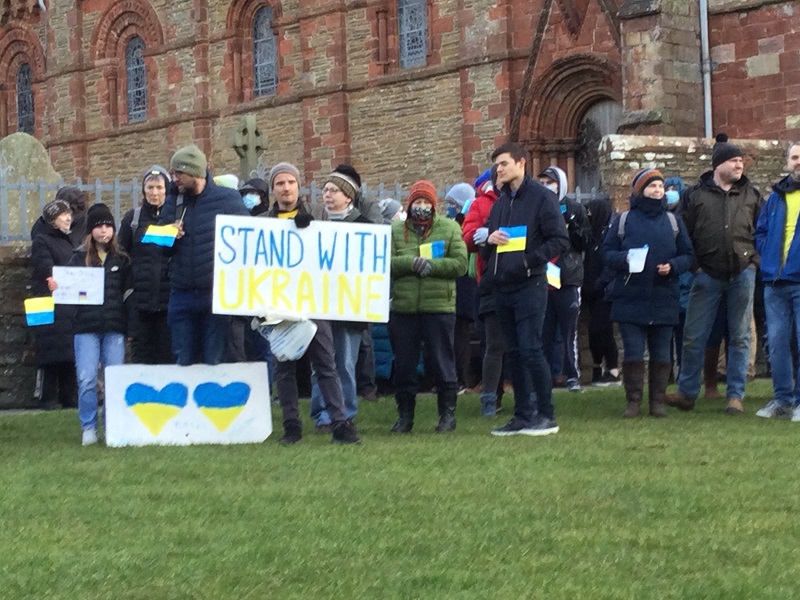
- The Ukraine Sponsorship Scheme – The Scottish Government has acted as sponsor for 21,702 displaced persons from Ukraine, which represents 75% of the total number of arrivals of people to the UK through a Scotland-based sponsorship arrangement. The Scottish Government, UK Government, COSLA – work together to support refugees from Ukraine.
- Funding for groups which support refugees – voluntary and creative groups.
- £8million (over 2 Years ) for an integration support service delivered by the Scottish Refugee Council.
Scottish Refugee Council chief executive Sabir Zazai said:
“We’re delighted that our approach to building a better future with refugees in Scotland has been recognised with this investment, which will enable us to continue reaching those who need our help, wherever in Scotland they are based.”
Although the UK retains power over Migration, MSPs through the Scottish Parliament and the Government of Scotland, try and ease the way for people who choose to come to Scotland to work, live and study, within the limits of the Devolved Settlement. For those seeking refuge from war and persecution, supporting ways to make people feel welcome and to socialise within their communities, is done through funding small schemes – many of which are run by volunteers.
If the top issue for you in the Scottish election is Migration then its important to be aware that the Scottish Parliament has no powers over this policy.
Fiona Grahame.
Leave a Reply