
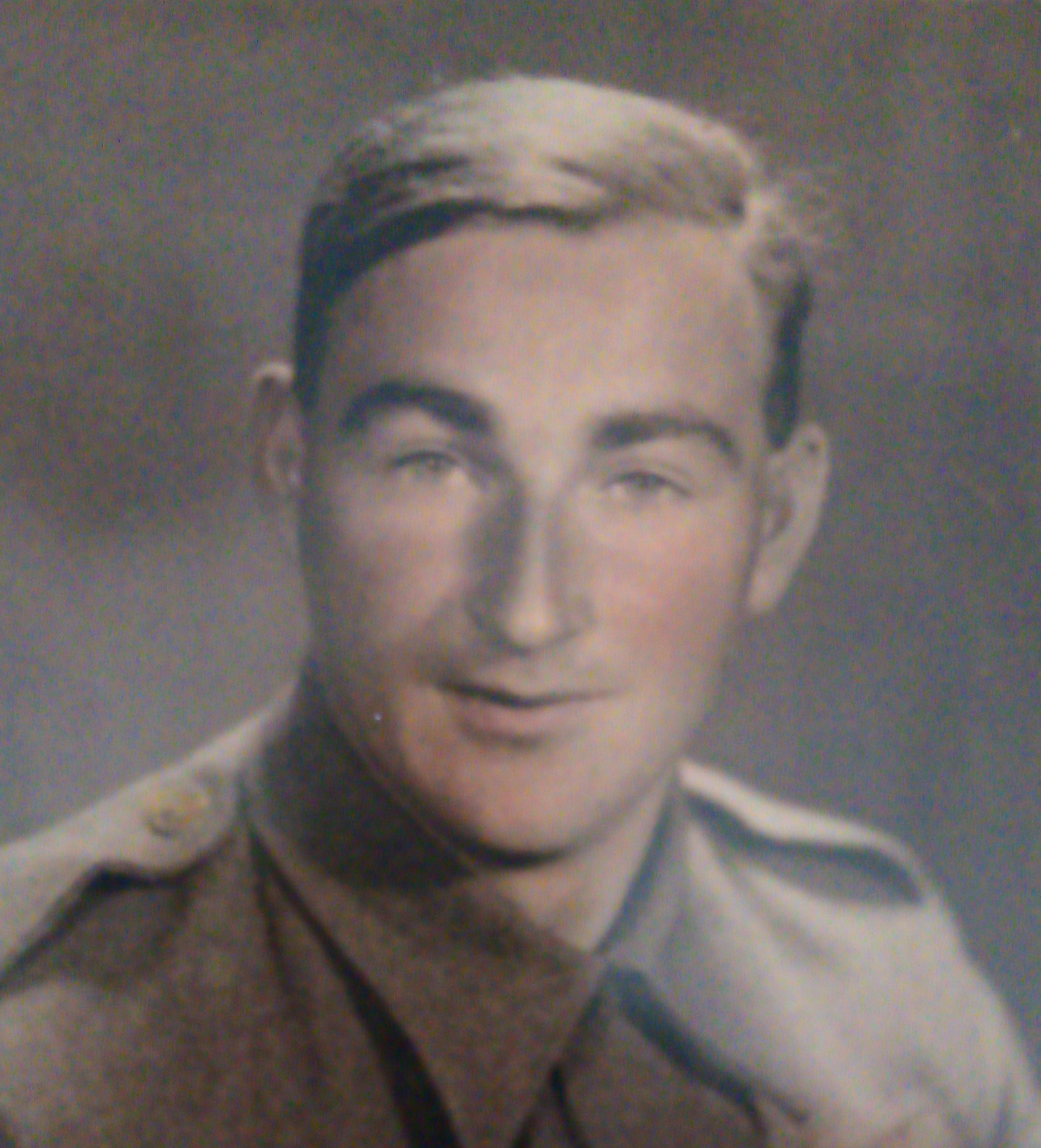
“He was a quiet and humble man who experienced the full horrors of war. It seems wrong that he should lie in an unmarked grave, hence the campaign to pay for a memorial stone, to show him the respect that he deserves.’ – Tom Muir.
A fund has been set up to erect a gravestone to an Orkney man who not only helped to preserve one of our important historic sites but who also served during World War 2.
John Cload was a quiet and modest man. He lived at the Hackness Battery, Martello Tower, Longhope and helped to preserve this historically important site, for which he received an MBE.
His grave in Osmundwall Cemetery has only a small marker stone. The organisers of the fundraising page want to change that and place a gravestone to remember the remarkable life of this quiet man – who served both community and country.
Click on this link to the Gofundme page: John William Cload MBE (Joe) – Lest we forget

John Cload’s story
John William Cload was born on 13 September 1920 to John James William Cload and Margaret Cload (née Sinclair). To distinguish him from his father, John William Cload was affectionately known as Joe among family and friends.
Joe’s grandfather, William Cload, served as an artilleryman stationed at Hackness in Hoy, Orkney. After his military service, William married Mary Anderson from a neighbouring croft and returned to Hackness as a caretaker.
In 1922, the family purchased Hackness Battery and the adjacent Martello Tower , and it was here that Joe spent the majority of his life.
Hackness Battery and Martello Tower

Constructed in 1813-15 during the Napoleonic and American Wars, Hackness Battery and Tower, along with its sister Tower at Crockness, were built as part of a defensive network to protect the Longhope anchorage and adjoining sounds.
In World War I, their role shifted to signals and barracks
Joe grew up in the Commissioned Officers’ accommodation at Hackness, which served as the family crofthouse, helping his family with daily life on the croft.

World War 2 and Military Service
At the start of World War 2 John, or Joe as he was known, saw the first German air-raid on Scapa Flow – the Royal Naval base, on 17th October 1939.
Joe had been retained on ‘protected service’, working on local road infrastructure and contributing to engineering projects at the Lyness Royal naval base. During the attack in October 1939 HMS Iron Duke was bombed by a German Junkers JU-88. The vessel sustained significant damage and was beached to prevent sinking. The Junkers JU-88 was shot down by anti-aircraft guns, marking the first enemy aircraft destroyed by ground fire on British soil – all of which Joe observed.
The Luftwaffe also targeted Hackness Battery – his home – likely having mistaken it for boom defence infrastructure.
Joe went on to serve as a sapper in the Royal Engineers in North Africa and Italy.

On 14 May 1942, he enlisted in the General Service Corps at Fort George, later transferring in the August to the Royal Engineers, where he served until February 1947. Joe’s military service took him to North Africa, Egypt, Italy, and Greece. On 23 March 1943, while enroute to North Africa aboard RMS Windsor Castle, the ship was torpedoed by enemy aircraft in the Mediterranean. Joe survived and was transferred to Algiers.
After nine months in North Africa and a brief period in Egypt, Joe was posted to Italy with the 225th Royal Engineers, 4th Division Field Company. There, he contributed to the construction of the “Amazon Bailey” bridge, which played a critical role in the breakthrough at the Battle of Monte Cassino on 12/13 May 1944.
The Amazon bridge, started first by Joe’s 225th Field Company, was to be built ‘at all costs’. All three of 4th Division’s engineer companies (7th, 59th and 225th) toiled under sniper fire and heavy shelling and mortaring – and exposure by flares – to build the Bailey Bridge overnight on 12/13 May 1944. The passage of tanks over the bridge from 0445 hours on 13th May was
arguably the turning point of the whole Cassino offensive.
“On 13 May 1944, at 5 a.m., the Bailey Amazon Bridge was completed, at the cost of many Royal Engineering workers who died during the construction. The companies 7, 59 and 225 carried it out. Among the various bridges built over the Gari River, this is the first to be used and the most important, as it is also the closest to State Road 6 Casilina.
The Germans knew its location. Throughout the night of 12 May, they relentlessly shelled the area, with considerable losses suffered by the Allies. Eventually, after much effort and sacrifice, the way into the Liri Valley was open and the troops of the 4th British Infantry Division advanced. ” – Amazon Bridge Monument.
‘It had cost the engineers 83 casualties out of the 200 men involved’.
After completing his service in Italy, Joe was stationed in Greece until 1946. Upon demobilisation he returned to Orkney.
Asked whether he had seen boy soldiers in the war, he said:
‘No, I didnda see boy soldiers but I did see bairns in uniforms.’
He was not a man of war, but a peace-loving guy caught up in world events and would recoil at the term ‘war hero’, he did what he had to do to survive.
Glen Moon who recorded Joe’s recollections of his early life in Longhope and of his military service said:
“Joe’s story is really just representative of all those yet to be told, to be told they must as this is a choice they gave to us.”
Return to Orkney
Upon returning home, Joe settled back into his quiet life in Orkney. He befriended local wildlife – seagulls and a stray cat! – worked for the Admiralty at Lyness until around 1957, and later took up road maintenance for Orkney County Council as a ‘County Man’, until his retirement.
During this period, Joe undertook the construction of a road between the Hackness Battery and Tower to assist his parents – a project that spanned ten years. For nine of those years Joe transported stone from the beach by hand on weekends, and in the final year he completed the task with the aid of a tractor he purchased with his savings. The expertise Joe acquired through his service with the Royal Engineers undoubtedly contributed to this accomplishment.
Over time maintaining the Hackness Barracks and Tower became too challenging. In 1995, he sold the long-time family property to Historic Scotland (now Historic Environment Scotland). Together, they restored the buildings and established a museum, with Joe becoming the full-time caretaker.
In 1997, Joe received an MBE from Her Majesty Queen Elizabeth II for his work in preserving the Martello Tower and supporting its restoration. Joe was invited to Buckingham Palace for the investiture but declined, stating,
“The last time I left Orkney, people tried to shoot me.”

Instead he accepted the honour from the Queen’s representative, the Lord Lieutenant in Orkney.
Drawing on decades of hands-on experience and a quiet determination shaped by years of service and stewardship, Joe remained deeply invested in the Hackness Battery and the preservation of its unique heritage. His practical know-how, gained both from military engineering and local projects, enabled him to leave a lasting impression – not just through the physical work he accomplished, but through the stories and memories he shared with those around him, enriching the legacy of Hackness for future generations.
During his later years, Joe generously participated in extensive interviews with Glen Moon, the current Steward of Hackness Battery and Tower, resulting in over thirty hours of recordings. Joe’s oral histories offered vivid recollections of his upbringing, wartime service, and the many military artefacts he had safeguarded over the years. Through these stories, he provided a deeply personal perspective on local heritage, ensuring that the memories and significance of Hackness Battery would endure for generations to come. Glen Moon later discovered that Joe’s hearing was significantly impaired, and that he had been lip-reading throughout the interviews.
Joe passed away on 3 October 2020, shortly after celebrating his hundredth birthday. He is buried at Osmondwall Cemetery, South Walls, near his lifelong home. Unmarried and without children, he has no headstone marking his grave – only a simple stone and marker – a humble tribute to a remarkable life.
Click on this link to the Facebook page: John William Cload MBE – Lest We Forget
A memorial stone has been designed and permission has been given by the Corps of Royal Engineers to use their crest. If the target is exceeded any extra money will go to two charities that John supported. GoFundMe Page.
Tom Muir who met Joe many years ago said:
‘I had the pleasure of John Cload’s company on a visit to the Martello Tower many years ago. I was unaware of his active service in North Africa and Italy until Glen Moon began recording his incredible story.
“He was a quiet and humble man who experienced the full horrors of war. It seems wrong that he should lie in an unmarked grave, hence the campaign to pay for a memorial stone, to show him the respect that he deserves.’
Fiona Grahame.


Leave a Reply