
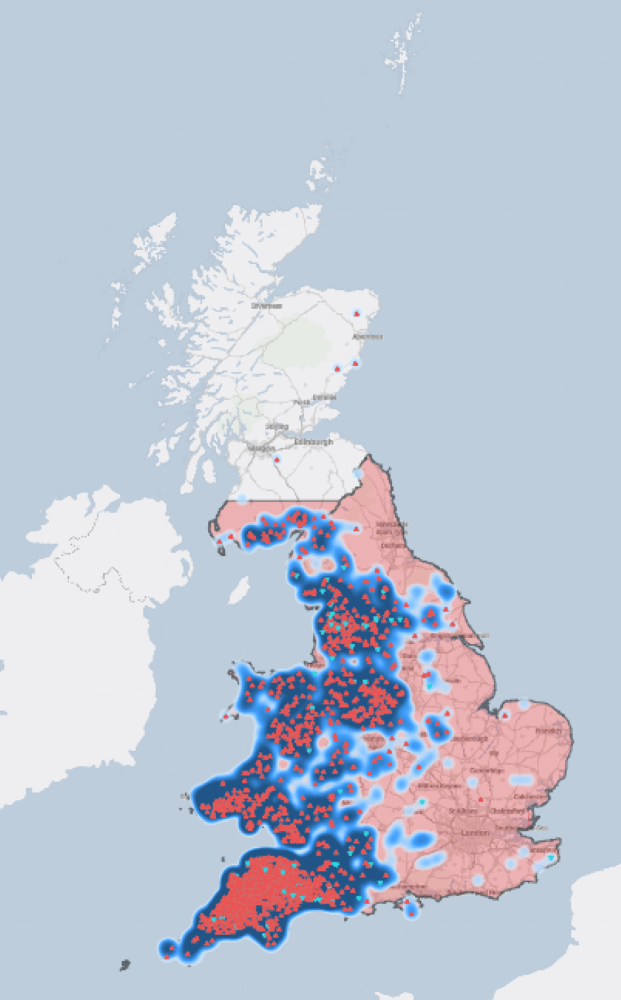
There have been 2,201 cases of bluetongue serotype 3 (BTV-3) or unspecified serotype in the UK in the 2026 to 2027 bluetongue season. A case is defined as a premises on which bluetongue has been confirmed, based on risk and following laboratory or clinical diagnosis. This includes:
- 1,825 cases in England
- 338 cases in Wales
- 39 cases in Scotland
- 0 cases in Northern Ireland
Scotland
| county | Number of cases (and change since last update) |
| Aberdeenshire | 2 |
| Angus | 1 |
| Dumfries and Galloway | 35 (+1) |
| South Lanarkshire | 1 |
| Total | 39 |

Bluetongue (BTV-3) cases in Scotland
| Species | BTV-3 animals confirmed |
|---|---|
| Sheep (including ewes, rams and lambs) | 20 |
| Cattle (including cows, heifers and calves) | 82 |
A restricted zone was put in place in South West Scotland on 10 September 2026.
Livestock keepers must follow the movement controls on animals and germinal products and apply for a licence where needed. Check the bluetongue case map and GOV.SCOT for more information.
There are currently 1,072 potential cases of bluetongue under investigation in Great Britain. These are premises that have reported suspicious clinical signs and where the keeper has not yet received the test results.
The bluetongue cases map has been updated to show suspect and confirmed cases of bluetongue. It also shows cattle and sheep population density.

The following species have test positive for bluetongue since 1 July 2026:
- sheep (including ewes, rams and lambs)
- cattle (including cows, heifers and calves)
- alpaca
- llama
- goat
The total number of affected animals is likely to be significantly higher than reported because testing does not always include every animal on a premises.
The midges that spread bluetongue became active again on 31 March 2026.
Temperatures are still consistently high enough in many parts of the UK and nearby continental Europe for the virus to develop inside the midges. This means onward transmission is now occurring. There is some bluetongue circulating in northern Europe and there remains a low risk of transmission from infected midges blown across the Channel. Animals can also get infected through germinal products (semen, ova or embryos).



Leave a Reply