
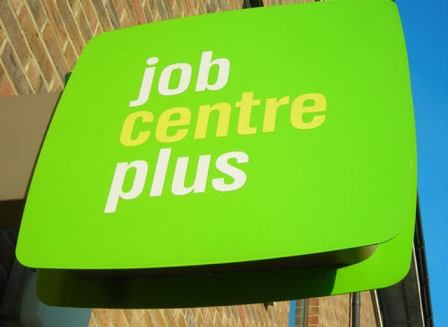
 At the Conservative Party conference in 2010 Ian Duncan Smith announced a new system that would deliver social security across the UK which he boasted would bring “fairness and simplicity” named Universal Credit (UC). As someone who is going through the process of claiming for UC, I can vouch for it being neither fair nor simple. After badly fracturing my ankle in three places, and having an operation, I am set to be off my work for three or four month’s recovery. I am a full-time post-graduate student and work part-time as a waiter to fund my studies. After sending my fit note my employer informed me that due to being a “low earner” I would not be entitled to Statutory Sick Pay (SSP). I was required to contact the Department of Work and Pensions to claim my SSP. When doing this I was told by the adviser on the phone that UC had been rolled out in my area and I would have to claim by filling in an online application. I was surprised to hear that I was required to go down the UC route and being a Scottish Green Party activist and foodbank volunteer I have seen the impact of UC for myself.
The UC claim is not made as an individual as it is based on household income. This seems to reflect the Conservative Party’s ideology that people should look after themselves and not gain support from The State. It further assumes that my partner is able to support me after his own financial commitments. SSP was a benefit that traditionally provided an individual with financial support whilst they were off sick. This has now been merged into UC along with Jobseeker’s Allowance, Housing Benefit, Working Tax Credit and a variety of Income Support benefits.
The online process is farcical as the extensive online forms take around thirty minutes to complete – that is, if you have the computer skills, access to a computer and the internet. The forms require be filled in once by claimant and repeating the process for a partner who, in my case, is not claiming anything. You are expected to navigate the forms autonomously, risking sanctions or delayed payments if the information provided is incorrect, which takes all responsibility from Job Centre staff and places it solely on the claimant. This could cause anxiety or barriers to those who do not have the ability or the confidence to complete the application alone. This is not an inclusive approach and support can only be accessed from a centralised call centre or from volunteers in organisations such as the Citizens Advice Bureau. Furthermore, my first payment date is on the 14th of March but no one has advised me on how much I am set to receive or even if I should expect anything at all.
As part of the initial process and as a means to prevent fraudulent claims I was required to successfully complete an online ID verification process. This activity proved to be the most problematic and frustrating part of the entire claim process. It failed to identify me even though I have a passport, driving licence, bank accounts, a telephone bill and answered five security questions about my credit history. I had to abandon the online verification and book an appointment with the local Job Centre in order to have my identification physically verified.
It is significant that the online ID verification system is provided by seven different private companies: Barclays, CitizenSafe, Digidentity, Experian, Post Office, Royal Mail and SecureIdentity. Out of the four recommended to me, none of them were successful in verifying my identity. As a society, we are reminded by our Government that we are living in times of Austerity yet it seems to be quite acceptable for the Conservatives to tender out to seven different private companies, each of which offered an inefficient service. A service so lacking that it failed to identify a person who has appropriate ID, has lived at his address for over three years and who is on the voters roll. When I attended my ID verification interview I asked the agent if the online system is successful for any claimants and she replied “hardly ever”. This is scandalous and should not be allowed to continue whilst organisations like Barclays profiteer by providing an online service which is not fit for purpose.
I found myself in this system because I work in an industry where precarious working practices are normalised. People who work in the service sector tend to be students, low skilled workers, employees working for the minimum wage and predominately women. It just takes an accident or long-term illness for these employees’ to be left with no financial support and having to turn to UC with its six weeks minimum wait for payment. As a society we need to challenge precarious working practices alongside the ideological social security system designed by the Conservative Party by considering alternatives such as Universal Basic Income.
Brian Finlay MSc Student in Human Resource Management
Twitter: @BSFGreen
His blog #LeftyInABusinessSchool can be found at:leftyinabusinessschool.wordpress.com
The Orkney News welcomes contributions from its readers. Use the contact form or email: fiona@theorkneynews.scot





Leave a Reply