
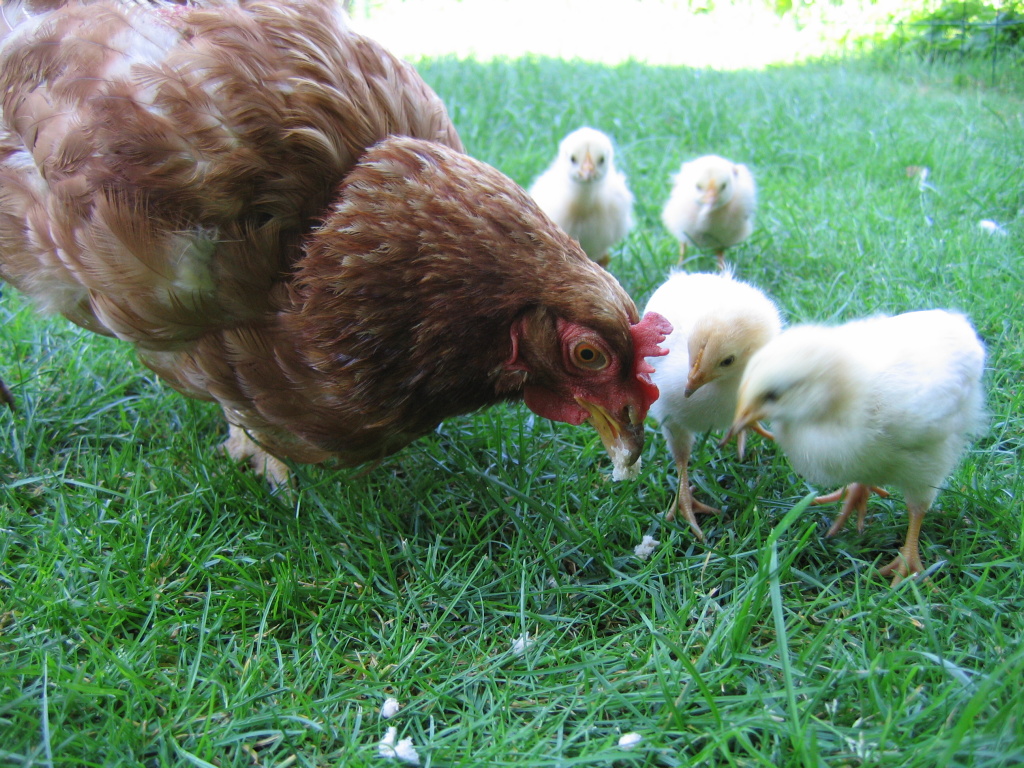
Are your chickens happy or sad? Are they annoyed or contented? Now research led by the University of Queensland has analysed the results of human responses to chicken clucking to show that – yes we can understand.

Professor Joerg Henning from UQ’s School of Veterinary Science explained:
“In this study, we used recordings of chickens vocalising in all different scenarios from a previous experiment.
“Two calls were produced in anticipation of a reward, which we called the ‘food’ call and the ‘fast cluck’.
“Two other call types were produced in non-reward contexts, such as food being withheld, which we called the ‘whine’ and ‘gakel’ calls.
“We found 69% of all participants could correctly tell if a chicken sounded excited or displeased.
“This is a remarkable result and further strengthens evidence that humans have the ability to perceive the emotional context of vocalisations made by different species.
“A substantial proportion of participants being able to successfully recognise calls produced in reward-related contexts is significant.
“It provides confidence that people involved in chicken husbandry can identify the emotional state of the birds they look after, even if they don’t have prior experience.
“Our hope is that in future research, specific acoustic cues that predict how humans rate arousal in chicken calls could be identified, and these results could potentially be used in artificially intelligent based detection systems to monitor vocalisations in chickens.
“This would allow for the development of automated assessments of compromised or good welfare states within poultry management systems.
“Ultimately this could enhance the management of farmed chickens to improve their welfare, while helping conscientious consumers to make more informed purchasing decisions.”
The research paper, Humans can identify reward-related call types of chickens, is published in Royal Society Open Science.
Film by Nick Morrison




Leave a Reply