
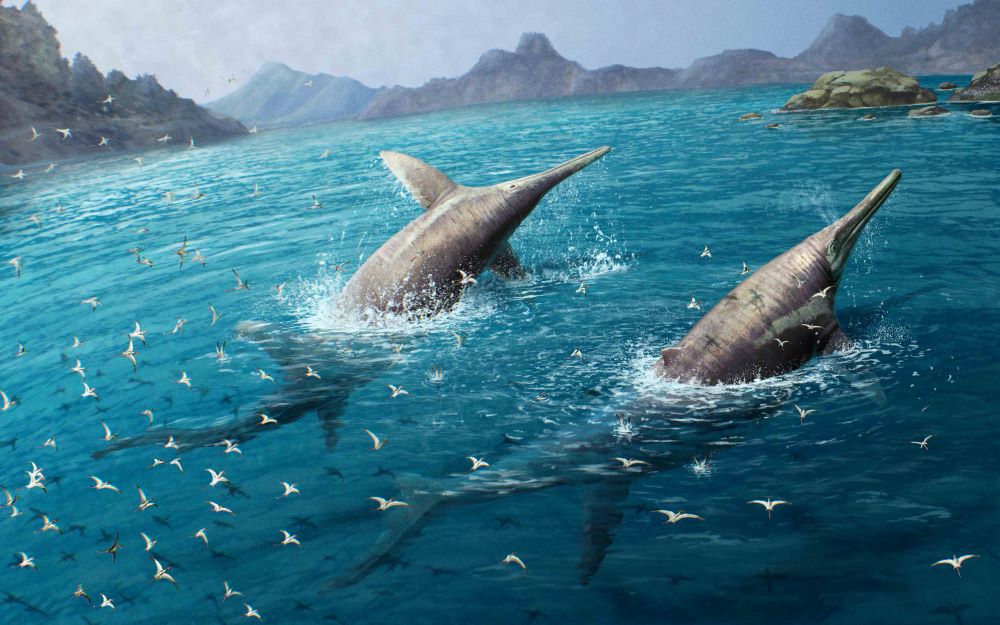
Scientists have identified a new species of Ichthyosaurus from the remains of one of the largest marine reptiles that lived 200 million years ago.

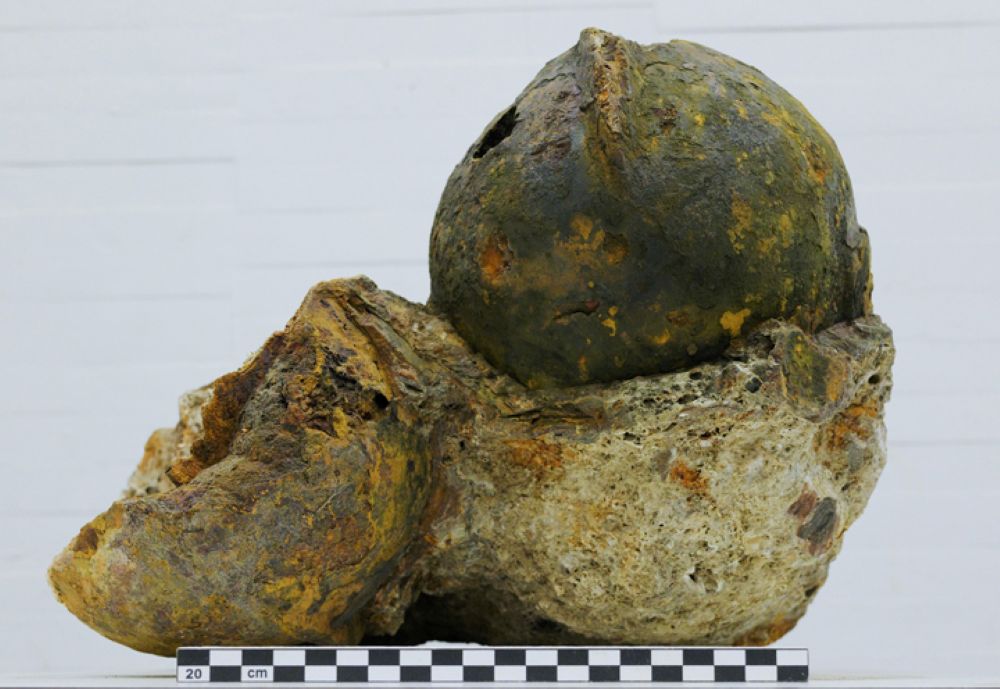
A research team from the University of Bristol and University of Manchester, UK, led by Dean R. Lomax, discovered and pieced together individual fragments of an ichthyosaur jawbone from the Westbury Mudstone Formation in Somerset, UK.
The new bone was similar in size and shape to another jawbone collected from the same rock formation just a few miles away — and the researchers now believe these two jawbones belong to a previously undescribed species of ichthyosaur, a group of massive, ocean-dwelling reptiles from the age of the dinosaurs.
Based on the length of these bones, the new species, named Ichthyotitan severnensis, may have been a whopping 25 meters (82 feet) long, or twice the length of a city bus. However, since the new species is being described solely via limited bone fragments, the study authors stress that further paleontological evidence is needed to confirm just how large I. severnensis likely was.

Ichthyosaurs, many of which looked like modern-day dolphins, first evolved during the early Triassic period around 250 million years ago. Within a few million years, some ichthyosaurs had evolved to reach at least 15 meters (49 feet) long, and by the Late Triassic (roughly 200 million years ago), the largest ichthyosaurs had evolved, including the newly described I. severnensis. This reign didn’t necessarily last long, however. While some species of ichthyosaur continued to roam the oceans for millions of years, these “giant ichthyosaurs” are believed to have gone extinct during the Triassic-Jurassic extinction event 200 million years ago — and this unique group of marine reptiles never again reached such a gargantuan size.
Dr. Dean Lomax explained:
“In 2018, my team (including Paul de la Salle) studied and described Paul’s giant jawbone and we had hoped that one day another would come to light.
“This new specimen is more complete, better preserved, and shows that we now have two of these giant bones (called a surangular) that have a unique shape and structure.
“It is quite remarkable to think that gigantic, blue whale-sized ichthyosaurs were swimming in the oceans around what was the UK during the Triassic Period. These jawbones provide tantalising evidence that perhaps one day a complete skull or skeleton of one of these giants might be found. You never know.”
Click on this link to access, The last giants: New evidence for giant Late Triassic (Rhaetian) ichthyosaurs from the UK, published in PLoS ONE



Leave a Reply