
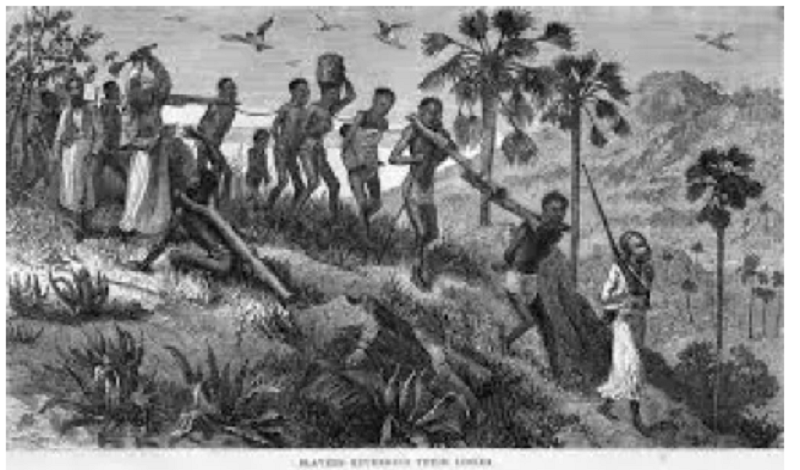
Retired Anglican Priest, Rev Yousaf Gooljary is a Member of the Iona Community and a Member of the Scottish Parliament Cross Party Group challenging religious and racial prejudice. He has highlighted before in The Orkney News how the proceeds from slavery were used to fund the building of Churches in Scotland. Many of these places, not all still owned by the Church of Scotland and the Free Church, have acknowledged the historical links they have with the sale of human lives.
On 3rd of June a blog by Fraser MacDonald was published in the London Review of Books – Send Back the Money. about the relationship between the Free Church and Slavery.
After the 1843 Disruption, when the Free Church of Scotland split from the Church of Scotland, some of its leaders tried to raise money from Presbyterians in the American South. Some of those who gave money were slavers. There was disapproval, but the money spoke louder – some sources say the church accepted £3000, others $3000. The American abolitionist Frederick Douglass came to Edinburgh in 1846 to urge the church to ‘Send Back the Money’. Last year, the Free Church Board of Trustees agreed to set up a committee of inquiry into these donations, led by the principal of the Edinburgh Theological Seminary, Rev. Iver Martin. The expectation was that it would report to this May’s General Assembly. ‘It’s an important issue,’ Donald Forsyth, the chairman of the trustees, said, ‘and we’re not going to dodge it. It needs to be addressed.’

In Fraser MacDonald’s blog he states that the meeting was held in private (highly unusual) and that no report has been published. However, a statement was issued where the Free Church:
‘recognises and freely admits the historical sins of members of the denomination in relation to slavery’; ‘we express regret over the interaction between members of a Free Church delegation that visited the USA in 1844 and some of their US associates’; ‘we grieve that the Free Church decided to receive funds as a result of the delegation’; and ‘we acknowledge with sorrow the actions of our forebears.’
Fraser MacDonald in his blog gives examples from the 19th, 20th and 21stC of members of the Free Church – the few that opposed slavery and those that continue, even to this day, to promote racist views.
The Church of Scotland’s Response to the Legacy of Slavery
In 2023 The Church of Scotland published its report, after extensive research, on its connections with the transatlantic slave trade.
The research covers a 131-year period between the Act of Union in 1707 and the abolition of slavery in Britain’s colonies in the West Indies during the 1830s.

It reveals that some Church of Scotland ministers and elders inherited wealth made on plantations from relatives and some buildings including Glasgow Cathedral have memorials to people who profited from the slave trade. Some church members received sums of money from plantation owners while the organisation itself is the custodian of a multi-million-pound fund which can be connected to compensation paid out to a family upon the abolition of slavery.
The report states that up to as many as 20,000 Scottish migrants arrived in the West Indies during the latter half of the 18th century and it is likely that many places of worship were built by enslaved people such as St Andrew’s Church in St George’s, the capital of Grenada.
The British Government paid £20 million to slave owners in compensation for their loss of ‘assets’ when slavery was abolished across most of the British Empire in 1833.
In some cases, money from slavery was bequeathed to parishes for specific purposes, such as poor funds distributed by the Kirk.
The names in the report include:
Very Rev Angus MacKellar, Moderator of the General Assembly of the Church of Scotland in 1840, who inherited a part-share of Hampden and Kerr estates in Jamaica through his wife Helen Stirling.
Rev Peter Robertson, a minister at Callander, was awarded compensation for enslaved people on the Friendship Estate, Jamaica as an executor and trustee of Duncan Robertson who was his uncle.
Rev Dr Robert Walker, a prominent abolitionist, minister at Cramond and later Canongate Kirk, both Edinburgh, was left the residuary estate of his brother John Walker, a merchant in London and St Lucia. The clergyman is the subject of a famous oil painting attributed to Henry Raeburn called the ‘Skating Minister’ which hangs in the National Gallery of Scotland. As a merchant living in St Lucia, John Walker’s connections to the slave economy can be inferred, but it is unknown whether he personally owned any slaves.

There are a number of church buildings that benefited from financial gifts from people who owned slaves across Scotland.
Alexander Grant financed the clock tower at Aberlour Parish Church in Moray. He was an enslaver and merchant in Jamaica and the nephew of Rev Alexander Grant, minister of Glenrinnes.
Gourock Old and Ashton Parish Church in Inverclyde bears the coat of arms of Gourock, which is widely understood to depict an enslaved man. The coat of arms has strong connections to Duncan Darroch, who made his fortunes in Jamaica.
Glasgow Cathedral, under the care of Historic Environment Scotland, contains a number of memorials to prominent city merchants who made their fortunes through tobacco and sugar from plantations in the West Indies. These include memorial windows to Alexander Spiers of Elderslie and Sir James Stirling of Keir, who owned slaves in Jamaica. Cecilia Douglas, who owned slaves on St Vincent in the Caribbean, donated a large window to the cathedral and there are two memorial inscriptions in her memory and that of her husband Hugh Douglas at Bothwell Parish Church in Lanarkshire.
The Kirk Session of Irvine Parish Church was bequeathed £100 in trust for the benefit of the poor by William Gemmell, merchant in Messrs Gemmell, Bogle & Scott which was associated with the Mount Craven estate in Grenada.
Augusta Lamont was the great niece of John Lamont, a sugar planter and enslaver resident in Trinidad who received £9,000 in compensation on the abolition of slavery. He left the majority of his wealth to his nephew James, Augusta’s father, and she was the last of the family to inherit Clan Lamont’s property in Scotland. Upon her death in 1950, she bequeathed the entirety of her share of the estate, which largely related to the contents of Knockdow house, to the Church of Scotland to further the work of the Church in the Cowal Peninsula in Argyll and Bute. The sale of the property and the contents was completed in 1990 and in 1992 £1,549,814.16 was received by the Church and the fund is currently understood to be valued at just over £5.5 million.
Response by The Free Church of Scotland to its Slavery Legacy
The Guardian recently published an article ‘Free Church of Scotland under fire for failure to apologise over slavery money’ . The Assembly of the Free Church of Scotland released a statement on 22nd May 2024 regarding the denomination’s connection to historical slavery.
“The Free Church of Scotland is firmly opposed to all forms of racism and slavery. The Bible teaches that everyone is made in the image of God and worthy of inherent dignity and respect. We are all equal in the eyes of God and the Bible urges us to love one another without partiality. Many of our congregations and individual members are financially, prayerfully, and actively engaged with organisations working to release and protect people from modern-day slavery and trafficking.
“The Free Church recognises and freely admits the historical sins of members of the denomination in relation to slavery. In particular we express regret over the interaction between members of a Free Church delegation that visited the USA in 1844 and some of their US associates. We grieve that the Free Church decided to receive funds as a result of the delegation.
“Even though we, as the Free Church today, are unlikely to be the beneficiaries of these funds due to the various transfers of property to other denominations, yet as their successors we acknowledge with sorrow the actions of our forebears who held the name of Free Church office holders. We express gratitude for the many Free Church members and office holders who actively opposed the slave trade and expressed opposition to it.
“The Free Church affirms the necessity for constant watchfulness against oppression in various forms, and we continue to commit ourselves to the opposition of modern-day slavery and racism.”
Fraser MacDonald has written in his blog that this is not enough because the Free Church continues to benefit today from those historical money transfers and legacy investments.
Fiona Grahame
Orkney also has several links with slavery:
- Orkney and Slavery–‘I have at present 36 negroes, besides stock…’
- Book Review: In My Right Place, the Life and Times of Joseph Clouston, Gold Coast Merchant and Harray Laird

Leave a Reply