
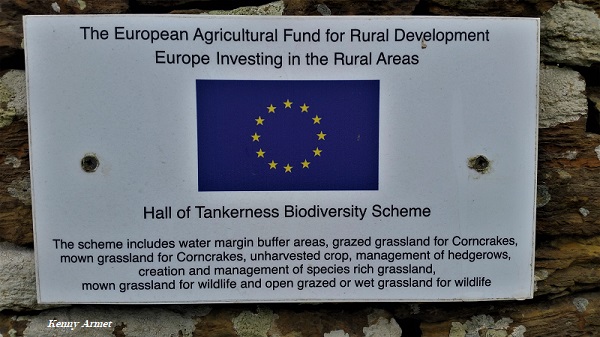
On 23rd of June 2016 Scotland voted to remain in the European Union : 62% to stay in the World’s largest free trade market and 38% to leave. Every local authority area of Scotland voted Remain.

The results across the rest of the UK were different: England voted to Leave 53.4%, Remain 46.6% ; Wales voted to Leave 52.5%, Remain 47.5%; and Northern Ireland voted to Remain 55.8%, Leave 44.2%.
The referendum was an advisory one, but the UK Parliament, went with the result, despite the results in Northern Ireland and Scotland :
At 11pm on 31 January 2020, the UK left the EU and entered a transition period.
At 11pm on 31 December 2020, the transition period ended and the United Kingdom left the EU single market and customs union.
The loss of being part of the world’s largest free trade area, the loss of free movement of goods and people , the loss of the Erasmus educational programme, and the loss of our EU citizenship, continues to be felt strongly in Scotland. But what are the main political parties promising Scots in their Manifestos for the General Election on 4th July?
The Conservatives: ‘Clear Plan, Bold Action, Secure Future’
The Tories pledge to “Seize the benefits of Brexit by signing further trade deals, speeding up infrastructure and unblocking
100,000 homes, cutting red tape for business, and creating new fishing opportunities.”
- secured trade deals with 73 countries plus the EU and last year we removed £1 million of trade barriers every single hour.(Here is a list of the countries that the UK has made trade agreements with or is in the process of making: UK trade agreements in effect)
- signed a deal to join the Comprehensive and Progressive Agreement for Trans-Pacific Partnership (CPTPP)
- complete free trade agreements with India and with the Gulf Cooperation Council, continue to pursue free trade agreements with countries such as Israel and Switzerland.
- The Trade and Cooperation Agreement (TCA) is the most comprehensive FTA the EU has ever agreed.
- All food and drink products imported into the UK, including those from countries we have trade agreements with, must comply with the UK’s high standards.
- stand up for UK agriculture in our trade deals.
- signed the Atlantic Declaration and deals with eight US states, including Florida and Texas, with a combined GDP of £5.7 trillion – look to agree a free trade agreement with the US when they are ready to do so.
- legislated to remove the principle of EU law supremacy and have undertaken a root-and-branch review of the more than 6,000 laws we had inherited from the EU.
- repealed or reformed over 2,000 EU laws and by July 2026 we will have repealed or reformed over half of the entire stock of EU law we inherited.
Labour., ‘Change’
The Labour manifesto states that they will “embrace a new approach to economic management – securonomics”
- continue to work with the United States on the basis of our shared values and common interests including on economic co-operation, defence and intelligence.
- Britain will stay outside of the EU.
- no return to the single market, the customs union, or freedom of movement.
- seek to negotiate a veterinary agreement to prevent unnecessary border checks and help tackle the cost of food; – help touring artists; and secure a mutual recognition agreement for professional qualifications to help open up markets for UK service exporters.
- seek an ambitious new UK-EU security pact to strengthen co-operation on the threats we face.
- rebuild relationships with key European allies, including France and Germany, through increased defence and security co-operation.
Scottish National Party (SNP) ‘A Future Made In Scotland’
Number 3 of the SNP Manifesto pledges is “Rejoin the EU, reverse the damage of Brexit and re-enter the single market restoring free movement for EU citizens.”
The Manifesto states that the SNP “will champion our vision for an independent Scotland in the EU, offering Scotland the
opportunity to regain what has been lost as a result of a hard Brexit and harness the opportunities that independence would provide.
Rejoining the EU would deliver:
● Freedom of movement to live, visit, study and work freely in any EU country
● Cheaper and quicker trading for business
● More funding for farming, fishing and other rural sectors
● Access to workers from across the EU, enabling many of our industries to grow
● Re-entry to the Erasmus+ scheme, widening educational opportunities for Scotland’s future generations
● A safer Scotland, working closely with police in the EU to help fight cross border crime, serious organised crime, cyber crime and terrorism
● Access to the Creative Europe scheme, supporting culture sector cooperation and boosting economic potential of our creative industries
Liberal Democrats ‘For A Fair Deal’
The LibDem Manifesto promises to “Fix the UK’s broken relationship with Europe by following their four-stage roadmap:
- Taking initial unilateral steps to rebuild the relationship, starting by declaring a fundamental change in the UK’s approach and improving channels for foreign policy cooperation.
- Rebuilding confidence through seeking to agree partnerships or associations with EU agencies and programmes such as the European Aviation Safety Agency, Erasmus Plus, scientific programmes, climate and environment initiatives, and cooperation on defence, security and crime.
- Deepening the trading relationship with critical steps for the British economy, including negotiating comprehensive veterinary and plant health agreements and mutual recognition agreements.
- place the UK-EU relationship on a more formal and stable footing by seeking to join the Single Market.
- All these measures will help to restore the British economy and the prosperity and opportunities of its citizens, and are also essential steps on the road to EU membership, which remains our longer-term objective.
Scottish Green Party ‘Vote Like Our Future Depends On It’
The Greens put forward in their Manifesto the prospect of “An independent Scotland in the EU”, and state
- For more than 60 years, the European Union and its predecessors has proved to be one of the most effective forums for cross-border collaboration on global challenges, including climate change, biodiversity loss, food security and peace-building. Scotland is a poorer country – both economically and culturally – due to the loss of our EU membership.
- Whilst we respect the democratic right of the people of England and Wales to choose to leave, this was not the choice of the people of Scotland or Northern Ireland. The UK Government has shown a complete disregard for this difference of decision ever since. We have lost our right to travel, live, work and study across the continent; our environmental protections, protections for workers, and enhanced human rights protections; and our ability to trade and collaborate with our closest European neighbours.
- With no UK-wide party now supporting re-entry to the EU, it is clear that the only way for Scotland to uphold the democratic vote of 2016 is through independence. The Scottish Greens will continue to fight for Scotland to become an independent country in the EU, and will ensure this option is put to the people of Scotland at a future referendum.
To sum up:
Against re-joining the European Union: Conservatives and Labour.
Liberal Democrats in favour of joining the Single Market and to eventually re-join the EU.
For re-joining the European Union: SNP, and Scottish Greens.
The candidates standing in the Orkney and Shetland Constituency at the General Election on 4th July are as follows:

Fiona Grahame

Leave a Reply