
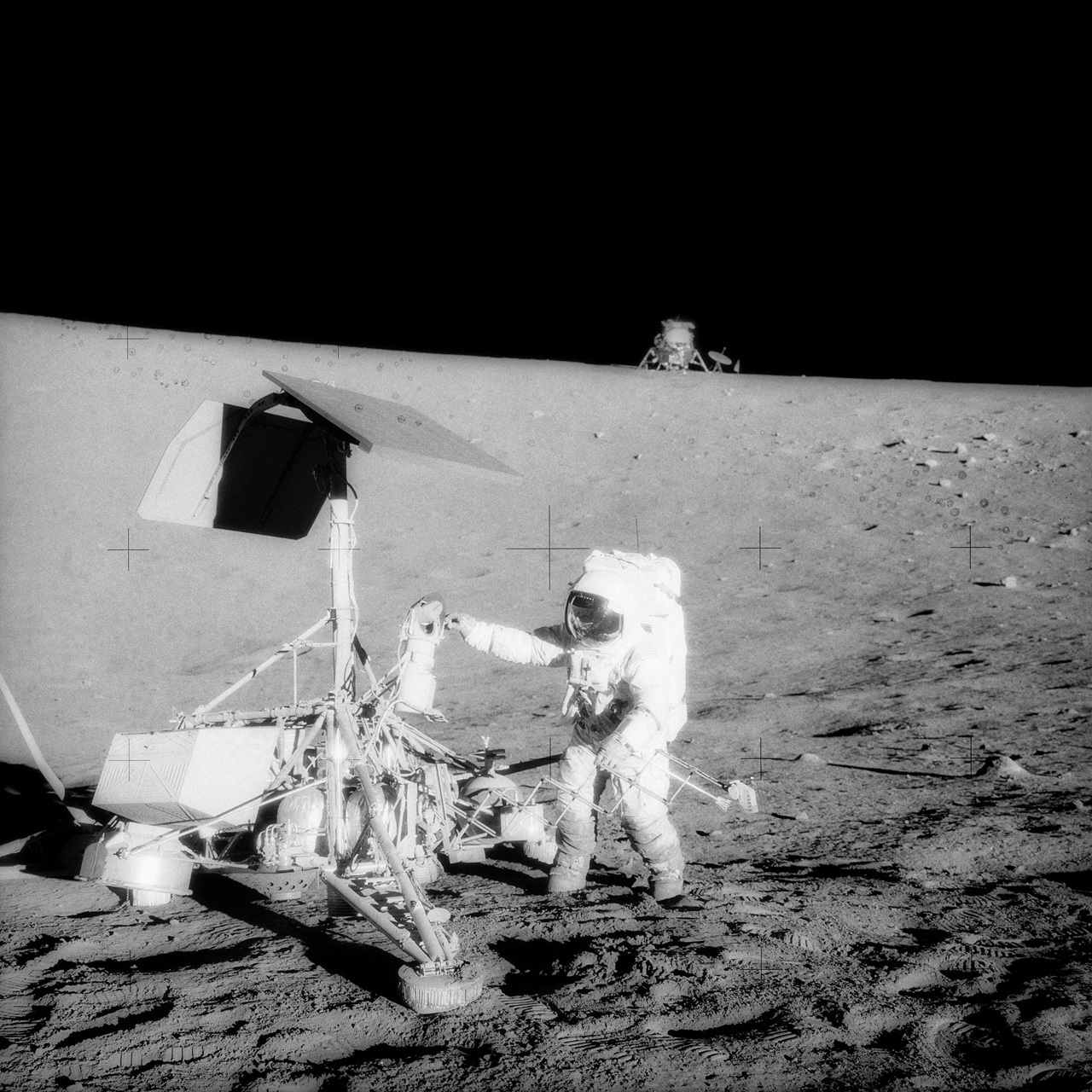
Is there life out in Space ? do we know what we are looking for ? and what if we are missing the signs ?
Researchers at Utrecht University have been posing the tricky questions around ‘false negatives’ – missed opportunities to detect life forms on other planets.
Astrobiologists are very aware of the possibility of ‘false-positive’ indications that wrongly suggest the existence of life. A false-negative result, on the other hand, means that we fail to detect life that is or was indeed present.
Inge Loes ten Kate, professor in astrobiology at Utrecht University and the University of Amsterdam, explained:
“We should be aware of these false-negative results. It means there are shortcomings in recognising the existence of life. These shortcomings are not yet high on the research agenda.
“We therefore advocate for the development of a targeted research strategy that systematically addresses these risks, in which we must combine laboratory experiments with modelling research and fieldwork.
“Space missions and instruments are designed to detect potential signs of life, but the risk of overlooking something is not taken into account. The search for signs of life should go hand in hand with better-defined questions and testable hypotheses to justify specific measurement or observation targets.”

The scientists feel that using AI could be a valuable and powerful tool in finding these patterns.
“Because then you might well uncover things that we would never be able to see on our own. And with new observations, you can then work out how and where they fit into such a pattern.”
She continued:
“A simplified example: if there is life under a rock, and you only look at that rock from above, that life will go unnoticed. So, investigate thoroughly whether the conditions for the existence of life forms are present in the environment, and whether you can recognise patterns on the surface of a celestial body.
“Secondly, there is a danger that policymakers will approve the premature exploitation of raw materials on planets, with the risk of irreversibly destroying unnoticed life.”
Fans of Star Trek will recall the episode, ‘The Devil in the Dark’, which dealt with this very issue. The Horta ‘The Devil in the Dark” is a silicon-based life form. In this episode, said to be Leonard Nimoy’s (Spock) favourite miners are destroying a lifeform due to ignorance that it exists.
The scientists at Utrecht argue that false-negative results may, for example, arise from traces left behind by life forms that are widespread and active on a planet’s surface but are not detected.
Similarly, an interaction between the production and capture of atmospheric gases on a planet can lead to false-negative results, as it may mask the release of those gases or shorten their lifespan. These types of causes of false-negative results are difficult to identify, as they are often only identified retrospectively.
Inge Loes ten Kate and the researchers say that,
“the heart of the problem is that we tend to look for things we already know. We therefore need to understand very clearly what kind of life is possible in a particular place, what the conditions for that life are, and how we can recognise the traces of that life. And even then, we might overlook things.”
For example of the iron-bearing minerals found on Mars last year, which clearly show a kind of oxidation differing from other minerals in the vicinity.
“On Earth, we only see such differing oxidation as a result of the presence of life. But does that necessarily mean that we are dealing with life in an extraterrestrial context?”
“To be clear: these minerals do not mean that we are dealing with false-negative results in this case. We simply do not yet understand what is going on here. But if we do not investigate this further, it could indeed result in a false negative. So we need to understand even better how the geochemistry works, and how the underlying chemical reactions operate in such situations. That will also help you try to rule out false-negative results.”
And, last but not least: know what you’re getting into before you send an expedition anywhere. “So make sure you’ve studied the situation in the landing zone meticulously in advance.”
Click on this link to access, False negatives in the search for extraterrestrial life, published in Nature Astronomy.
The Green Children of Woolpit, Part 2



Leave a Reply