
By Bernie Bell
I regularly look at a Facebook site known as ‘Ancient Stone Bothering’ https://www.facebook.com/groups/2003881253140331 on which someone asked about in-explicable sounds in the landscape or at ancient sites.
Aaron Watson has done a lot of work on the use/effects of sound at ancient sites https://www.aaronwatson.co.uk
And so has Paul Devereaux https://en.wikipedia.org/wiki/Paul_Devereux
This brought Duntryleague Cairn to mind.
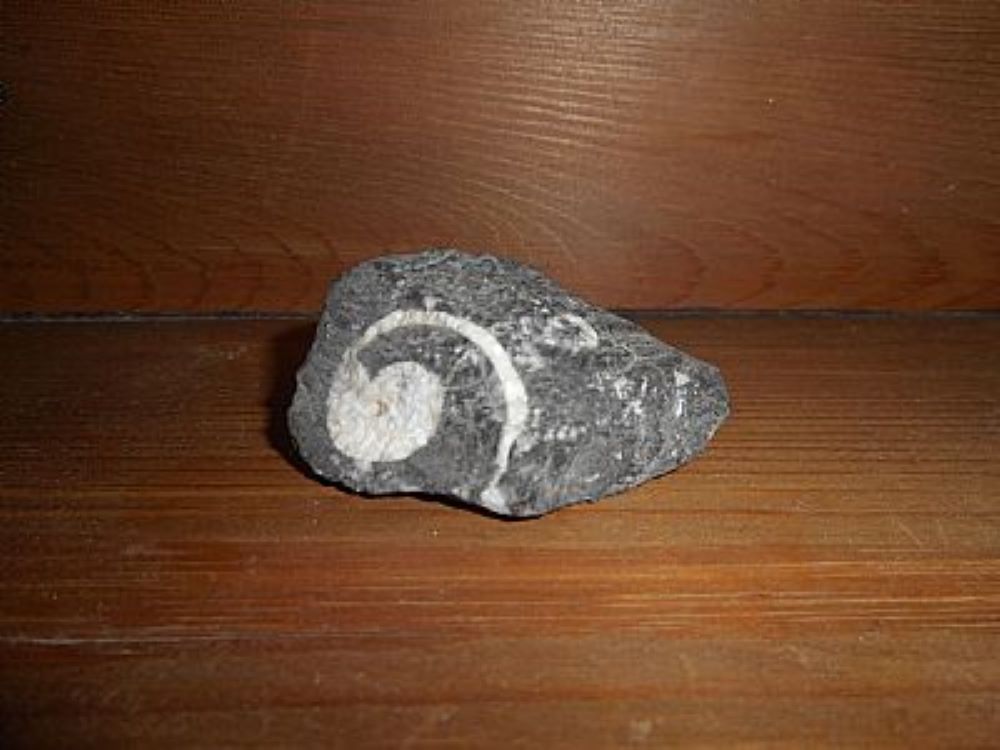
Mike and I were visiting family in County Limerick, Republic of Ireland and staying in a cottage not far from Duntryleague Hill. We walked up a winding track cut around the side of the hill, where we found stones with spirals in them

I also found one with a triple spiral, which I gave to my sister. They’re fossilized sea-shells and finding them on the hill adds to the magic.
We were fortunate in our timing, as the site is usually in a Forestry plantation but when we were there the trees had recently be cut down, so we could appreciate the full, impressive, vista which can be seen from the Cairn, and which would have been seen when it was built.
Cairns are often built on an elevation overlooking surrounding countryside


Mike sat inside the Cairn and ‘toned’, making deep humming noises. I sat outside, quietly eating a Mars bar, when it suddenly sounded like about a dozen people were in there!
It was our first experience of sound resonating off the stone in a cairn, and there have been others since….
The Dwarfie Stane https://theorkneynews.scot/…/bernie-bell-orkney-walks…/
Wideford Cairn https://theorkneynews.scot/2021/12/28/on-christmas-day-on-christmas-day/
There was a toning event at Maes Howe a few years ago https://theorkneynews.scot/…/what-the-architecture…
The Grey Cairns of Camster https://theorkneynews.scot/2018/03/31/something-about-sound/
Four Knocks in the Bru Na Boinne, where Mike did ‘didgeridoo’ noises in the side chambers, and the resonance was wonderful. I realise that might be because a metal ceiling has been put on the Cairn, but it was impressive anyway.

Do the zig-zag carved lines indicate sound patterns? That’s another thought to conjure with.
There must have been people who had a strong knowledge of engineering, acoustics and the different properties of different stones, carefully planning the siting and building of those cairns to achieve the required effect. It can’t possibly be co-incidence that such sounds are produced.
Those people really knew what they were doing, and that knowledge would need to be transfer-able. They are said not to have had writing, but how can we know that they didn’t?
What was the sound used for? Could be a number of things – and I don’t mean this thing or that thing – it could have been for a number or all of them.
For example, modern medicine uses ultra-sound to detect and alleviate some health problems. There are practitioners of complementary medicine who can direct sound to re-balance and heal.
Imagine though, in one of the cairns, the combined use of light and sound and maybe smoke. Imagine. And that would need to be taken into account at the very beginning of the building plans, by folk who knew what they were doing.





Leave a Reply