
Since October 2023 The Orkney News has reported the appalling human cost of the destruction of Gaza. The vigils held every Saturday in Orkney on the Kirk Green between 1 and 2pm have also been documented both in print and in film by The Orkney News. This Saturday 4th January, campaigners will again meet outside St Magnus Cathedral calling for an immediate ceasefire, the return of all hostages and the unhindered delivery of humanitarian aid.
Less covered has been the destruction of sites of historical and cultural significance as the deaths of tens of thousands of innocent civilians sheltering in flimsy tents has been to the fore of our reporting. The human lives and the cultural destruction, together constitute a genocide. As the rest of the world looks on at the horrors unfolding daily, the loss of sites of historical importance in Gaza to many cultures around the world and to our shared humanity is catastrophic. These ancient sites are testament to the importance of Gaza, and the wider lands of Palestine, in the development of trade, knowledge, and the spread of Christianity in the region and beyond. Once gone, they cannot be replaced.
The obliteration of structures and sites of historical significance in Gaza is being monitored by UNESCO (The United Nations Educational, Scientific and Cultural Organization). The destruction is beyond our understanding, a huge loss not only to the people of Gaza, to Palestinians, but to the whole world.
The only way UNESCO can do this is by remote monitoring based on satellite imagery and analysis provided by UNITAR/UNOSAT, as on-the-ground assessments are impossible.
As of 29 November 2024, UNESCO has verified damage to 75 sites since 7 October 2023 – 10 religious sites, 48 buildings of historical and/or artistic interest, 3 depositories of movable cultural property, 6 monuments, 1 museum and 7 archaeological sites.
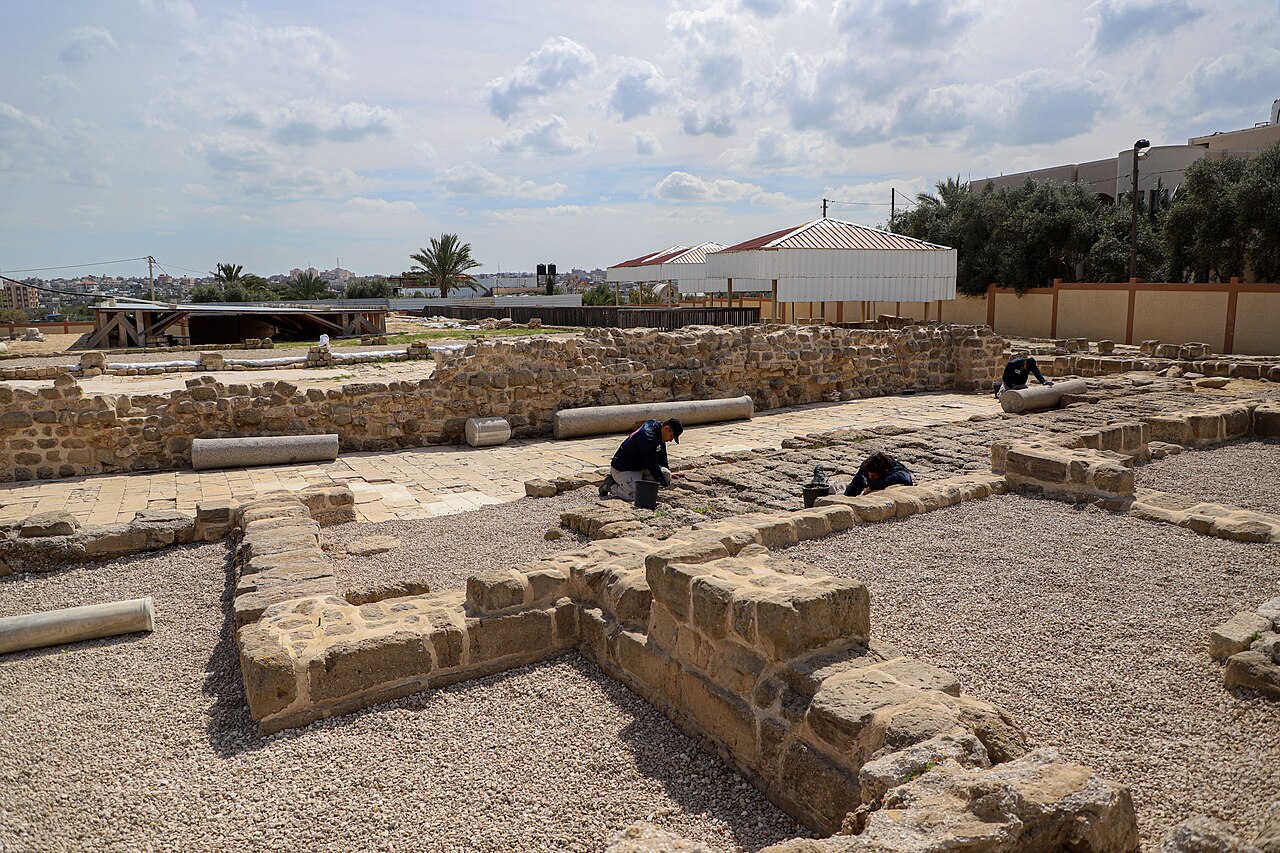
Saint Hilarion Monastery
Those sites include the ruins of Saint Hilarion, one of the oldest monasteries in the Middle East and which bear a unique exceptional testimony to the emergence of Christianity in the region.
The monastery was founded in ca. 340 by Hilarion, a native of the Gaza region and one possible father of Palestinian monasticism (see also Chariton the Confessor). The remains of Saint Hilarion Monastery span more than four centuries, from the Late Roman to the Umayyad period, and are characterized by five successive churches, bath and sanctuary complexes, geometric mosaics, and an expansive crypt.

In December 2023, UNESCO granted the monastery “provisional enhanced protection”. In January 2024, Al Jazeera reported that the monastery is one of 195 cultural heritage sites that have been damaged or destroyed. In July 2024, the monastery was included on the List of World Heritage in Danger by UNESCO. The listing was fast-tracked using emergency procedures, with UNESCO expressing “deep concern about the impact of the ongoing conflict on cultural heritage, particularly in the Gaza Strip” and stating “The organization urges all involved parties to strictly adhere to international law, emphasizing that cultural property should not be targeted or used for military purposes, as it is considered civilian infrastructure.”
UNESCO stated:
“The Hague Convention for the Protection of Cultural Property in the Event of Armed Conflict (1954), ratified by Palestine and Israel, stipulates in particular that States undertake “to respect cultural property situated within their own territory as well as within the territory of other High Contracting Parties by refraining from any use of the property and its immediate surroundings or of the appliances in use for its protection for purposes which are likely to expose it to destruction or damage in the event of armed conflict; and by refraining from any act of hostility, directed against such property”.
Anthedon Harbour
Anthedon is the first known seaport of Gaza, mentioned in Islamic literature with the names of Tida, apparently an abbreviation of Anthedon, or Blakhiyeh. The city was inhabited from 800 BC to 1100 AD, and witnessed a series of different cultures: Neo-Assyrian, Babylonian, Persian, Greek, Roman, Byzantine and early Islamic rules (Umayyad, Abbasid, Tulunid and Fatimid).
Anthedon represents a clear example among the seaports along the Eastern Mediterranean coast, demarcating the ancient trade route that linked Europe with the Levant during Phoenician, Roman, and Hellenistic periods. Abundant archaeological evidence provides a complete and comprehensive picture of the historical and archaeological evolution in the region, which reflects the rich socio-cultural and socio-economic interchange between Europe and theLevant. The presence of massive earthen structure in the proximity of the sea as well as the rich underwater heritage, still to be explored, make Anthedon an excellent site for nomination to the World Heritage list.
The Commonwealth Gaza War Cemetery
Gaza War Cemetery contains 3,217 Commonwealth burials of the First World War, 781 of them unidentified. Second World War burials number 210. There are also 30 post war burials and 234 war graves of other nationalities.

The majority of burials at the cemetery are of Allied soldiers who lost their lives in the First World War, principally in the First, Second and Third Battles of Gaza, all in 1917.
Of the British Soldiers from WW1, the great majority belong to the 52nd (Lowland), the 53rd (Welsh), the 54th (East Anglian) and the 74th (Yeomanry) Divisions.
During the Second World War, Gaza was an Australian hospital base, and the AIF Headquarters were posted there. Among the military hospitals in Gaza were 2/1st Australian General Hospital, 2/6th Australian General Hospital, 8th Australian Special Hospital, and from July 1943 until May 1945, 91 British General Hospital. There was a Royal Air Force aerodrome at Gaza, which was considerably developed from 1941 onwards.
The Roman cemetery, Gaza city
Old Al-Omari Mosque in Jabalia
Also known as Gaza’s Great Mosque, it is the oldest in the region and was built around 700 CE during the Umayyad period. Its structure was developed out of the older cathedral of John the Baptist, which was built in 406 CE.
That structure was in turn built on the old ruins of the Temple of Dagon, a Philistine temple honouring an ancient pagan god of fertility and water, according to the Barakat Trust, a UK charity specialising in the heritage of the Islamic world.
The Great Omari Mosque is reportedly named after the second caliph of Islam, Omar ibn al-Khattab. The mosque was severely damaged as shown in images. The Tale of Gaza’s al-Omari Mosque and the Erasure of Palestinian Archaeological Heritage
As well as the destruction of historically significant sites museums and their collections have been destroyed or looted. In an article by the Museums Association it states:
” The Euro-Mediterranean Human Rights Monitor said Unesco must “fulfill its role in dispatching a fact-finding mission to uncover the fate of thousands of archaeological artefacts in the Gaza Strip, assess the conditions of historical sites, and hold Israel accountable for its violations targeting cultural and human heritage in the region”.
“Independent organisations such as the UK-based collective Forensic Architecture, which uses architectural mapping to investigate state violence and human rights abuses, are also documenting evidence of the destruction of heritage, which they say is deliberate.”
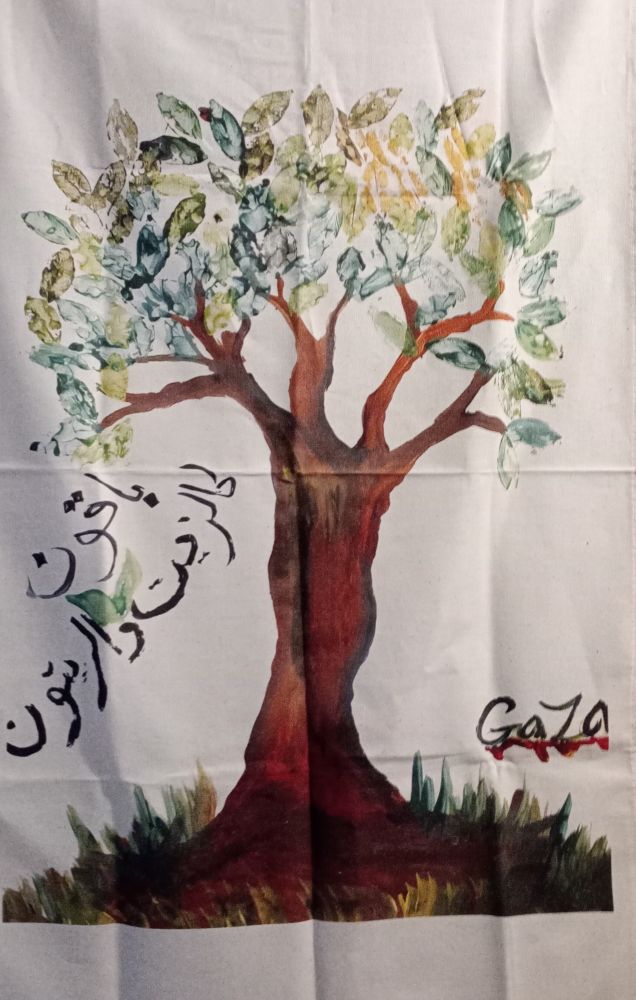
A people without the knowledge of their past history, origin and culture is like a tree without roots. Marcus Garvey
UNESCO has listed the following sites as being damaged or destroyed:
Gaza Governorate (70 sites)
- Anthedon Harbour, Al-Shati Camp, Gaza Governorate
- Ibn Othman Mosque, Gaza city, Gaza Governorate
- Rashad Ash-Shawwa Cultural centre, Gaza city, Gaza Governorate
- The Great Omari Mosque, Gaza city, Gaza Governorate
- Dar AsSa’ada dome and Manuscript Center, Gaza city, Gaza Governorate
- Pasha Palace Museum, Gaza city, Gaza Governorate
- Zofor Domri Mosque, Gaza city, Gaza Governorate
- AsSaqqa Palace, Gaza city, Gaza Governorate
- Subat Al Alami, Gaza city, Gaza Governorate
- Al-Qissariya Market, Gaza city, Gaza Governorate
- The Commonwealth Gaza War Cemetery, Gaza city, Gaza Governorate
- Hamam AsSamra, Gaza city, Gaza Governorate
- Khader Tarazi House, Gaza city, Gaza Governorate
- “Al Mathaf” Hotel (movable heritage repository), Al-Shati Camp, Gaza Governate
- Storage facility of movable cultural objects at the Ministry of Tourism and Antiquities, Gaza city, Gaza Governorate
- The Roman cemetery, Gaza city, Gaza Governorate
- Al-Ghussien house/Goethe Institute, Gaza city, Gaza Governorate
- The Saint Porphyrios Orthodox Church Complex, Gaza city, Gaza Governorate
- Sabil ArRifaiya (ArRifaiya Fountain), Gaza city, Gaza Governorate
- HatHat House, Gaza city, Gaza Governorate
- Old Gaza Municipality historic building of Midan Filastin “AsSaha”, Gaza city, Gaza Governorate
- Ali Ibn Marwan Mosque, Gaza city, Gaza Governorate
- Shaikh Zakaria Mosque, Gaza city, Gaza Governorate
- Al-Mahkama Mosque Minaret, Gaza city, Gaza Governorate
- Al-Mughrabi Mosque, Gaza city, Gaza Governorate
- Raghib Al-Alami House, Gaza city, Gaza Governorate
- Hani Saba House, Gaza city, Gaza Governorate
- Sett Ruqayya Mosque, Gaza city, Gaza Governorate
- Ahmad Bsieso House, Gaza city, Gaza Governorate
- Eid Al-Biltaji House, Gaza city, Gaza Governorate
- Abdelqader Bsieso House, Gaza city, Gaza Governorate
- Sarah Al-Hatou House, Gaza city, Gaza Governorate
- Ash-Shawwa House (architectural monument of local importance), Gaza city, Gaza Governorate
- The Unknown Soldier Memorial, Gaza city, Gaza Governorate
- Riyad Al-Qishawi (Beit Sitti), Gaza city, Gaza Governorate
- Gaza Municipality building of Omar Al-Mukhtar Street (architectural monument of local importance), Gaza city, Gaza Governorate
- Building of An-Nassr Cinema (architectural monument of local importance), Gaza city, Gaza Governorate
- Building of As-Samer Cinema (architectural monument of local importance), Gaza city, Gaza Governorate
- Bashir Ar-Rayyes (architectural monument of local importance), Gaza city, Gaza Governorate
- Jalal Al Ghalayeeni, Gaza city, Gaza Governorate
- Abu Ramadan House, Gaza city, Gaza Governorate
- Al-Qirm House, Gaza city, Gaza Governorate
- Tell el-Ajjul, Al Mughraqa, Gaza Governorate
- Mahfuz Shuhaiber House, Gaza city, Gaza Governorate
- Ali Ibn Marwan Shrine, Gaza city, Gaza Governorate
- Al-Wheidi House (Basma Society), Gaza city, Gaza Governorate
- Tell Essakan, Az Zahra’a, Gaza Governorate
- Omar Shakhsa House, Gaza city, Gaza Governorate
- Ali Abu Al-Kass Shrine, Gaza city, Gaza Governorate
- Tell Al-Muntar, Gaza city, Gaza Governorate
- Moris Shuhaiber house, Gaza city, Gaza Governorate
- Khalil Al Halimi shops (architectural monument of local importance), Gaza city, Gaza Governorate
- Saleh Ja’rour house, Gaza city, Gaza Governorate
- Abdulhamid Ashaikh house, Gaza city, Gaza Governorate
- Ayesh Al-Ar’ir house, Gaza city, Gaza Governorate
- Ashaikh Deib house, Gaza city, Gaza Governorate
- Al-Ghussien shop, (architectural monument of local importance), Gaza city, Gaza Governorate
- Hashim Abu Jarad shop (architectural monument of local importance), Gaza city, Gaza Governorate
- Jahshan House, Gaza city, Gaza Governorate
- Abdul-Mutaleb Al-Ghussien house, Gaza city, Gaza Governorate
- Abu Kamal Sahyon shops (architectural monument of local importance), Gaza city, Gaza Governorate
- Hanna Al-Ma’sarani shops (architectural monument of local importance), Gaza city, Gaza Governorate
- Habib Al-Kabariti shop (architectural monument of local importance), Gaza city, Gaza Governorate
- Abu Mohammad Skaik – Awqaf shop (architectural monument of local importance), Gaza city, Gaza Governorate
- ArRayyes Shop (Architectural monument of local importance), Gaza city, Gaza Governorate
- Theater Day productions, Gaza city, Gaza Governorate
- Atfaluna Society for Deaf Children, Gaza city, Gaza Governorate
- Shababeek Studio, Gaza city, Gaza Governorate
- The Palestinian Institute of Music, Gaza city, Gaza Governorate
- EBAF Storage (Depository of movable cultural property), Gaza city, Gaza Governorate
North Gaza Governorate(1 site)
- Old Al-Omari Mosque in Jabalia, Jabalia, North Gaza Governorate
Rafah Governorate (1 site)
- Tell Rafah, Rafah, Rafah Governorate
Deir Al Balah Governorate (2 sites)
- English Cemetery, Az-Zawaida, Deir al-Balah Governorate
- Al-Bureij Mosaic, Al Bureij, Deir al-Balah Governorate
Khan Younis Governorate (1 site)
- Qal’at Barqouq, Khan Younis City, Khan Younis Governorate
Orkney islanders will again meet Saturday 4th January, on the Kirk Green, Broad Street Kirkwall, between 1 and 2pm. The latest film from the Orkney vigils is available free to view on The Orkney News YouTube channel.
Fiona Grahame






Leave a Reply