
By Ian Cooper in his excellent series ‘Records of a Bygone Age’, first published in The Stronsay Limpet and republished here with kind permission.
Last month we left the South School celebrating the end of the war in Europe and Japan, and also taking an active part in the Victory Celebrations in June 1946.
Continuing with the celebratory aspects of school and island life, the school was
used as a wedding venue on numerous occasions. One of these was on 24th October 1945, when the marriage took place between Tom Miller, Park of Holland, and Mary Shearer, Kirkhall in a ceremony conducted by local minister Rev George Ramage. The school was pressed into use once again on 21st May 1947, this time to celebrate the marriage of George (Dod) Groat and Jessie (Cissie) Tulloch from the nearby farm of Arifea. The school was closed to pupils that day to allow preparations to take place.
The school was again closed because of a wedding on 20th November 1947, this time as a public holiday to celebrate the royal wedding of Princess Elizabeth (later to be Queen Elizabeth II) to Philip Mountbatten. Another festive holiday was given on 26th April the following year to celebrate the Silver Wedding Anniversary of King George VI and Queen Elizabeth.

Although the war was now well past and food imports were slowly getting back to pre-war levels food rationing in Great Britain was still very much in force. With this in mind, school pupils in some of the Commonwealth countries were organising local collections of non-perishable food and sending to schools in this country one of these collections, a box of food gifted by children in Adelaide, Australia, was received at the school in March 1948. This must have been quite a novelty, and also quite a large parcel, as Miss Fotheringhame notes that it was enjoyed by pupils over a period of four days.
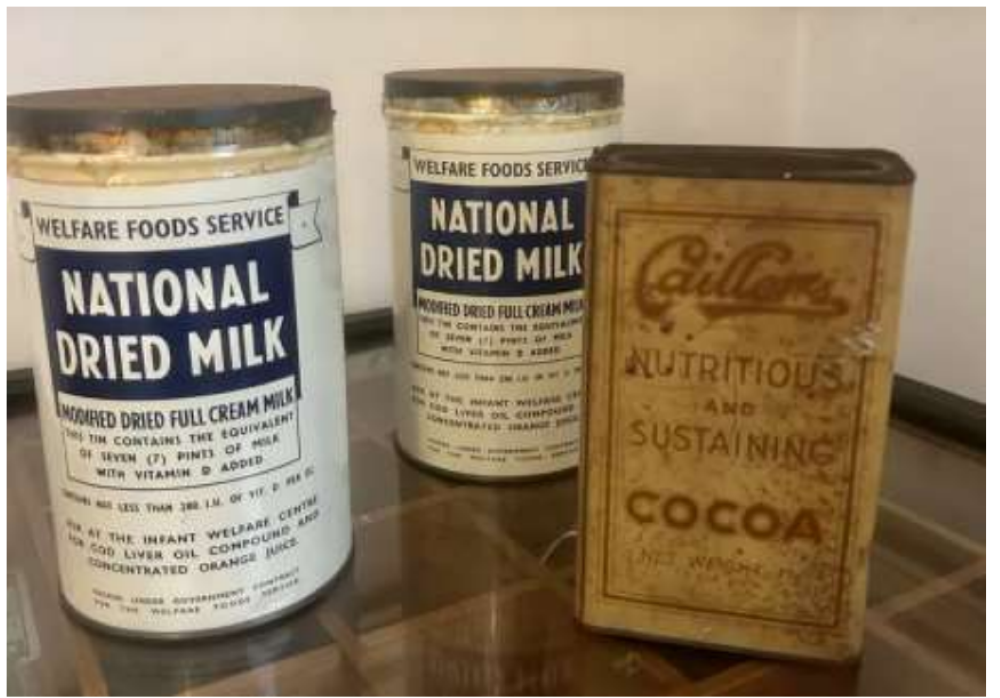
Following the introduction of government-funded free school milk for all pupils, a consignment of 22 tins of National Dried Milk was received at the school in April 1948, with Miss Fotheringhame recording that this free milk was being served daily. Similar consignments were noted every few months until the last consignment of 20 tins was recorded in April 1950.
This dried milk was mixed with water and shared out in individual cups to the pupils but, with most of the children being used to ample supplies of fresh cow’s milk, didn’t find favour with everyone. During the winter months the kettle was boiled up on the fire, with a hot drink of cocoa and dried milk then being served up. Some former pupils also remembered Miss Fotheringhame buying ‘hard biscuits’ from Swanney’s bakery in the Village and pupils getting one of those biscuits spread with butter along with their cocoa.

Paying some regard to fire safety in the schoolroom, in February 1949 a new fire extinguisher was fitted to the wall by John Mitchell.
Also in February was a visit to the Meal Mill to see it in operation. A demonstration of the whole process, from drying the grain to grinding and bagging the bere meal and oat meal, was given by the appropriately named James Miller, together with a description of how water pouring over the big water wheel was used to provide power to all the machinery in the mill.
In addition to encouraging her pupils to take a keen interest in nature and the world around them, another activity which had been encouraged by Miss Fotheringhame as part of the school curriculum for some time was gardening, a pursuit which had been commended in a previous Inspectorate report. Although seldom mentioned in the log, it was noted that the 1949 activities had begun in the Schoolhouse garden on 19th April.
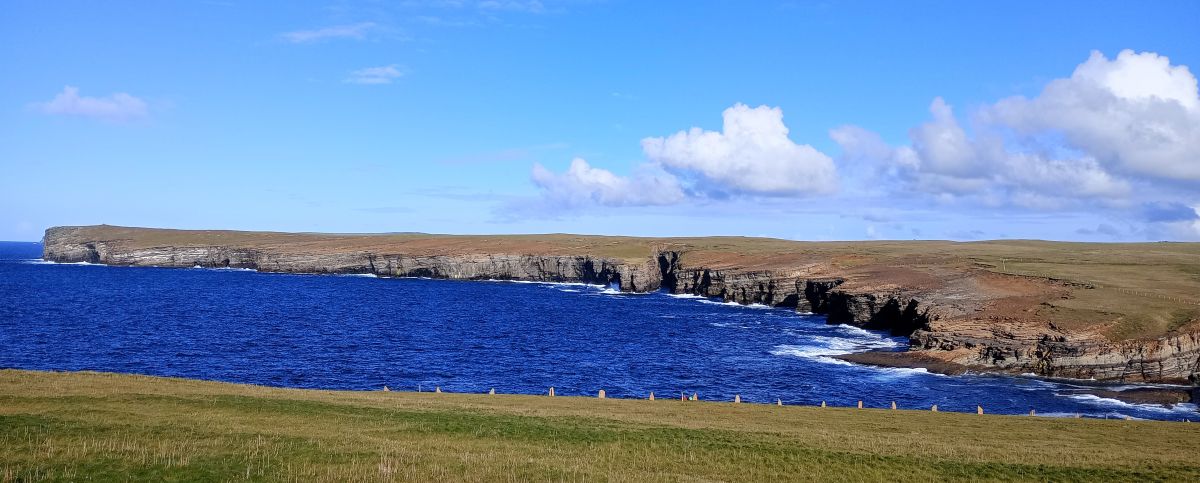
Rambles too continued as usual in June. In what was a first for these rambles, use was made of motor transport to convey teacher and pupils into Rothiesholm for the first part of the excursion. They then continued the outing by foot, with a walk out along the west shore of the peninsula to Scaval where they viewed the remains of a complex of small buildings and sheep folds enclosed by dry-stane dykes, all erected on a flat coastal strip nestling in the shelter of a steep grassy bank.. Later that week pupils were taken on a walk out past Housebay and on to the Crook Sand.

Things didn’t always go smoothly though, and one incident well remembered by a number of former pupils is worth recounting. This involved a bold young lad, John Stevenson from Kirbuster, who was always up for adventure and decided one day to crawl through the large drain (what Orcadians would call a ‘brig’) which went under the road at the school from one side to the other. As he slithered along the stone-built drain it gradually got narrower until he became firmly stuck! The teacher was called for and, so the story goes, this was the only time anyone had ever seen the normally unflappable Miss Fotheringhame get flustered! She quickly dispatched one of the older pupils to fetch the Council roadmen to the scene, thinking that the only way to rescue the young lad was going to be to dig up the road. Before their arrival however John discovered that he could drag himself slowly backwards and managed to reverse out of the drain. All ended well, although there is no record of what was said to the daring young lad when he eventually emerged!
The school closed early once again on 28th September to allow preparations for another wedding, this time the marriage of Edward Miller Bews and Margaret Ann Cooper. Barbara Smith (nee Cooper), a pupil at the time, recalls the pupils being given the leftover trifle and goodies to eat the next day.
Another HMI inspection took place in November 1949 and the resulting report paid tribute to the teaching of Miss Fotheringhame, who was soon to retire, as follows:
‘The teacher in charge, who is retiring shortly after thirty-eight years loyal and efficient service to the community, is to be complimented on the pleasant tone of her school and the creditable attainment of her pupils.’ The report then went on to record ‘On the day of inspection there were 14 pupils on the roll, all under 12 years of age, Their attendance this session had as usual been remarkably good. From the results of oral and written tests and from scrutiny of class exercises it was evident that the work in all subjects had received regular attention, and that the aptitude of the pupils had been carefully considered. The good use that had been made of modern texts in English and composition, the efforts made to foster readiness in oral answering and development of choral singing are specially commendable.’
At a small ceremony on 22nd December 1949 William Work, Chair of the School Management Committee, presented attendance prizes to the pupils and the school was dismissed for the Christmas holidays.
In what was to be her final entry in the school log book, dated that same day, Miss Fotheringhame stated that ‘This is my last day of teaching. Mrs Fiddler takes over in January. (signed) Elizabeth Fotheringhame.’

Miss Fotheringhame was held in high regard throughout the island, serving as a teacher at the South School for 38 years and being a stalwart of the island community, taking an active and often leading part in the work of several island organisations. She was my Grand Aunt and, although I never met her, she was referred to affectionately as ‘Auntie Lizzie’ by many in the island, often as a sign of respect rather than any close blood relationship. Auntie Lizzie retired to Edinburgh where she died in January 1960, with her remains coming home to be laid to rest in the island where she had spent most of her life.
Part 6 to follow.


Leave a Reply