
In 1529 a bloody battle took place in the hills of Stenness with hundreds dead and many more wounded. What was this battle about and what were the repercussions for Orkney ?
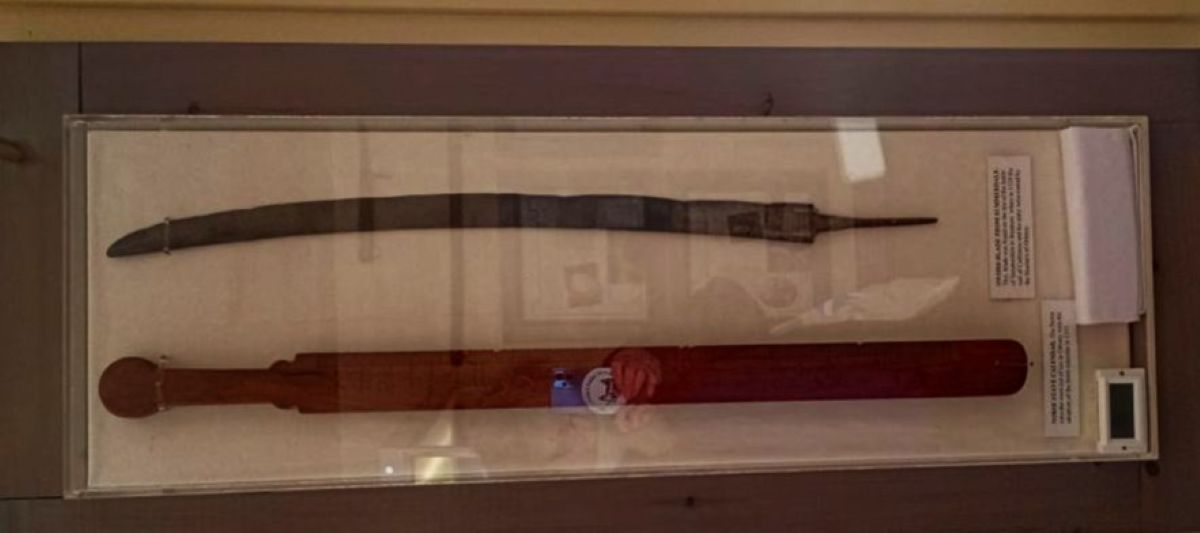
The Orkney Museum in Tankerness House, Kirkwall, is a great place to start for those curious about the history of the islands. Upstairs, there is a small panel which provides some information about this violent conflict in 16th century Orkney.

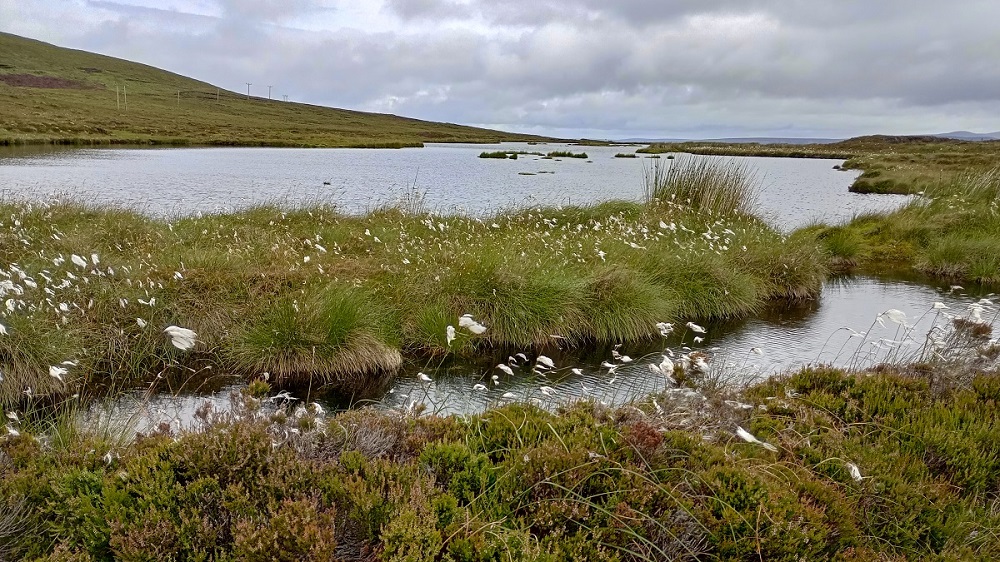
It’s difficult to think that the now quiet hills of Stenness where it borders with Orphir was once the scene of such carnage.
” In 1529 a fleet sailed over the Flow to invade Orkney; it was manned by hundreds of Caithnessmen who had come to teach rebellious Orkneymen a sharp lesson. By all the laws of warfare, the Caithnessmen should have won; but the hastily summoned and poorly armed Orkneymen believed that dead warriors were fighting on their side. They claimed to see the island saint, St Magnus, in the thick of the battle, and their valour was terrible. Five hundred Caithnessmen and their Earl lay dead on the field of Summerdale and only a handful went back over the Flow” – ‘An Orkney Anthology, Selected Works, Vol 1. , Ernest Walker Marwick ed. John D.M. Robertson.
The St Magnus we think about today is known as a saint of peace, but this was not always the case. He was also the St Magnus who gave courage to those who went into battle – he was a warrior’s saint. The Orcadians who fought at Bannockburn in 1314, believed that St Magnus was with them that day, when Robert Bruce, King of Scots, led them into battle and to victory.
By the 16th century Orkney had been part of the realm of Scotland since 1472, although the Scots influence in the islands had been growing long before then.
In February 1472 the Earldom of Orkney and the Lordship of Shetland were annexed to the Crown of Scotland.
From 1379 – 1470 Orkney was ruled by the Sinclair Earls. For a period, Earl William was Chancellor of Scotland (1454 – 1456) in the court of James II King of Scots (1437 – 1460). He was also Earl of Caithness which he regained in 1455 and ,of course of Orkney . Additionally he held family estates in Shetland. Earl William fell out of favour with James II who had plans to expand his realm, especially into the northern isles.

Unknown author to Georg (Jörg) von Ehingen, Public domain, via Wikimedia Commons

James III, came to the throne after the sudden death of his father when a canon he was standing near to exploded during the siege of Roxburgh Castle. The new Scots’ King continued the policy of expansion and the marriage negotiations with Christian I King of Denmark and Norway, to acquire Orkney, which had been underway during his father’s reign, continued. (Denmark, Norway, and Sweden established and formed the Kalmar Union in 1397.) The marriage took place on 10 July 1469 between James III, King of Scots, and Margaret of Denmark, only daughter of Christian I.
Orkney and Shetland had been pledged as part of this marriage deal for which Earl William Stewart, with all his lands in the islands, had no say in. What was supposed to be a temporary arrangement, as we today now know, became permanent, as Denmark never redeemed their pledge, despite several attempts to do so.
” On 17 September 1470 he [Earl William] resigned the castle of Kirkwall and ‘all his right in the earldom of Orkney…to the King, receiving in exchange the castle of Ravescraig and surrounding estates in Fife and a raft of other concessions. ” – The Northern Earldoms, Barbara E. Crawford.
The administration of Orkney fell under the control of Bishop William Tulloch, a trusted councillor of King Christian of Denmark, and who had helped considerably to broker the marriage deal. His position was then taken over by Bishop Andrew Painter. Onto the scene comes Henry, the grandson of Earl William – a farmer and leaseholder. Henry was keen to retore the financial position of his family. This involved confrontation between himself and the Bishop over the rentals and tack being paid.
“…and it was claimed that Lord Henry, and his brother, William Sinclair of Warsetter, took forcible possession of some bishopric lands.” – The Northern Earldoms, Barbara E. Crawford.
Lord Henry was amongst the many killed on the field of Flodden in 1513. His brother Sir William of Warsetter continued to increase the family’s power and influence in Orkney from his base in the island of Sanday. He had been very successful in this, however, it all fell apart after his death. Conflict arose between his sons and his nephew, his brother William’s son – also William.
This culminated in the pitched battle at Summerdale, with Lord Henry’s sons the winners, defeating their cousin in his attempt to reclaim his father’s properties and lands in Orkney – despite William having the support of the Scottish King, James V.
There were several stories of the supernatural which emerged in the years following the battle including the army of the dead led by St Magnus, and a witch’s prophecy. It is said that there was only 1 survivor out of the 500 dead from Caithness, and that just 1 from Orkney, a boy, was killed. Controlling the financial bounty of the tack in Orkney had been very costly for the Caithness Sinclairs.
In 1536, Lady Sinclair (Lord Henry’s widow) had her rights to tack renewed, and Kirkwall was awarded the status of Royal Burgh.
James V King of Scots , died in 1542, possibly from cholera and dysentery, to be succeeded by his infant daughter Mary. Her mother, James V’s widow Mary of Guise, eventually became regent of Scotland on 12 April 1554 at a meeting of Parliament.


And finally…
“From 1542 till about 1558, the royal and earldom lands – and probably the conquest lands as well – were ruled directly in the name of James V’s widow Mary of Guise, who inherited them as her portion. Her governor, the obscure M. Bonot, received possession of Kirkwall Castle in 1543; he was still in control sixteen years or so later…For the years 1560-5, from the death of Mary of Guise to the first appearance of Robert Stewart, the revenues of the lands went directly to the crown.” – Earl William to Earl Patrick, A survey of the history of Orkney from 1468 to 1615, Peter Anderson.

Fiona Grahame
.jpg)
.jpg)

Leave a Reply