
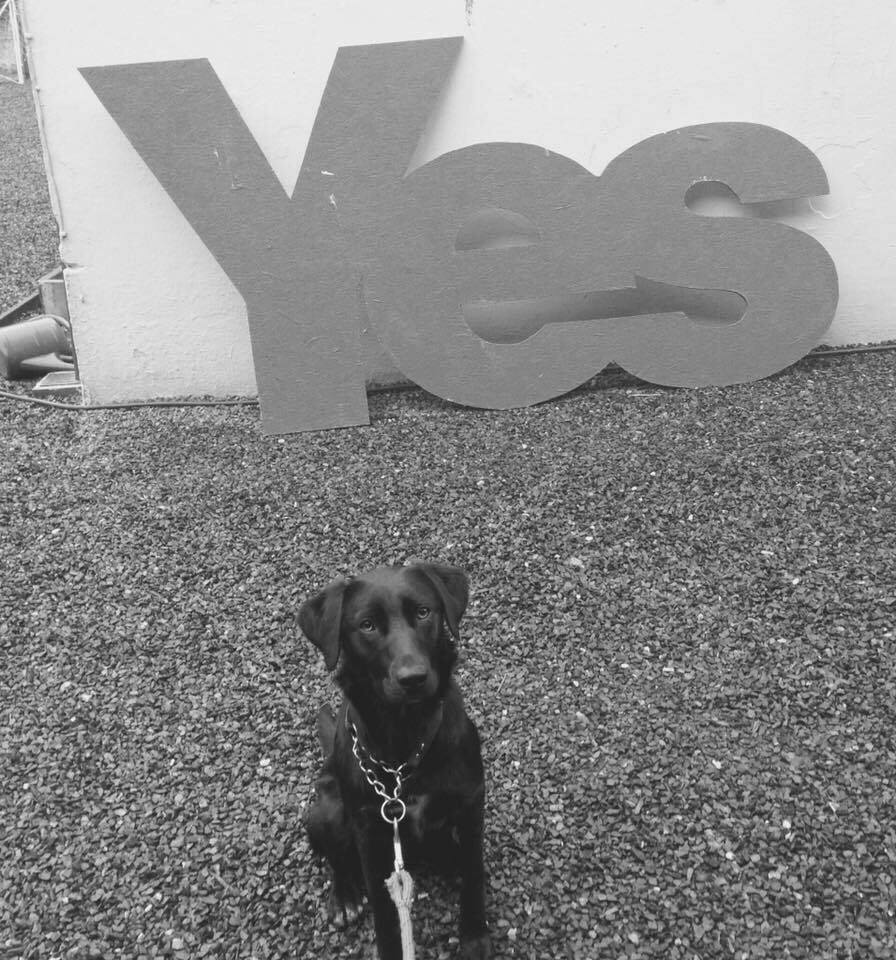

With First Minister John Swinney about to embark on a tour of Scotland (including my own area of Dumfries and Galloway) to roll out yet another relaunch of an independence strategy, it feels like an important moment to reflect on Scotland’s constitutional journey.
The first thing to say is that this isn’t going away. When the independence referendum was launched in 2012, support for self-determination was languishing at 27%. Although Yes ultimately fell short, support for independence has rarely dropped below 50% since, and amongst young people – 1.4 million of whom have only earned the franchise since 2014 – support runs at around 80%. The biggest achievement of the pro-independence movement in 2014 was normalising the concept of independence.
But Scotland’s journey towards self-governance is – or should be – much more than an abstract concept. And yet, nearly eleven years on, that is what it currently is.
And that’s for a number of reasons. There has never been any serious attempt from either pro-independence parties or the wider movements to understand why Yes lost. There has therefore been no strategic reset on independence (and no re-imaging of what a union might look like), and no rethinking about the fundamentals of independence – like currency, the economy and our relationship with Europe. The movement seems to have forgotten that the cause wasn’t always a theoretical abstract but about imagining and planning a future that is still to be decided.
What of SNP members? We feel appeased and slightly patronised, noticing that the party makes just about enough noise about independence to keep us quiet for a wee while and hoping that we won’t notice the entire lack of strategy towards independence, far less progress. But plummeting membership and poor election results – like the recent Hamilton contest – suggest that this tactic is delivering ever diminishing returns. After all, there’s only so many times you can march an army up a hill. And it feels like the party, after nearly two decades in government, has either failed or refused to reinvent itself as it transitioned from the fringes to the established party of government.
The party looks tired, not just physically but ideologically. Where are the big ideas? Instead of presenting a bold vision, they seem to have meekly accepted the narrative that they should, in that deeply dispiriting mantra, just “get on with the day job”. It depresses me that this is rarely, if ever, challenged.
There is so much wrong with this mindset that it’s difficult to know where to start.
Firstly, and I can’t believe I have to point this out, strategising and delivering independence is one of only two mission statements on the SNP’s constitution (the other is “for the betterment of Scotland”). It’s like Harold Wilson used to say about the Labour Party – “it is either a cause or it is nothing”. Delivering independence is, literally, the day job.
Secondly, it’s a bit rich when successive UK governments lecture you to stop bringing up the constitution when the last Conservative government had its own subcommittee, headed by Michael Gove, with the sole brief of promoting unionism. Which, of course, meant that half of Scotland was helping to fund its own belittlement.
And, thirdly, the idea that you must only focus on the here and now betrays our history. If you read Hansard from the 1940s, there’s long debates about education, housing and the formation of the NHS. Not despite the fact that Britain was at war, but precisely because it was. It was felt crucial that the rebuild began before the conflict ended, and no-one seemed to think it odd that governments should choose to plan for peace while the country fought fascism. This was government doing its job. When did we lose the ability or desire to multitask?
All of which speaks to a wider debate. Where are the big ideas? Whither McDiarmid’s “multiform Scotland”, McIlvanney’s “proudly mongrel national”? We lionise towering historical minds like Smith, Kames, Burns, Hutchinson and Hume, and Scotland is still a place of thinkers and intellectuals. It’s just few if any of them inhabit civic Scottish society, far less the party of government. Something I learned from the war correspondent Jen Stout was that Ukraine’s resistance to Putin is at its heart a cultural movement. “Nation building in quick time” she called it. And yet this is something that our pro-independence parties seem reluctant to get involved in, which would explain their almost total absence from any Yes events, unless there’s an election to win, naturally. The late AA Gill described Scotland as “proudly, fiercely different” and yet I sense a reluctance for the party of government to articulate this. We could use a little gallusness, and yet we boast, then cower, begging for a piece of what’s already ours.
It feels like we’re reactive, not proactive. An obvious example of this is the annual GERS figures. Without wishing to go over this again, it’s still worth remembering that even the authors of the yearly report clearly state that the numbers do not remotely reflect what the finances of an independent Scotland would look like. But is it too much to ask our Holyrood government to produce a set of figures that would reflect precisely that? That would set out what Scotland could achieve if it had, say, its own immigration policy, the ability to not pay for Trident, crossrail, HS2, illegal wars and unelected heads of state? Opponents will of course say: “och, stop using hypotheticals”. But aren’t all budgets precisely that? Isn’t creating hypotheticals a big part of any government’s job? Because if we don’t then we’ve become the glorified parish council that Tony Blair described us as when he said the quiet part out loud back in the day.
And this speaks to something I’ve always believed in – the need to change the burden of evidence. The question isn’t Yes or No. It’s “what do we want Scotland to look like”, and then “what powers do we need to achieve this?”.
Inevitably, there will be a gap between aspiration and achievability. At which point, the SNP should then demand that the unionist members in the chamber should join them in demanding the powers needed to close this gap be returned by Westminster. They won’t, obviously, proving that their unionist identity will always trump any desire they may have for a better Scotland.
In the meantime, our government needs to be the best version of itself. The better we govern, the bigger we think, the higher we aim, the more we demonstrate the narrow limits of the devolution settlement and the urgent need for the fullest possible extent of self-determination.
A colleague recently asked me about independence. Yes, I want it, I said. But what I really want is a revolution. Empowerment. Disruption. Living dangerously. Being honest. Accepting that we’re miles from perfect. Thinking harder. Confronting our fears.
“If you build it, they will come” says the ethereal voice from the maize field in Field of Dreams. A decade and more on, we need to start laying some bricks.


Leave a Reply