
It is always a pleasure to have an article I have written published. This last week, however, I read something I thought I had written, altered to such an extent that it was no pleasure to read at all.
How AI has come into our lives should be concerning all of us.
Last summer I chatted to a young US visitor to Orkney who had just graduated with a science degree. He intended progressing into post doctoral research. As I congratulated him on his success the issue of AI came up in our conversation. AI is the use of computer generated ‘support’ for many tasks which might take a human much longer to achieve without its data input. The young student I was chatting to had used AI to write his essays and pass a course in English. The student’s first and only language was English but he was not able to write an essay without AI’s extensive input. Well – he hadn’t tried to write it using his own thoughts and words – he’d simply utilised AI to take the easy route and do it for him.
Apparently the use of AI in this context is not confined to the students. Some teachers /lecturers have been using AI to mark essays. UK Government advice has been published permitting teachers in England to use AI “to speed up marking and write letters home to parents.” The report on the BBC also stated:” The Scottish, external and Welsh, external governments have both said AI can support with tasks such as marking, as long as it is used professionally and responsibly.
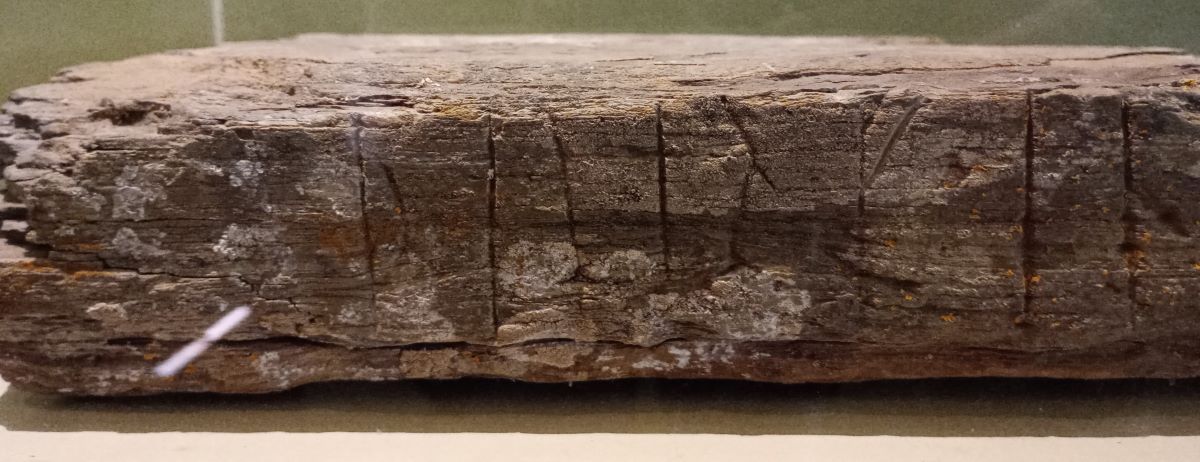
Back to my personal encounter with AI being used to rework my writing which I had also researched prior to putting the words together. I knew something was wrong immediately with the article I had written about the use of runes in Orkney (a link to my original article is included below).
Here’s the first line:
“There’s a peculiar itch you get in Orkney..”
This would be hilarious and I could have a lot of fun with that if it wasn’t supposed to be me saying it. Reading this you may be laughing already – but it was no laughing matter to me.
The article then bombards us with words and phrases such as: motherlode, mystical, magical, – that’s about the actual runes – or as the article states – ‘gossip on the walls’. Vikings are described as ‘testosterone-filled soldiers’.
Orcadian history is fascinating without the use of hyperbole and tabloid-style Americanisms.
Here’s another irony about my particular encounter with AI bastardising my work – the edition of the iScot Magazine this article appears in is dedicated to Elspeth King. Elspeth King died last year. She was a Scottish curator, writer and social historian, known for her role as curator of social history at the People’s Palace Museum in Glasgow, as Director of the Stirling Smith Art Gallery and Museum, and for her scholarship on the Scottish women’s suffrage movement.
Somehow I do not think Elspeth King would have ever needed to or indeed have used AI to express her thoughts and ideas.
What else can I say ? – the article is awful and I am extremely angry but also disappointed that a Scottish based Magazine would do this to my work. I research Orcadian history. I go into the Orkney Archives. I read books. I attend talks. Whoever put the article together has done none of those things – and it shows.
Meanwhile, the energy demands of AI through Data Centres is going to be enormous to feed its insatiable appetite.
In 2024, data centres accounted for about 1.5% of the world’s electricity consumption. But demand is projected to double to 945 TWh by 2030, potentially exceeding Japan’s current total electricity consumption. The United States accounts for the largest share of global data centre electricity consumption (45%), followed by China (25%) and Europe (15%). In the US, data centres already represent 4.4% of energy consumption. The need to finance the unprecedented expansion of power grid infrastructure could lead to public funding being diverted away from social and environmental projects and delay the retirement of existing fossil fuel-intensive infrastructure. LSE
For Scotland the data centres already going through our planning system will require “between 4450 MW and 4950 MW, which is larger than the winter peak electricity demand for the whole of Scotland,” as reported by Environment Rights Centre Scotland.
The statement continues :
“This rush of applications is related to the exponential growth of AI and the processing power that it demands. UK Government and Scottish Government estimates give a figure of 10-30 MW for 2024 data centre capacity in Scotland. Three quarters of the data centre electricity demand comes from planning applications from just one company.”
Dr Kat Jones, Director of Action to Protect Rural Scotland (APRS) said:
“This is a critical moment. Any one of these humongous data centres would use the energy of an entire city, and some considerably more. These are all going through local planning processes with no overview as to their effect on the country as a whole.
“We are in the ludicrous situation that the data centres currently in Scotland’s planning system would more than double the country’s energy use if they were built. This is evidently impossible, and yet it is entirely possible that we will see these data centres consented by local councils, without even requiring an Environmental Impact Assessment.”
So, whilst I am angry at the bastardisation of my own writing, and students are graduating unable to write an essay in basic English, the wider picture of carving up our landscape to cater for AI Data Centres consuming MW of energy, is a profoundly serious one.
Success in creating AI would be the biggest event in human history. Unfortunately, it might also be the last, unless we learn how to avoid the risks. – Stephen Hawking
Click on this link if you wish to read about runes in Orkney. In fact The Orkney News has several well researched articles about runes, an early form or writing before we relied on AI to do that for us.
Fiona Grahame



Leave a Reply to berniebell1955Cancel reply