
On 15 March 1906, women in Finland gained the right to vote. A first for European countries.
Finland was asserting itself as an independent nation and resisting Russian control. It was becoming more industrialised and women formed an essential part of the workforce.
The Finnish Women’s Association was established in 1884.
The push for enfranchisement was largely supported by the Finnish Social Democratic Party, reflecting a broader consensus on the need for democratization and the inclusion of women in the political process. Following the reforms, women actively participated in politics, with 19 elected to the Finnish parliament, or Eduskunta, in the 1907 elections. This landmark decision not only empowered Finnish women but also served as an inspiration for women’s suffrage movements in other countries. Over the following decades, Finnish women continued to advocate for and achieve significant reforms, establishing Finland as a leading example in terms of women’s rights and gender equality. – Finland Grants Women Suffrage, Peake, Thomas P.
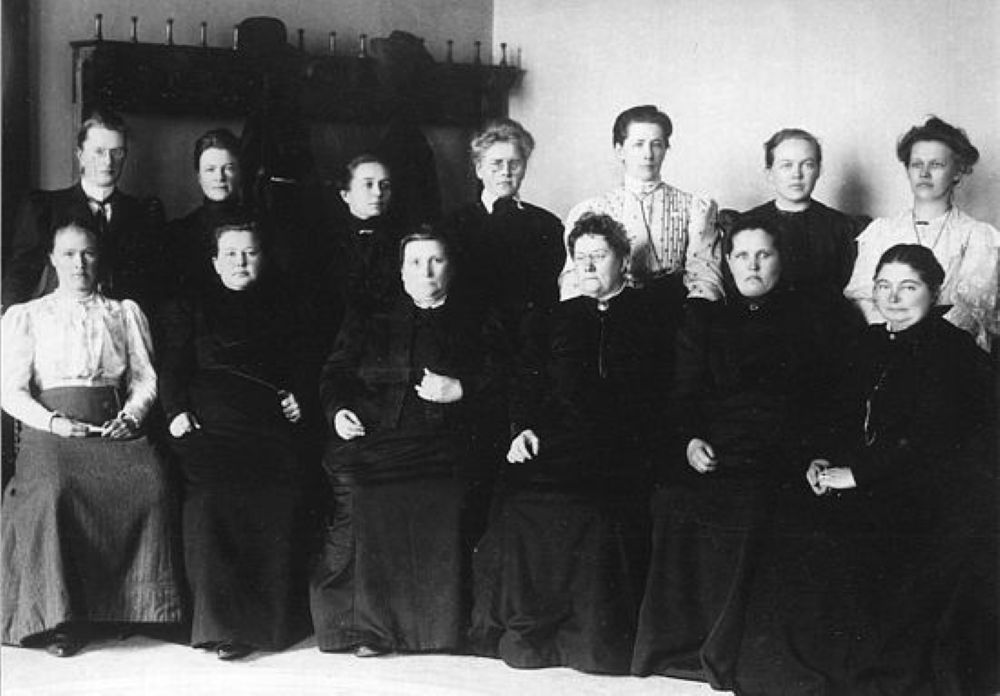
13 of the total of 19 female MPs, who were the first female MPs in the world, elected in Finland’s parliamentary elections in 1907.

The successful women elected included: Lucina Hagman, Miina Sillanpää, Anni Huotari, Hilja Pärssinen, Hedvig Gebhard, Ida Aalle, Mimmi Kanervo, Eveliina Ala-Kulju, Hilda Käkikoski, Liisi Kivioja, Sandra Lehtinen, Dagmar Neovius, Maria Raunio, Alexandra Gripenberg, Iida Vemmelpuu, Maria Laine, Jenny Nuotio and Hilma Räsänen.
It wasn’t until 1918 that some women in Britain gained the right to vote, which was extended in 1928.



.jpg)
Leave a Reply