
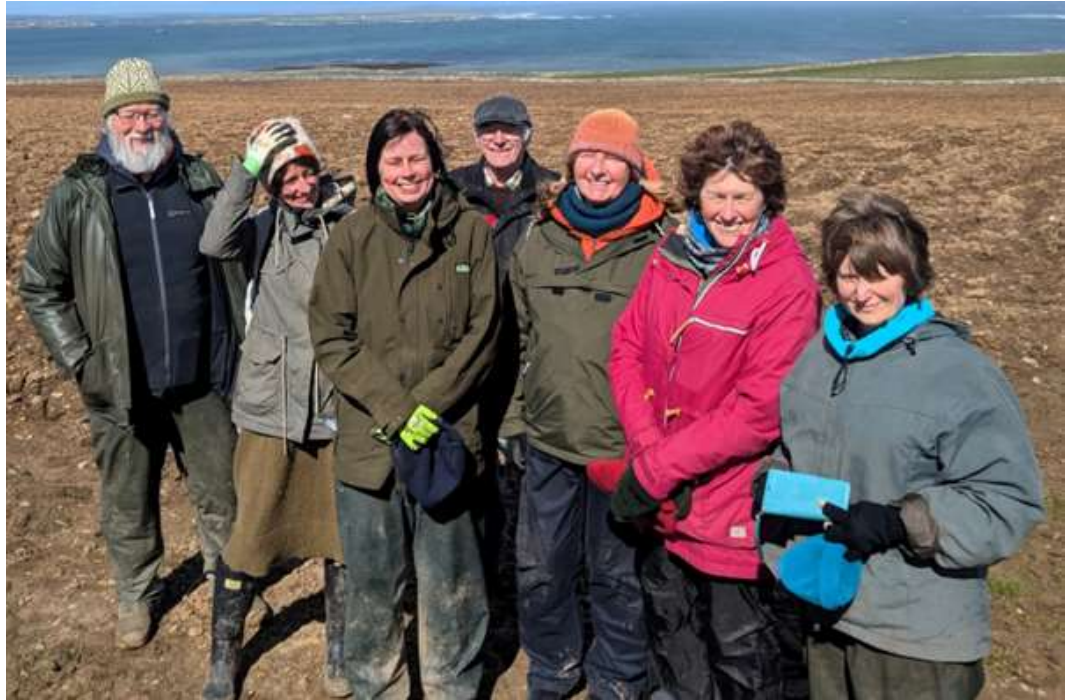
On the weekend of 10 April, field walking took place in Stronsay led by archaeologist Ben Elliot from the University of the Highlands and Islands (UHI) Archaeology Institute, together with volunteers from Orkney Research Centre for Archaeology (ORCA). Many thanks to The Stronsay Limpet for permission to publish an account of the day.
Stronsay Archaeological Fieldwalking Survey 2026.
This was aimed at continuing the fieldwalking project to add to the information gleaned from the work of the 2007 Stronsay Archaeological Survey and the 2024 fieldwalking project which were undertaken to evaluate the archaeological history of Stronsay and to attempt to form a clearer picture of Stronsay past.
This started in glorious weather on Friday afternoon in a 12 acre field at Midgarth, opposite the end of the road to Oddie. This whole field had previously been marked off, using GPS technology, into a grid of 10 metre squares, with the resulting straight lines of little red flags indicating the areas to be searched.
With this completed Ben and his team, ably assisted by a group of enthusiastic local volunteers, then began the actual fieldwalking. This involved walking slowly along the previously set transects searching for anything unusual that could only have been deposited over the millennia by the hand of man, with anything spotted being picked up, bagged and left beside the next red flag so that the finds could later be collected and the location accurately logged.
Among these finds were numerous bits of pottery and quite a number of pieces of worked and unworked flint, these found mainly on the side of the field nearest Linksness.
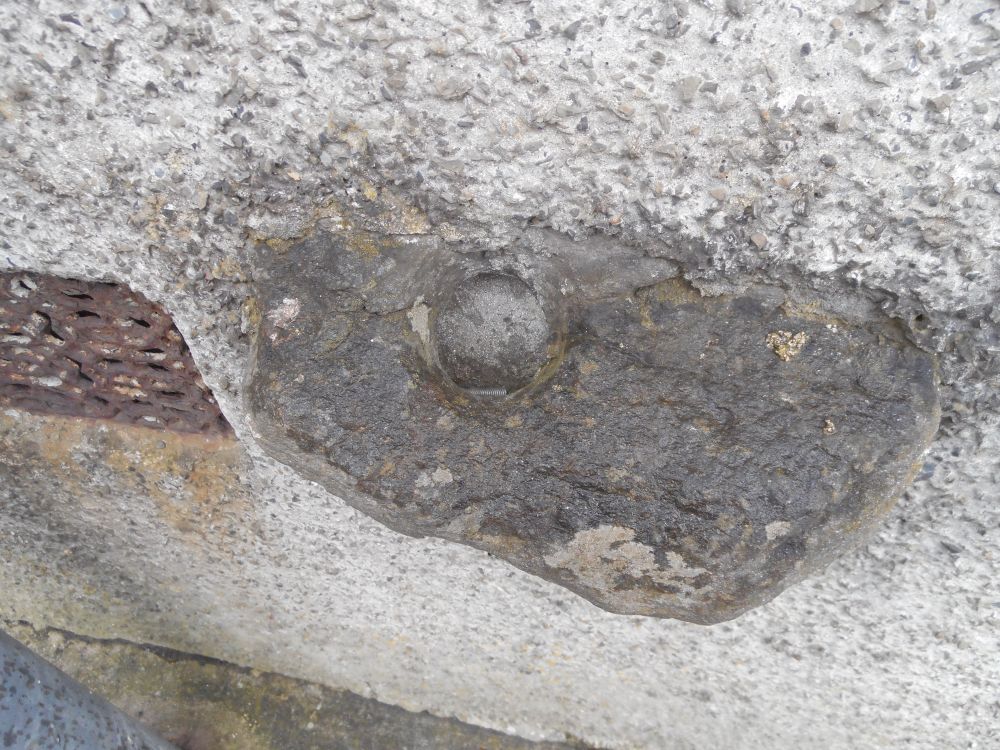
One of the highlights of the day for everyone was going to have a closer look at a fairly large stone built into the dyke nearby. This stone had been spotted by a sharp eyed Isaac Erdman a few years ago and, it was thought, could be an early example of ‘Rock Art’. (in archaeology, rock art apparently refers to human-made markings formed on natural surfaces, typically vertical stone surfaces.) Following detailed visual and ‘hands on’ examination of this stone it now seems almost certain that this was made by human hand and not naturally formed indentations.

With the field completed and the positions of the finds all logged, they were taken back to GHQ (the polytunnel!) to be cleaned, re-bagged and recorded the next day.
A monsoon on Saturday put an end to any thoughts of fieldwalking for that day but we retired to the polytunnel to look at some of the finds from 2024 and to be informed and entertained by some of the visitors who explained what some of the finds were and how they would have been used.
We were also able to examine the previous day’s finds and were shown how to wash or clean the items while ensuring that they never strayed far from the bag with their identification and location number on it!
Sunday again dawned bright and fair, although a bit windier than we would have wished for, and attention turned to an 11 acre field at Odiness which, although not quite as forthcoming as the Midgarth field in quantity of finds, still provided some interesting items including pottery, a few flints and what looked like two little ‘shell middens’, where a quantity of old and very fragile limpet and whelk shells were found.
With the ferry leaving early because of a poor forecast the visitors had to leave before scheduled on Sunday but Ben will be compiling a report analysing the finds and what they mean, and we look forward to his return in a few months’ time to tell us all about it.
Some photos from the weekend, courtesy of Ben Elliot, are shown below.

Some of the pieces of flint found:



Leave a Reply