

I’ve previously written of ancient connections between Ireland and other places re. cairns & carvings
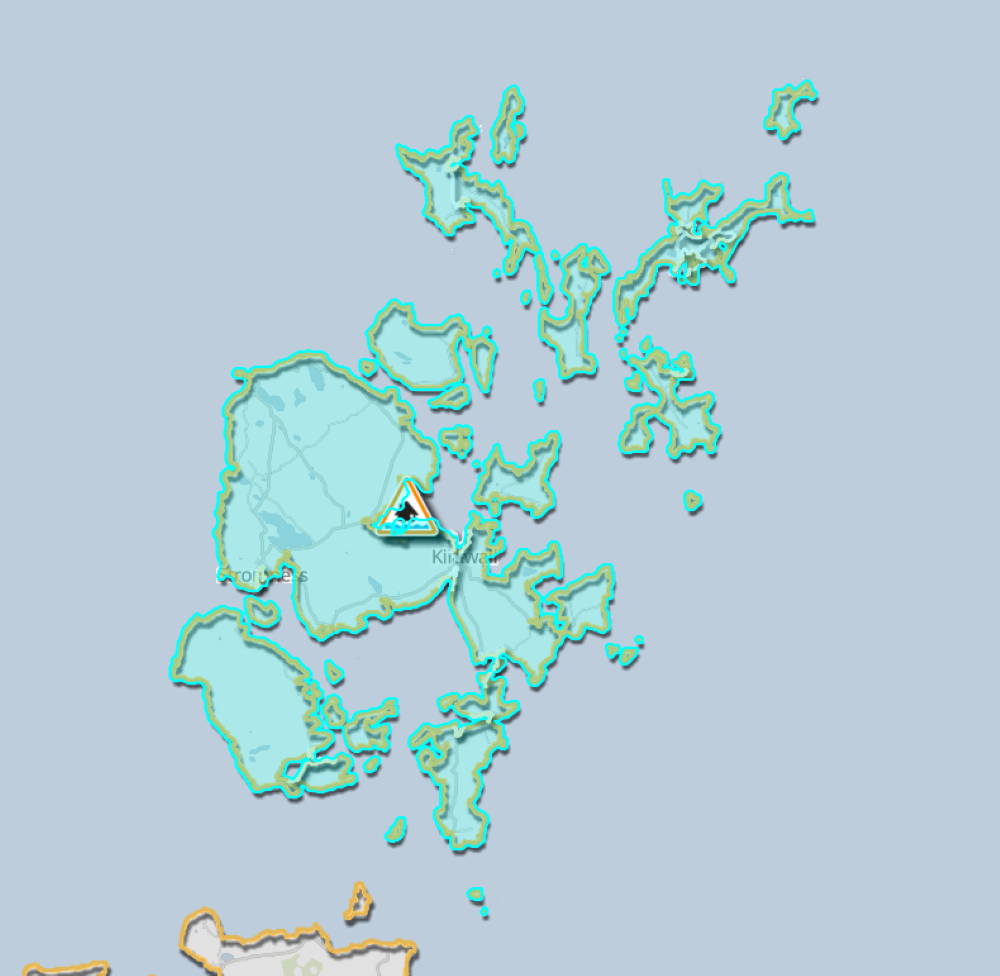
The new excavation at the Tomb of the Eagles, South Ronaldsay
got me thinking about other connections.
I’ve long wondered about the trough of water at the site known as the Burnt Mound

and was interested to see on the Tomb of the Eagles Facebook page, that Merryn Dineley has a theory that it could have been used for brewing ale in the Bronze Age! She mentioned the fulacht fiadh research by Irish archaeologists at the Moore Group…..
’Ale, brewing and fulacht fiadh…
https://mooregroup.wordpress.com/2007/10/08/the-archaeology-ireland-article/ ‘
……. which brought to mind a memory of visiting the Craggaunowen Project in County Clare, Ireland and wondering about the stone trough displayed there…
The Craggaunowen Project also has a replica crannog, and there are crannogs in Orkney, which UHI Archaeology Institute investigated in 2022…..
I have a liking for crannogs – for small islands, generally. This stirred up lots of thoughts about crannogs – I’ll begin with a brief mention of the Wasdale one, here…..
And….Stenness
Years ago, I was at a Harvest Home here in Orkney, and was talking with the woman sitting next to me who lives near that end of Stenness Loch. I asked about the crannogs – pronouncing the word ‘crannog’ – with a long-drawn out ‘o’ – as the Irish do – which translates as ‘young tree’, as that’s what they were built from. She corrected me and said it should be pronounced ‘crannog’ with a strong emphasis on the short last syllable. (Apologies for both attempts at explaining the pronunciation!)
We realised that it was simply a difference in pronunciation between Ireland and Orkney/Scotland. Same language root though – young tree.
The Irish crannog I’m most familiar with is the one in Lough Gur, County Limerick, Republic of Ireland
Lough Gur is part of a sacred landscape including Grange Stone Circle an associated monuments. One dry summer the water level in the lake was very low and my Great-nephew walked across to the crannog – how I envied him that experience! A crannog……in that lake – considering the significance that the local folk put onto that lake and the whole landscape around it.
There’s a crannog at the end of Lough Talt, County Sligo. This photo, taken from Crummis Hill ( which I climbed in my youth!) shows the situation of Glennawoo crannog and also gives a good idea of what crannogs tend to look like now

And then there are the souterrains – there’s an example at the Craggaunowen project, and
I’m just pulling some thoughts together, playing with ideas.

Leave a Reply