
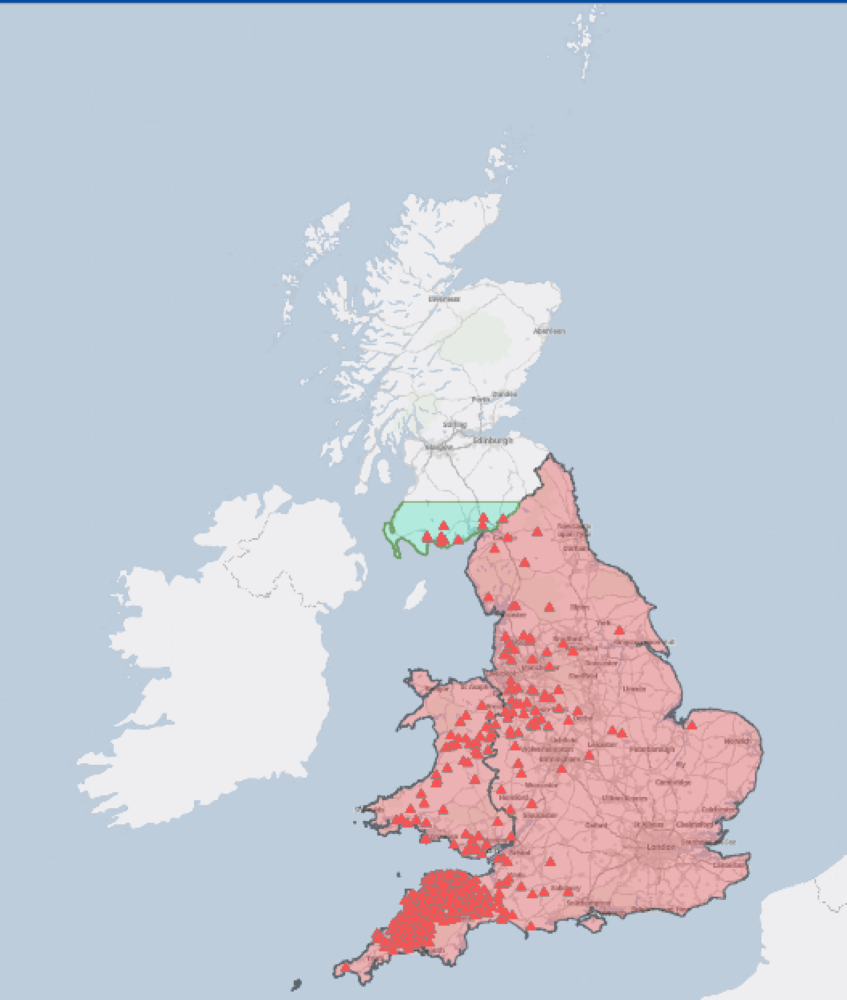
On 28 August 4 new cases of bluetongue were confirmed in Scotland. All were in Dumfries and Galloway, involved sheep and were tested following reports of suspicious clinical signs. They were all located within the temporary control zone.
72 animals across twelve holdings in south west Scotland have been confirmed positive for BTV-3.
The Scottish Government has updated advice on the temporary control zone (TCZ) established in Scotland after consultation with the farming industry. From 10 September, store, fattening and non-pregnant female animals will no longer need to be vaccinated to move from the TCZ to the disease free area of Scotland. However, some breeding animals will still require vaccination and testing before leaving the zone.
Movement rules for animals coming into Scotland from restricted zones in England, Wales and Northern Ireland, or moving to those areas, remain unchanged.
| Species | Number of animals |
|---|---|
| Sheep (including ewes, rams and lambs) | 1,146 (+19) |
| Cattle (including cows, heifers and calves) | 291 (+6) |
| Alpaca | 5 |
| Llama | 1 |
There are currently 2,541 potential cases of bluetongue under investigation in Great Britain. These are premises that have reported suspicious clinical signs and are under investigation. The total number of affected animals is likely to be significantly higher than reported because testing does not always include every animal on a premises.
Minister for Agriculture, Marine and the Islands, in the Scottish Government Jim Fairlie, said:

“We have listened to feedback from farmers and are updating our approach to movement controls within the south-west Scotland control zone.”
“From 10 September, store, fattening and non-pregnant female animals will no longer need to be vaccinated to leave the zone, though some breeding animals will still require vaccination before any movement out of the area.
“The risk of bluetongue spreading further across Scotland is increasing. I would ask all animal keepers in Scotland to review their vaccination plans and prepare for the very high likelihood that cases may emerge in new parts of the country next season.
“Vaccination remains the only viable long-term strategy for controlling bluetongue. I would urge anyone with susceptible livestock to speak to their vet as soon as possible to discuss the right approach for their animals.”




Leave a Reply