
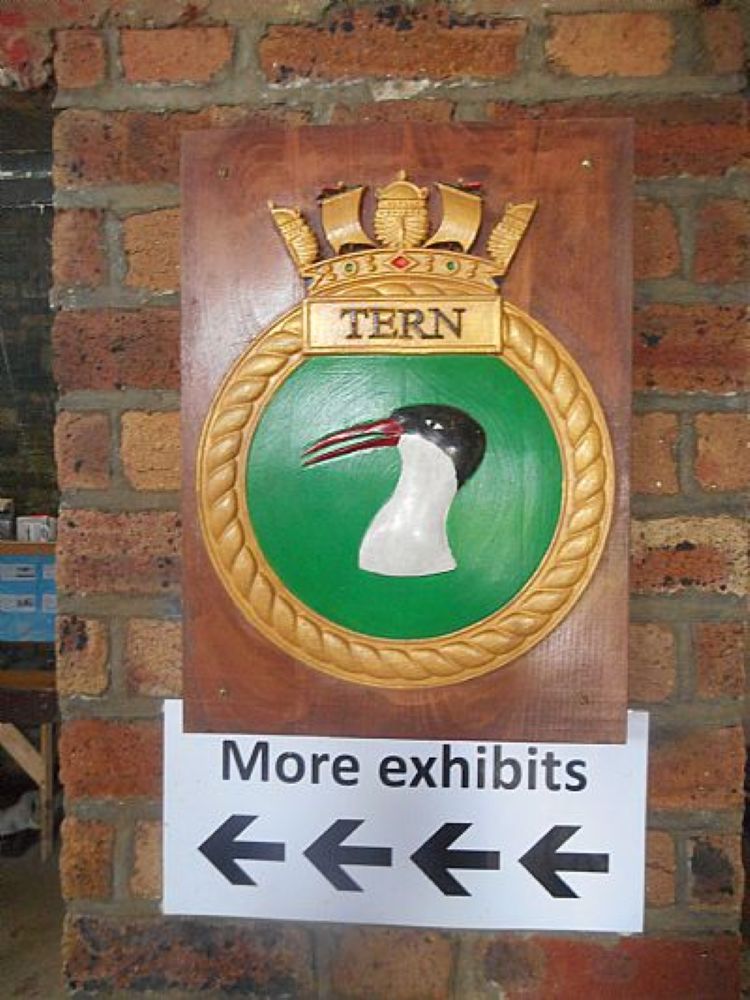

We’ve been meaning to visit HMS Tern, but other things kept turning up. I was talking with someone who was puzzled that it’s called HMS when it’s not a ship, and explained that, although the aircraft based at Tern formed part of the defences of Orkney, the site’s main role was to provide training facilities for the Navy and that when the Fleet’s aircraft carriers were in harbour their aircraft would fly ashore rather than stay on board and the facilities at Tern and other airfields in Orkney also served that purpose.

This re-awakened our interest, especially as we feel that we have a personal connection to the wartime Airforce presence in Orkney.
Mike’s brother is researching the family tree, and Mike received an email telling him that their maternal Grandfather was stationed in Orkney, at Walls, at some time between 1914 and 1920.
Flight Lieutenant Arthur Leslie Russell was a pilot with the Royal Flying Corps during the First World War, and was presumably in Orkney to help with the protection of the Scapa Flow anchorage. This air cover was primarily provided by the Royal Navy Air Service, but the RFC and the RNAS merged to form the Royal Air Force in 1918.
He was in Orkney in the First World War, not the Second, but he might have known some of the places in this booklet
We’re very taken with the idea that Grandpa will have been to places here that we go to. Very probably visited St. Magnus Cathedral. It’s a pleasing thought.
As a Flight Lieutenant in the First World War, Grandpa Russell will have been piloting some of the first ‘planes to be built – with no parachute, firing at enemy planes with a hand-held revolver.
After he was shot down over German occupied territory in Europe in 1916, the pilot of the German ‘plane landed and approached him, they shook hands, and he was marched off to captivity as a prisoner of war for three years. A gentlemanly way to approach enmity.
Would that happen now?
On his return to civilian life he became traffic manager at the old Croydon aerodrome, which was then the airport for London at the beginning of commercial flights.
Imagine that – different times indeed!
And now after that pre-amble I’ll take you on the tour we were part of, led by Nick Crohn, though what I can record here is the tip of the iceberg – there was so much to see and so much information – I can’t possibly fit it all in, and Nick ended up nearly losing his voice!
The first structure used to be the Fire Station, and now houses the main collection of artefacts from daily life in the war years .


There is also a lot of information relating to the armed forces and weaponry. The three shell cases on the left were dredged up from Scapa Flow

The whole display reminds me of a similar display in the Fossil & Heritage Centre, Buray…
Also on display are parts of two ‘planes which crashed. One in Rendall, which was later excavated


And one which flew too low over a misty Hoy and crashed, taking it’s Czech. crew with it. Those young men, far from home – never went back

Across from the Fire Station, what was the de-contamination unit is now a dark room with an Enlarger made in 1937 which still works!


We then walked along to the air-raid shelter, passing a torpedo oxygen tank and fuel tank which were dredged from Isbister Loch

The air-raid shelter blends perfectly into the landscape

and inside is…atmospheric


It was bult by Balfour Beatty, who left their mark low down on the wall

I took a pic because they’re my initials!
TO BE CONTINUED!
The Orkney News has several articles about HMS Tern, Birsay which you can find by typing into the Search Button.

Leave a Reply