

Households experiencing fuel poverty in energy-rich Orkney were dealt a double blow by the UK Government last week, with news of a New Year energy price cap rise following Chancellor Jeremy Hunt’s lack of energy support in his autumn statement.
The Chancellor’s failure to introduce a £400 energy bill rebate for households – despite bills being around double what they were in 2021 and set to rise by almost 5% on 1st January, was one of a lengthy list of autumn statement failings.
He failed to match the SNP Government’s council tax freeze and Scottish Child Payment – which are putting thousands of pounds back in the pockets of families in Scotland.
He failed to introduce mortgage interest tax relief – despite many families paying thousands of pounds more in interest due to soaring rates.
And he failed to reverse real-term Tory cuts to public sector pay for millions of workers.
This all adds up to prolonging the cost-of-living crisis for folk and makes next month’s Scottish budget a very difficult one to deliver.
But it doesn’t have to be like this.
An independent Scotland could have taken real action to reduce food prices, like other countries, including France, have done, intervening to help families with their grocery bills. We could have used our enormous energy resources to help and support struggling households – indeed, the Scottish Government is providing a record £30 million Fuel Insecurity Fund to help folk keep the heating on despite the limits of devolution which prevent us from tackling the issues with energy policy at source.
The absence of a return of the energy bill support – withdrawn after last winter – means that this kind of Scottish Government support to Orkney households will be even more crucial in the coming colder months.
As smaller, independent European countries like the Republic of Ireland are prospering with an over £56bn budget surplus, Scotland is forced to deal with the harmful inaction and failure of Westminster.
Scotland needs the full powers of independence to boost incomes and grow our economy. Independent European countries similar to Scotland are wealthier and fairer than the UK, so, the question must be: why not Scotland?
The opportunities of being part of the EU are explored in one of the Scottish Government’s latest Building a New Scotland papers.
Joining the EU as an independent nation offers Scotland the chance to regain what has been lost because of Brexit and what devolution cannot deliver. For the first time, Scotland would have a seat at the table, directly advancing our interests.
Orkney’s farmers will be well aware of the loss to Scotland’s agriculture sector in this post-Brexit era.
As the Rural Affairs Secretary, Mairi Gougeon, pointed out recently, while we were in the EU, we enjoyed the benefit of a seven-year framework, with Scotland receiving nearly £1 billion pounds in funding annually to support farming, food production, environmental protection and other rural priorities. Since Brexit, our funding allocation has become annual, and is shrinking.
Scotland’s farmers need funding certainty, which we know we can deliver as an independent Scotland within the EU.
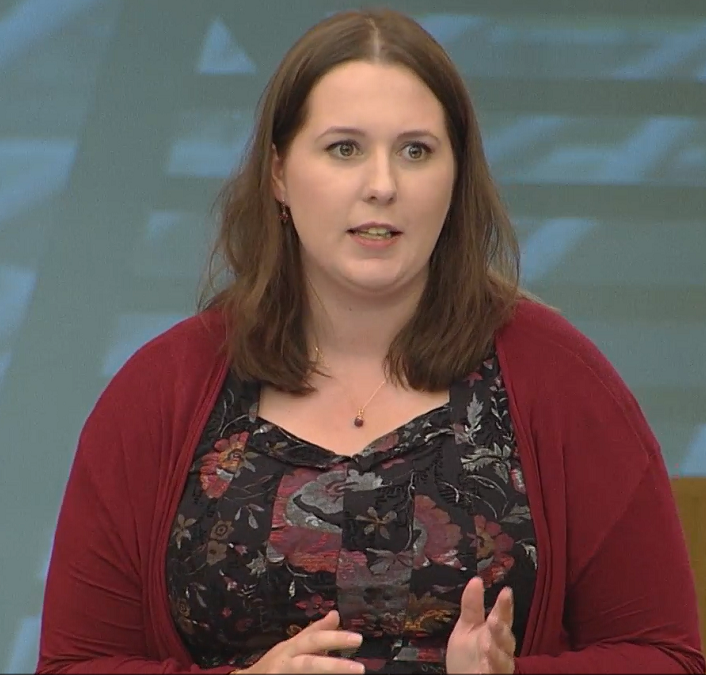
This is a regular column by SNP MSP Emma Roddick. All Highlands and Islands MSPs have been offered the same space in The Orkney News to share their personal views.
Leave a Reply